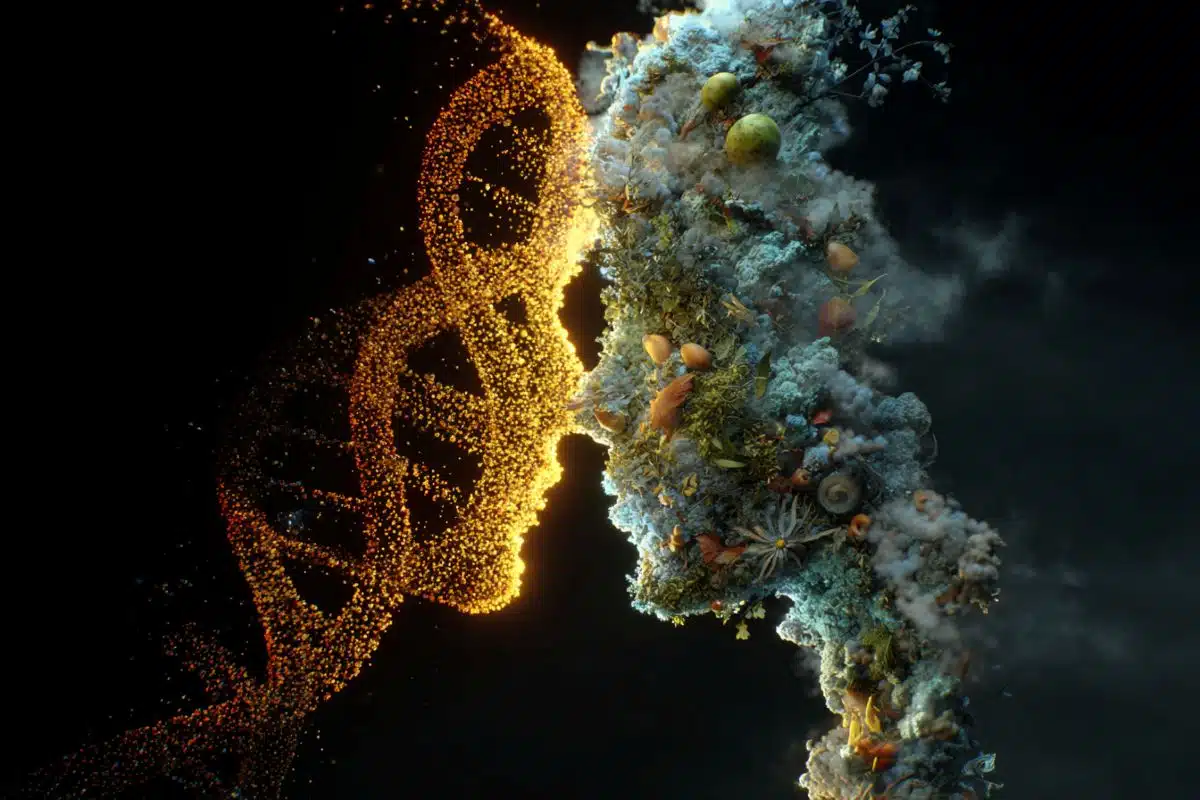
Summary: The “gut-brain axis” has long been known for its indirect chemical signaling, but a groundbreaking study suggests a much more direct—and startling—interaction. Researchers found that a high-fat diet in mice causes gut dysbiosis and increased permeability, allowing live bacteria to physically translocate from the intestines to the brain.
This bacterial migration appears to utilize the vagus nerve as a private highway. While the bacteria disappeared when mice returned to a healthy diet, their presence was also detected in models of Alzheimer’s, Parkinson’s, and Autism, suggesting that “brain-invading” bacteria could be a hidden trigger for various neurological conditions.
Key Facts
- Dietary Trigger: A high-fat diet alters the gut microbiome and breaks down the gut barrier, providing a “green light” for bacteria to escape the GI tract.
- The Vagus Route: Evidence suggests bacteria travel directly to the brain via the vagus nerve, the body’s longest cranial nerve, rather than just through the bloodstream.
- Disease Correlation: Low levels of brain bacteria were found in mouse models of Alzheimer’s, Parkinson’s, and ASD even without a high-fat diet, indicating that “leaky gut” issues in these conditions might allow for bacterial infiltration.
- Reversibility: Switching back to a normal, balanced diet caused the bacteria in the brain to vanish, highlighting the power of dietary intervention in brain health.
Source: PLOS
Gut dysbiosis caused by a high-fat diet can allow bacteria to move from the gut to the brain in mice, according to a new study by David Weiss and Arash Grakoui from Emory University, U.S., and colleagues published March 12th in the open-access journal PLOS Biology.
The gut microbiome is known to indirectly interact with the brain through immune pathways, neuroendocrine signaling, or secretion of metabolites. However, how gut bacteria may directly interact with the brain is poorly understood.

Researchers fed mice a high-fat diet, which is known to change the composition of the gut microbiome and increase gut permeability. They found that a small number of bacteria translocated from the gut to the brain, likely via the vagus nerve.
When mice were returned to a normal diet, the bacteria in the brain disappeared. The team also detected low numbers of bacteria in mouse models of Alzheimer’s disease, Parkinsons’ disease, and autism spectrum disorder without any dietary changes.
The findings add to growing evidence that the gut–brain axis plays a role in neurological disorders. More research is needed to understand whether a similar phenomenon occurs in humans and what role, if any, these bacteria may play in neurological disorders.
The authors add, “While the incidence of multiple neurological conditions is increasing, the initiating causes are largely unknown. This novel pathway of gut bacteria reaching the brain could be a trigger of numerous neurological diseases.”
Key Questions Answered:
A: In a healthy state, the blood-brain barrier and a strong gut lining keep them out. However, this study shows that a poor diet (specifically high-fat) can weaken those “walls.” If the gut becomes too permeable, a small number of bacteria can “hitchhike” up the vagus nerve and enter the brain.
A: It’s a potential “trigger.” The researchers found these bacteria in the brains of mice with Alzheimer’s and Parkinson’s markers. While the bacteria themselves might not be the disease, their presence likely causes chronic inflammation, which is a known driver of neurodegeneration.
A: According to the mouse data, yes! When the mice were moved back to a normal diet, the bacteria in the brain disappeared. This suggests that the brain has mechanisms to clear these invaders once the “leak” in the gut is repaired through better nutrition.
Editorial Notes:
- This article was edited by a Neuroscience News editor.
- Journal paper reviewed in full.
- Additional context added by our staff.
About this neuroscience and microbiome research news
Author: Claire Turner
Source: PLOS
Contact: Claire Turner – PLOS
Image: The image is credited to Neuroscience News
Original Research: Open access.
“Translocation of bacteria from the gut to the brain in mice” by Manoj Thapa, Anuradha Kumari, Chui-Yoke Chin, Jacob E. Choby, Elahe Akbari, Bikash Bogati, Fengzhi Jin, Elise Furr, Daniel M. Chopyk, Nitya Koduri, Andrew Pahnke, Theodore L. Burns, Elizabeth J. Elrod, Eileen M. Burd, David S. Weiss, and Arash Grakoui. PLOS Biology
DOI:10.1371/journal/pbio.3003652
Abstract
Translocation of bacteria from the gut to the brain in mice
Recent advances suggest a correlation between gut dysbiosis and neurological diseases, however, relatively little is known about how gut bacteria impact the brain.
Here, we reveal that bacteria can translocate directly from the gut to the brain in small numbers when mice are fed an atherogenic, high-fat diet (Paigen diet) that causes alterations in gut microbiome composition and gut barrier permeability.
The bacteria were not found in other systemic sites or the blood, but were detected in the vagus nerve. Right cervical vagotomy reduced bacterial burden in the brain, implicating the vagus nerve as a conduit for bacterial translocation from the gut to the brain.
Antibiotic treatment perturbed the composition of the gut microbiome and correspondingly changed the bacteria that localized to the brain in the setting of Paigen diet feeding.
To further establish the gut as the origin of bacterial translocation to the brain, we gavaged exogenous Enterobacter cloacae into Paigen diet-fed mice, subsequently detecting the E. cloacae in the gut and brain.
In addition, we monocolonized germ-free mice with E. cloacae and only cultured the bacteria from the brains of mice fed Paigen diet, but not those fed standard diet. Localization of bacteria to the brain in Paigen diet-fed mice was reversible with return to normal diet.
Bacteria were also detected in the brain of murine models of Alzheimer’s, Parkinson’s, and autism spectrum disorder fed standard diet.
These data reveal a bacterial translocation axis from the gut to the brain, impacted by environmental (diet) and genetic factors, and warrant further investigation to determine if this phenomenon also occurs in humans and to elucidate whether it may play a role in diverse neurological conditions.