

Summary: With global dementia cases projected to reach 139 million by 2050, researchers have been awarded $1.325 million in seedling grants to accelerate prevention and treatment.
A new study explores how environmental stressors, specifically circadian rhythm dysregulation, accelerate cognitive aging by malfunctioning the brain’s immune system. The team is now testing a pioneering extracellular vesicle (EV) therapy to protect these vital cells and prevent the neuroinflammation associated with Alzheimer’s.
Key Research Findings
- The Circadian Trigger: Dysregulated sleep-wake cycles, often seen in shift work, lead to the activation of microglia, the brain’s primary immune and “clean-up” cells.
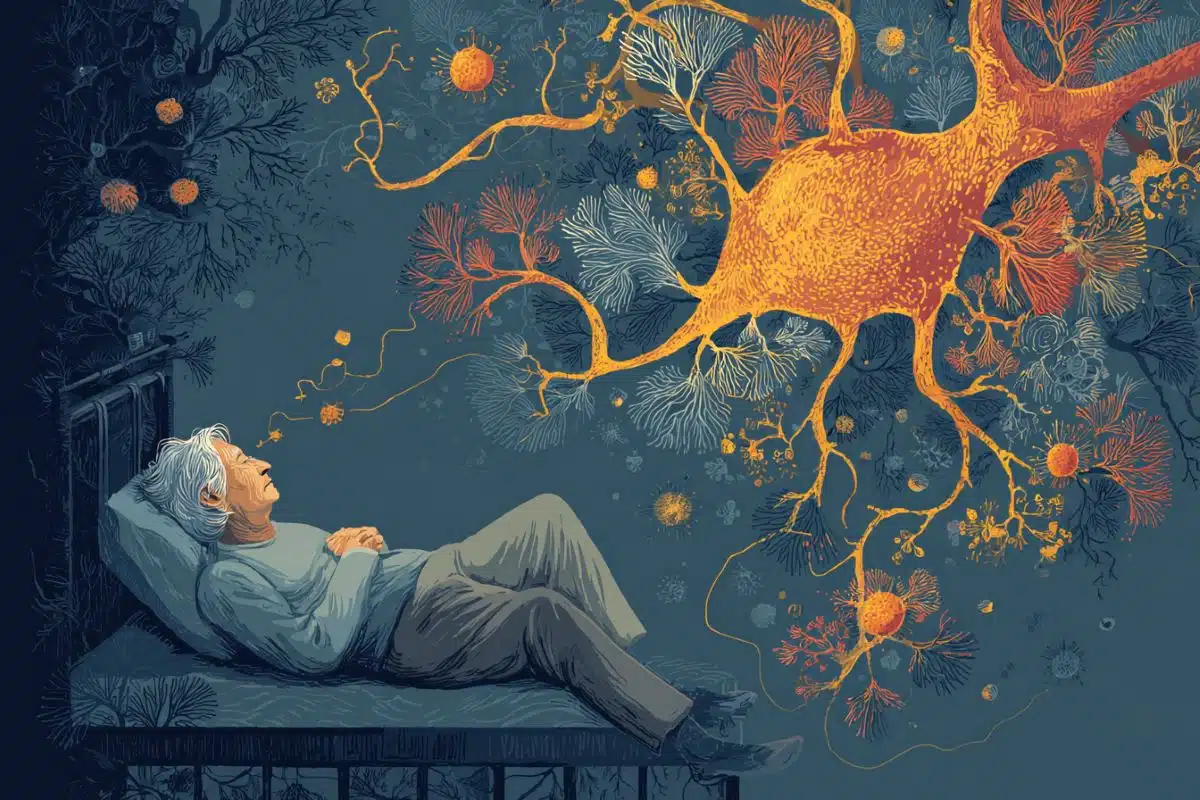
- “Stress-Primed” Microglia: While healthy microglia have a branched, tree-like structure for monitoring the brain, Souza’s team observed “stress-primed” cells with extra branches. These irregular shapes indicate the cells are no longer functioning normally.
- Debris Accumulation: When microglia malfunction, they fail to clear damaged cells and amyloid plaques. This buildup is a primary contributor to the development and worsening of dementia symptoms.
- EV Therapy Breakthrough: Developed by Ashok Shetty, extracellular vesicle therapy uses stem-cell-derived nanoparticles to send anti-inflammatory signals to the brain. These “EVs” act as a shield, preventing microglia from shifting into a damaged, stress-primed state.
- Environmental vs. Genetic Risk: Souza emphasizes that only 3% of Alzheimer’s risk is genetic, while the remaining 97% is environmental, making the study of sleep and lifestyle factors critical for prevention.
Source: Texas A&M
Alzheimer’s disease and other dementias impact approximately 55 million people worldwide, including 7.2 million cases in the United States alone. With 10 million new cases globally each year, the worldwide number is expected to rise to 78 million by 2030 and 139 million in 2050.
In response these alarming trends, Texas A&M Health and the Division of Research created the Dementia & Alzheimer’s Research Initiative (DARI) to prevent, more quickly detect and more effectively treat dementia. DARI recently awarded $1.325 million in seedling grants to support 11 research projects at Texas A&M University aimed at Alzheimer’s disease and other dementias.
Karienn Souza, research assistant professor at the Texas A&M University Naresh K. Vashisht College of Medicine, is one of the inaugural 2026 seedling grant awardees.
Last year, in collaboration with David Earnest, Souza published a study examining how circadian rhythm dysregulation during shift work may accelerate cognitive aging. To study this, her team developed an animal model to better understand what happens chronically to the brain’s immune system when sleep-wake cycles become out of sync.
What they found was striking: Over time, dysregulated circadian rhythms led to activated microglia, the cells that act as the brain’s clean-up crew and play a key role in regulating inflammation.
“We discovered the changes in the peripheral immune system, but we also discovered some changes in microglia,” Souza said.
“Microglia are immune cells in your brain. They change shape depending on what’s happening in your body or brain. They can go from normal, functioning cells to inflammatory-response type cells, where they can atrophy or change shape depending on the type of inflammation or condition your brain is in.”
Normal microglia have a branched, tree-like structure that allows them to monitor and protect the brain. But the irregular cells Souza’s team observed are “stress-primed microglia,” appearing with extended or extra branches — a sign they may not be functioning normally.
The hypothesis is that when microglia malfunction, debris, damaged cells and even amyloid plaques can accumulate in the brain. Over time, that buildup may contribute to the development or worsening of dementia symptoms.
In Souza’s funded DARI project, the team is attempting to target microglia by applying this model to test a new therapeutic intervention developed by Ashok Shetty, distinguished professor of cell biology and genetics at the Vashisht College of Medicine. Shetty’s previously published work on extracellular vesicle (EV) therapy has shown promise in preventing microglia from developing a stress-primed appearance.
EV therapy works by releasing nano-sized particles, called extracellular vesicles, derived from stem cells that contain protective proteins. Once inside the brain, these EVs interact with microglia and send anti-inflammatory signals to the microglia, allowing them to continue performing their job without shifting into a stress-primed state. By preserving healthy microglia, the brain experiences less of the inflammation and damage associated with Alzheimer’s disease.
Souza plans to use the DARI funding to further examine microglia and test whether Shetty’s EV therapy can prevent — or even reverse — inflammation in the brain linked to dementia.
With the data gathered through the seedling grant project, Souza hopes to expand understanding of how environmental factors like irregular work or social schedules influence Alzheimer’s risk and identify strategies to prevent disease progression.
“Only 3% of Alzheimer’s risk is genetic, and the rest is environmental,” she said.
That makes finding what environmental risks may cause the disease critical to preventing and curing it.
For Souza, DARI represents an opportunity for meaningful collaboration.
“I’m just very grateful that the university is recognizing the need for internal support, so we can pursue collaborations like this,” she said. “Dr. Shetty is a world-renowned scientist in aging and inflammation, and I’m earlier in my career. DARI allows us to combine our expertise in ways that could potentially change so many people’s lives.”
Key Questions Answered:
A: It’s not that simple, but chronic circadian dysregulation acts as a major environmental stressor. Over time, this “out of sync” lifestyle primes your brain’s immune cells to stop cleaning up toxic debris, which can accelerate cognitive aging and increase disease risk.
A: Think of them as tiny “instruction packets” sent from stem cells. These nano-sized particles contain protective proteins that travel to the brain and tell your immune cells to stay in their “protective” mode rather than switching to “inflammatory” mode.
A: That is the goal of the DARI initiative. By identifying environmental triggers—like irregular social or work schedules, and developing therapies like EVs to counter their effects, researchers hope to stop the disease before it starts.
Editorial Notes:
- This article was edited by a Neuroscience News editor.
- Journal paper reviewed in full.
- Additional context added by our staff.
About this Alzheimer’s disease research news
Author: Laura Tolentino
Source: Texas A&M
Contact: Laura Tolentino – Texas A&M
Image: The image is credited to Neuroscience News


