

Summary: Corporal punishment may detrimentally harm brain development, a new study reports. Previous studies have revealed links between spanking and psychological problems, including depression and anxiety. The new study found children who experienced spanking as a form of punishment demonstrated greater activation in areas of the prefrontal cortex in response to fearful stimuli.
Source: Harvard
Spanking may affect a child’s brain development in ways similar to more severe forms of violence, according to a new study led by Harvard researchers.
The research, published Friday in the journal Child Development, builds on existing studies that show heightened activity in certain regions of the brains of children who experience abuse in response to threat cues.
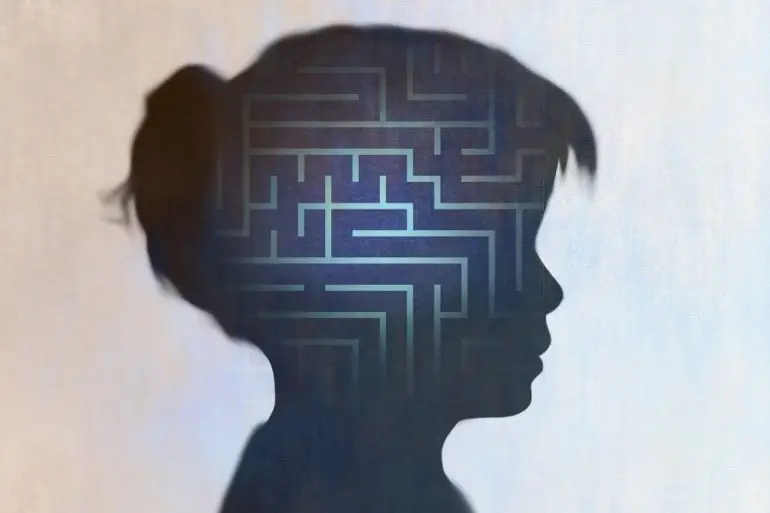
The group found that children who had been spanked had a greater neural response in multiple regions of the prefrontal cortex (PFC), including in regions that are part of the salience network. These areas of the brain respond to cues in the environment that tend to be consequential, such as a threat, and may affect decision-making and processing of situations.
“We know that children whose families use corporal punishment are more likely to develop anxiety, depression, behavior problems, and other mental health problems, but many people don’t think about spanking as a form of violence,” said Katie A. McLaughlin, John L. Loeb Associate Professor of the Social Sciences, director of the Stress & Development Lab in the Department of Psychology, and the senior researcher on the study.
“In this study, we wanted to examine whether there was an impact of spanking at a neurobiological level, in terms of how the brain is developing.”
According to the study’s authors, corporal punishment has been linked to the development of mental health issues, anxiety, depression, behavioral problems, and substance use disorders. And recent studies show that approximately half of parents in U.S. studies reported spanking their children in the past year and one-third in the past week. However, the relationship between spanking and brain activity had not previously been studied.
McLaughlin and her colleagues — including Jorge Cuartas, first author of the study and a doctoral candidate in the Harvard Graduate School of Education, and David Weissman, a postdoctoral fellow in the Stress & Development Lab — analyzed data from a large study of children between the ages of 3 and 11. They focused on 147 children around ages 10 and 11 who had been spanked, excluding children who had also experienced more severe forms of violence.
Each child lay in an MRI machine and watched a computer screen on which were displayed different images of actors making “fearful” and “neutral” faces. A scanner captured the child’s brain activity in response to each kind of face, and those images were analyzed to determine whether the faces sparked different patterns of brain activity in children who were spanked compared to those who were not.
“On average, across the entire sample, fearful faces elicited greater activation than neutral faces in many regions throughout the brain … and children who were spanked demonstrated greater activation in multiple regions of PFC to fearful relative to neutral faces than children who were never spanked,” the researchers wrote.
By contrast, “There were no regions of the brain where activation to fearful relative to neutral faces differed between children who were abused and children who were spanked.”
The findings are in line with similar research conducted on children who had experienced severe violence, suggesting that “while we might not conceptualize corporal punishment to be a form of violence, in terms of how a child’s brain responds, it’s not all that different than abuse,” said McLaughlin. “It’s more a difference of degree than of type.”
Researchers said the study is a first step toward further interdisciplinary analysis of spanking’s potential effects on children’s brain development and lived experiences.
“These findings aligned with the predictions from other perspectives on the potential consequences of corporal punishment,” studied in fields such as developmental psychology and social work, said Cuartas.
“By identifying certain neural pathways that explain the consequences of corporal punishment in the brain, we can further suggest that this kind of punishment might be detrimental to children and we have more avenues to explore it.”
However, they noted that their findings are not applicable to the individual life of each child.
“It’s important to consider that corporal punishment does not impact every child the same way, and children can be resilient if exposed to potential adversities,” said Cuartas. “But the important message is that corporal punishment is a risk that can increase potential problems for children’s development, and following a precautionary principle, parents and policymakers should work toward trying to reduce its prevalence.”
Ultimately, added McLaughlin, “We’re hopeful that this finding may encourage families not to use this strategy, and that it may open people’s eyes to the potential negative consequences of corporal punishment in ways they haven’t thought of before.”
Funding: This research was supported by the National Institute of Mental Health.
About this child development research news
Source: Harvard
Contact: Manisha Aggarwal-Schifellite – Harvard
Image: The image is credited to Harvard
Original Research: Open access.
“Corporal Punishment and Elevated Neural Response to Threat in Children” by Katie A. McLaughlin et al. Child Development
Abstract
Corporal Punishment and Elevated Neural Response to Threat in Children
Spanking remains common around the world, despite evidence linking corporal punishment to detrimental child outcomes.
This study tested whether children (Mage = 11.60) who were spanked (N = 40) exhibited altered neural function in response to stimuli that suggest the presence of an environmental threat compared to children who were not spanked (N = 107).
Children who were spanked exhibited greater activation in multiple regions of the medial and lateral prefrontal cortex (PFC), including dorsal anterior cingulate cortex, dorsomedial PFC, bilateral frontal pole, and left middle frontal gyrus in response to fearful relative to neutral faces compared to children who were not spanked.
These findings suggest that spanking may alter neural responses to environmental threats in a manner similar to more severe forms of maltreatment.


