

Summary: The placebo effect, where the mere expectation of relief triggers actual healing, is one of medicine’s most enduring mysteries. Now, a multi-institutional team has mapped the exact neural highway responsible for this phenomenon.
By “reverse-translating” human placebo protocols into mice, researchers identified a specific circuit linking the cortex to the brainstem and pinpointed the exact site where the brain releases its own natural painkillers (endorphins) to shut down pain.
Key Findings
- Broad-Spectrum Relief: Training mice to expect relief from one type of pain (like heat) created a “resilience” that applied to entirely different types of pain, such as injury-related inflammation.
- Preemptive Resilience: The study suggests that humans could be “trained” via placebo conditioning before a major event, like surgery, to build a natural resistance to post-operative pain.
- The Addiction Alternative: Since the placebo effect uses the brain’s internal opioid system, it provides “broad-spectrum” relief without the dangerous side effects or addiction risks associated with external opioid drugs.
- Trans-Species Logic: By showing that mouse brain areas correspond exactly to those implicated in human studies, the research validates using rodent models to develop new mental “training” protocols for chronic pain patients.
Source: UCSD
Placebo effects, in which patients experience relief without therapeutic treatment, increasingly have been considered as potentially powerful clinical treatments for ailments such as depression and pain. Yet the neurological mechanisms underlying such processes are not fully understood.
Now, a multi-institutional team led by the University of California San Diego’s Matthew Banghart, an associate professor in the School of Biological Sciences, has pinpointed the brain circuitry responsible for placebo pain relief.
Their findings, reported in the journal Neuron, describe brain regions that support placebo effects and identify sites where endogenous opioid neuropeptides (commonly referred to as endorphins) provide signals that are critical for placebo pain relief.
The study is the first to establish placebo mechanisms using a “reverse translation” method, in which a placebo protocol that works in humans was directly adapted to mice. Importantly, working with labs at the University of Pennsylvania and UC Irvine, they detected activity in mouse brain areas that correspond to those previously implicated in human studies.
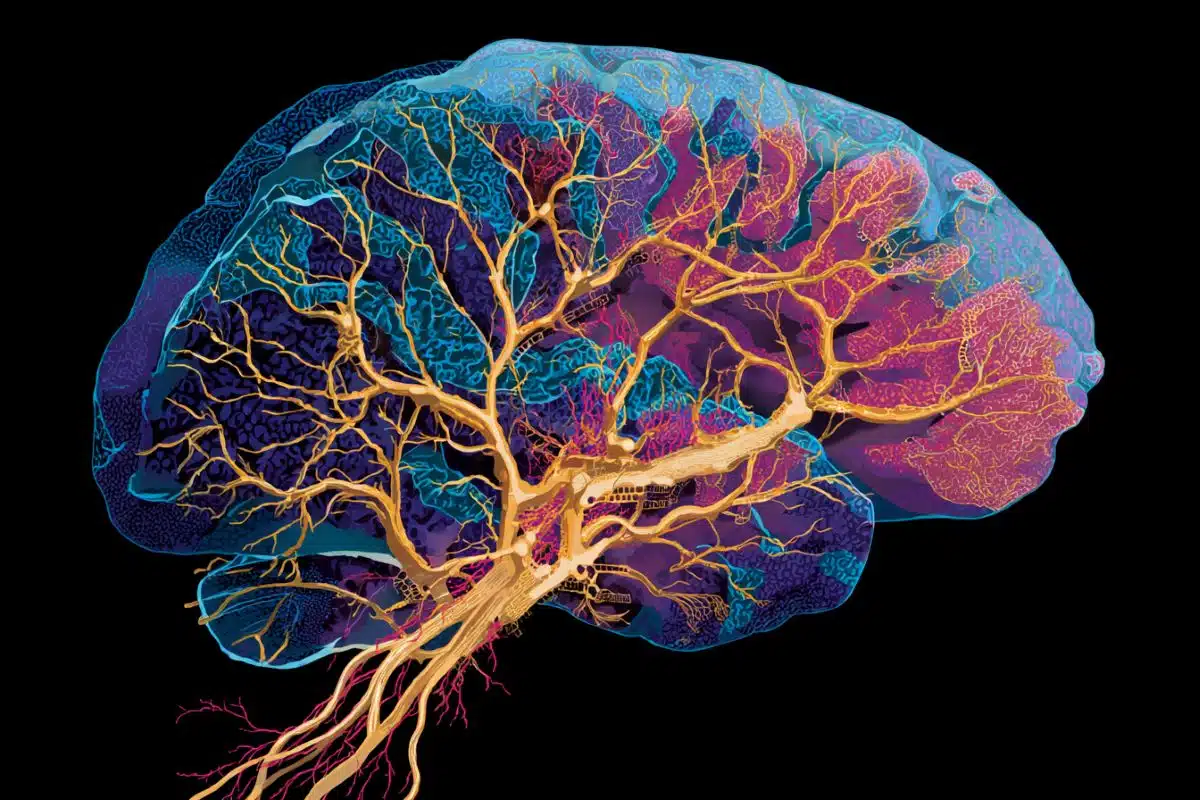
By precisely mapping neural pathways and manipulating brain activity in mice, the researchers uncovered essential roles for neural circuits linking the cortex to the brainstem and spinal cord during placebo pain relief.
“We took a placebo protocol from humans and worked it out in mice, and used that to deconstruct the underlying mechanisms,” said Banghart, a faculty member in the Department of Neurobiology. “We went much further than previous studies and pinpointed a site at which endogenous opioid peptides are critical, which previously had not been done.”
Notably, they discovered that training mice to exhibit a placebo effect with one type of pain produces marked relief of several different types of pain, including pain caused by injury.
“This finding has direct implications for how placebo training in humans might be used to produce resilience to future pain that results from injury, whether anticipated — such as an upcoming surgery — or unanticipated pain, such as a broken bone from a fall,” said Banghart.
The results of the research also offer hope of using such “expectancy-driven” placebo effects as a substitute for painkillers that can cause addiction. It’s possible, Banghart says, that patients in clinical settings could be trained to build preemtive resilience to pain using placebo conditioning.
To illuminate the role of naturally occurring opioid peptides in specific areas of the brain, the researchers implemented two emerging technologies. First, using novel sensors developed with colleagues at UC Davis and the Max Planck Florida Institute for Neuroscience, they detected opioid peptide signaling during placebo trials in a region called the ventrolateral periaqueductal gray (vlPAG), which is well-known as a hub for pain signaling.
To establish that these native opioid peptides actually drive pain relief, similar to opioid painkillers such as morphine, the researchers employed a light-activated drug developed in Banghart’s lab called PhNX, for photoactivatable naloxone.
Naloxone, also known as Narcan, is the medicine used to reverse opioid overdoses by blocking opioid receptors. Using light, they were able to precisely control the site and timing of opioid signaling interference. Using PhNX, the scienists found that both morphine-induced pain relief and placebo pain relief rely on opioid signaling in the vlPAG brain region.
Co-first author Janie Chang-Weinberg, a PhD student in the Biological Sciences Graduate Program, states: “We essentially trained a mouse brain to create its own broad-spectrum painkillers on demand, precisely where they are needed to treat pain, without the off-target effects of opioid-based painkillers.”
“These results increase the translational relevance of rodent placebo models to clinical contexts, in which patients’ prior experiences with drugs and treatment settings can generalize to broader expectations of improvement,” the researchers conclude in their paper.
Future studies based on the new results will dig more deeply into how placebo learning unfolds in the brain. A primary goal of future studies will be to evaluate different placebo training strategies in mice with hopes of developing protocols that readily translate to produce placebo pain resilience in the general population, especially people living with chronic pain.
“This is something that can be very powerful,” said Banghart. “We should be tapping into it intentionally in order to reduce pain and suffering.”
Key Questions Answered:
A: It starts in your head, but it ends in your spinal cord. This study proves that the “expectation” of feeling better triggers a physical release of endorphins that travel down to the brainstem to physically block pain signals. It is a biological reality, not an imaginary one.
A: That is the ultimate goal. If we can teach the brain to “create its own painkillers on demand,” we could significantly reduce our reliance on synthetic opioids. The researchers believe we should be tapping into this “natural pharmacy” intentionally to treat chronic pain and recovery.
A: It’s all about conditioning. By repeatedly pairing a specific environment or “cue” with pain relief, the brain learns to associate that cue with feeling better. Eventually, the brain starts releasing its own painkillers as soon as it sees the cue, even if no actual medicine is given.
Editorial Notes:
- This article was edited by a Neuroscience News editor.
- Journal paper reviewed in full.
- Additional context added by our staff.
About this pain and neurology research news
Author: Mario Aguilera
Source: UCSD
Contact: Mario Aguilera – UCSD
Image: The image is credited to Neuroscience News
Original Research: Open access.
“Top-down control of the descending pain modulatory system drives multimodal placebo analgesia” by Giulia Livrizzi, Janie Chang-Weinberg, Desiree A. Johnson, Susan T. Lubejko, Jingzhu Liao, Blake A. Kimmey, Chunyang Dong, Yuan Li, Kevin T. Beier, Gregory Corder, Lin Tian, and Matthew R. Banghart. Neuron
DOI:10.1016/j.neuron.2026.03.025
Abstract
Top-down control of the descending pain modulatory system drives multimodal placebo analgesia
Placebo analgesia, in which expectation and prior experience suppress pain in response to an inert treatment, is a powerful clinical phenomenon whose causal neural basis remains unclear.
By reverse-translating a human placebo paradigm to mice, we identify neural circuits linking the cortex to the brainstem that causally mediate placebo pain relief. Placebo conditioning suppresses both nociceptive and affective-motivational pain behaviors and generalizes to unconditioned forms of pain.
Descending neurons in the ventrolateral periaqueductal gray (vlPAG) are indispensable for both morphine and placebo analgesia, but the placebo effect additionally requires medial prefrontal and anterior cingulate cortical inputs to the vlPAG.
Conditioning potentiates noxious stimulus-evoked endogenous opioid release in the vlPAG, which causally gates descending pain modulation. Remarkably, conditioning in pain-naive animals produces lasting placebo analgesia after injury.
These findings identify a central circuit mechanism of placebo analgesia and suggest a translational strategy in which preventive placebo conditioning can build resilience to pain.


