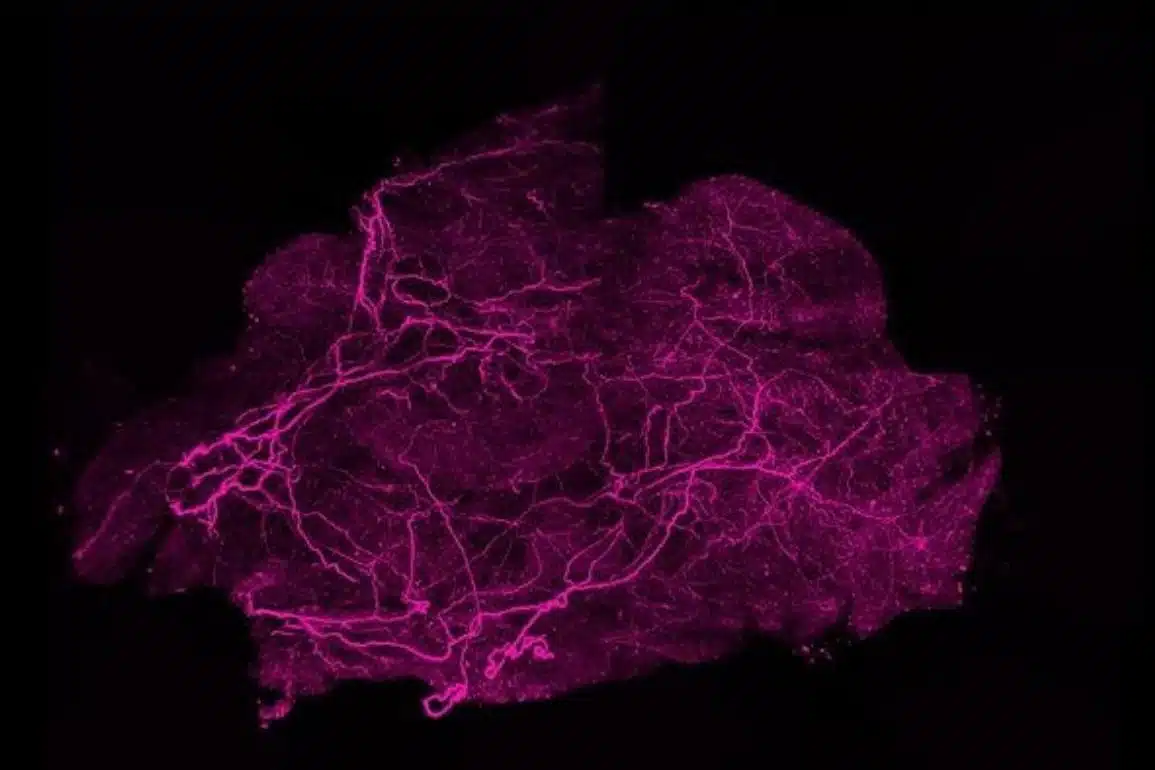
Summary: Researchers have demonstrated that memory decline and symptoms of Alzheimer’s may not be irreversible. By using “partial reprogramming” on specific groups of neurons called engrams—the cells that form a physical memory trace—a team at EPFL successfully restored learning and memory in aged mice.
Using a gene therapy cocktail known as “OSK” (Oct4, Sox2, and Klf4), the scientists were able to reset the molecular clock of these specific neurons, bringing them back to a younger, more plastic state. This targeted approach not only recovered recent memories in the hippocampus but also restored long-term memories in the prefrontal cortex, offering a potential new paradigm for treating age-related cognitive decline and dementia.
Key Facts
- The “OSK” Cocktail: The study utilized three specific genes (Oct4, Sox2, Klf4) to “partially reprogram” neurons, resetting age-related molecular changes without causing the cells to lose their identity.
- Targeting Engrams: Unlike broad brain treatments, this approach specifically targeted “engram cells”—the sparse groups of neurons that actually store specific memories.
- Alzheimer’s Application: In mouse models of Alzheimer’s, the reprogramming improved spatial learning strategies and restored long-term memory that had previously been impaired.
- Molecular Rejuvenation: The treated neurons showed physical signs of “youth,” including restored nuclear structures and improved firing patterns that typically degrade with age.
Source: EPFL
Age-related memory decline and neurodegenerative diseases like Alzheimer’s are often thought of as irreversible. But the brain is not static; neurons continually adjust the strength of their connections, a property called “synaptic plasticity”, and this flexibility is the basis of memory and learning.
But aging and Alzheimer’s disrupt many cell processes that support synaptic plasticity. A key question is whether and how the affected cells can be helped to sustain their plasticity.

Memories are thought to rely on sparse groups of neurons called “engrams”, which become active during learning and reactivated during recall, forming part of the brain’s “memory trace”. In aged brains and animal models of Alzheimer’s disease, engrams can malfunction, and memory recall suffers.
A team led by Johannes Gräff at EPFL’s Brain Mind Institute asked whether rejuvenating these engram neurons could recover memory after decline has already begun?
In a study published in Neuron, the team reports that “partial reprogramming” of engram neurons restores memory performance in multiple mouse settings. The approach uses a short, controlled pulse of three genes, Oct4, Sox2 and Klf4 referred together as “OSK”.
Previous studies have shown that carefully timed expression of these factors can reset several aging-related features in cells. Here, the team targeted OSK specifically at the engram neurons that are active during learning, rather than broadly across the entire brain.
Tagging and controlling OSK
Working on mice, the researchers used gene therapy vectors (adeno-associated viruses) delivered by precise brain injections. They combined two elements: a system that adds a fluorescent tag to neurons that are activated by learning, and a switch that briefly turns OSK on during a defined time window.
The team used their approach in brain areas known to support different kinds of memory: the dentate gyrus of the hippocampus, which is important for learning and recent recall, and the medial prefrontal cortex, which contributes to remote recall two weeks later.
Back to a younger state
In aged mice, briefly activating OSK in learning-related hippocampal engram neurons restored memory, essentially bringing performance back to levels seen in young controls. When the same approach was applied to prefrontal cortex engrams, it also recovered remote memories formed weeks earlier.
The reprogrammed engram neurons also showed signs of improved health. They maintained their neuronal identity and displayed molecular features associated with a younger state, including changes in nuclear structure linked to aging.
The team then tested mouse models of Alzheimer’s disease. In a spatial-learning task, the mice showed inefficient navigation and impaired memory strategies. Reprogramming dentate gyrus engrams improved learning strategies during training, while targeting prefrontal engrams restored long-term spatial memory.
Further analysis revealed that Alzheimer’s-related changes in gene activity and neuronal firing within engram cells were partly reversed by turning OSK on.
A proof of concept
The study stands as a proof of concept for restoring function in a specific group of memory-related neurons to improve memory performance, even after cognitive decline has begun. By limiting OSK expression to a small number of neurons and a short time window, the approach captures beneficial effects while reducing the risk of disrupting cell functions.
Key Questions Answered:
A: Yes, in a sense. The memory itself isn’t deleted; instead, the “hardware” (the neurons) holding that memory is refurbished. By making the neurons young and flexible again, the brain can once again access and process those memories as if it were decades younger.
A: No, and that’s the breakthrough. Broadly reprogramming the brain could be dangerous. This study precisely targeted only the neurons that were active during learning, meaning they only “fixed” the parts of the brain that were failing to recall specific information.
A: While this is a “proof of concept” in mice, it’s a major shift in thinking. It suggests that cognitive decline isn’t just about losing neurons—it’s about neurons becoming “too old” to function. If we can rejuvenate them, we might be able to restore function even after the disease has started.
Editorial Notes:
- This article was edited by a Neuroscience News editor.
- Journal paper reviewed in full.
- Additional context added by our staff.
About this memory and neuroscience research news
Author: Nik Papageorgiou
Source: EPFL
Contact: Nik Papageorgiou – EPFL
Image: The image is credited to Neuroscience News
Original Research: Open access.
“Cognitive rejuvenation through partial reprogramming of engram cells” by Gabriel Berdugo-Vega, Cesar Sierra, Simone Astori, Veronika Calati, Jules Orsat, Marianne Julie Scoglio, Carmen Sandi, Johannes Gräff. Neuron
DOI:10.1016/j.neuron.2025.11.028
Abstract
Cognitive rejuvenation through partial reprogramming of engram cells
Counteracting cognitive decline is a declared goal of regenerative medicine. Recently, partial cellular reprogramming has emerged as a promising strategy to promote tissue regeneration and restore cellular function, but whether this approach bears fruit when targeted to cell populations underlying cognitive processes remains unknown.
Here, we report that partial reprogramming of engram neurons—bona fide memory trace cells—by OSK-mediated gene therapy reversed the expression of senescence- and disease-related cellular hallmarks in aged mice and models of Alzheimer’s disease (AD), re-established aberrant epigenetic-transcriptional patterns pertaining to synaptic plasticity, and counteracted AD-typical neuronal hyperexcitability.
Importantly, irrespective of the brain area targeted or the behavioral paradigm employed, engram reprogramming also recovered learning and memory capacities to levels of healthy young animals, suggesting cognitive rejuvenation.
These results posit that partial reprogramming of specific cell populations in the brain can be exploited for cognitive restoration in aging and disease.