

Summary:
Researchers at Washington University School of Medicine in St. Louis have solved a major biological mystery behind Angelman syndrome, a rare neurodevelopmental disorder caused by the loss of the maternal UBE3A gene. In a study published in Nature, scientists discovered that the absence of UBE3A leads to an abnormal accumulation of asparagine synthetase, a normally benign metabolic enzyme. This buildup tricks developing neurons into sensing starvation and entering an unneeded emergency stress mode that halts protein synthesis and stunts brain growth. Blocking this downstream enzyme restored normal brain development and behavior in mice.
Key Facts:
- The False Stress Alarm: The absence of the ubiquitin ligase enzyme encoded by UBE3A causes the metabolic enzyme asparagine synthetase to accumulate, tricking neurons into perceiving acute metabolic stress when none exists.
- Conservation Halts Growth: Believing they are under stress, developing neurons conserve cellular resources by dramatically curtailing protein synthesis, resulting in microcephaly and cognitive deficits characteristic of Angelman syndrome.
- Rescuing the Phenotype: Genetically or pharmacologically blocking asparagine synthetase accumulation downstream restored normal neural protein synthesis, normalized brain growth, and reversed behavioral deficits in mouse models.
Source: Washington University School of Medicine in St. Louis
Angelman syndrome is a severe genetic neurodevelopmental condition that occurs in roughly one in 20,000 live births. Affected children typically appear healthy at birth, but around six months of age, profound developmental delays, motor and balance deficits, absence of speech, seizures, and microcephaly begin to manifest.
Genetically, the cause of Angelman syndrome has been clear for decades: the loss of function or deletion of a single maternal gene known as UBE3A. However, translating this simple genetic fact into viable clinical therapies has proven remarkably difficult. Scientists have struggled to pinpoint why the absence of this single gene causes such severe neurological damage throughout the developing brain.
Now, a study led by researchers at Washington University School of Medicine in St. Louis and published in Nature maps the precise molecular chain reaction that stalls brain growth in Angelman syndrome.
Led by senior author Jason Yi, PhD, assistant professor of neuroscience at WashU Medicine, the team discovered that the disorder is driven not by direct cellular toxicity, but by a mistaken cellular stress response that tricks developing neurons into halting growth.
Unraveling the Housekeeping Breakdown
The UBE3A gene codes for ubiquitin ligase, an essential cellular housekeeping protein responsible for tagging surplus or unneeded proteins for destruction. Because ubiquitin ligase is active across the brain and intersects with at least 60 distinct biochemical pathways, identifying which cellular processes directly cause Angelman syndrome has been a monumental hurdle.
To isolate the culprit, Dr. Yi and his team generated cell models lacking the functional UBE3A gene. Through systematic proteomic screening, the researchers identified 23 candidate proteins that abnormally accumulated in the gene’s absence.
Among these candidates, one metabolic enzyme stood out: asparagine synthetase (ASNS), a protein responsible for synthesizing the amino acid asparagine for general cellular protein construction.
The Cost of an Unwarranted Defense
Under ordinary physiological conditions, asparagine synthetase is harmless. However, in genetically modified mouse models of Angelman syndrome, the researchers discovered that the uninhibited accumulation of asparagine synthetase activated a persistent cellular stress response within the brain.
This discovery was unexpected, as asparagine synthetase does not engage canonical cellular stress sensors and causes no direct physical damage to cellular membranes or organelles. Instead, its excess buildup serves as an aberrant biochemical trigger that signals to the cell that resources are depleted.
“The neurons are tricked into thinking that they’re in stress when they’re not — that’s bad because they will then not grow normally,” said Dr. Yi, noting that children with Angelman syndrome frequently have noticeably smaller brain volumes than neurotypical peers. “It’s a reaction from the brain trying to conserve resources to protect itself. It does suggest that there is a dysregulation in the brain we might be able to correct.”
In an attempt to conserve metabolic energy, the deceived neurons downregulate protein synthesis and stop expanding their dendritic networks, effectively freezing normal neurodevelopmental growth.
Resetting the Molecular Dominoes
To test whether this false alarm could be overridden, the research team intervened downstream in the molecular cascade. By experimentally blocking the production and accumulation of asparagine synthetase in Angelman syndrome mice, the researchers silenced the abnormal stress signaling.
Once the false alarm was shut off, cortical neurons resumed robust protein synthesis, brain volumes normalized, and the animals exhibited substantial improvements in motor coordination and learning behaviors.
The investigation marks the first time that an accumulation of asparagine synthetase has been directly linked to a neurological condition, introducing a novel paradigm: protein imbalances that do not directly kill cells can still induce developmental arrest by hijacking endogenous stress responses.
Dr. Yi’s laboratory is now identifying the specific receptors and pathways through which asparagine synthetase trips the brain’s stress wire, while mapping the precise anatomical regions and developmental windows where pharmacological inhibitors would be most effective.
“We still don’t know a whole lot about the disease,” Yi concluded. “We haven’t been able to identify all of the things that the missing gene is doing and rescue the things that it is not doing in Angelman’s syndrome. But I think our data are the most complete so far to begin answering those questions.”
Editorial Notes:
- This article was edited by a Neuroscience News editor.
- Journal paper reviewed in full.
- Additional context added by our staff.
About this genetics and neurodevelopment Research:
- Media Contact: Abeeha Shamshad
- Source: WashU Medicine
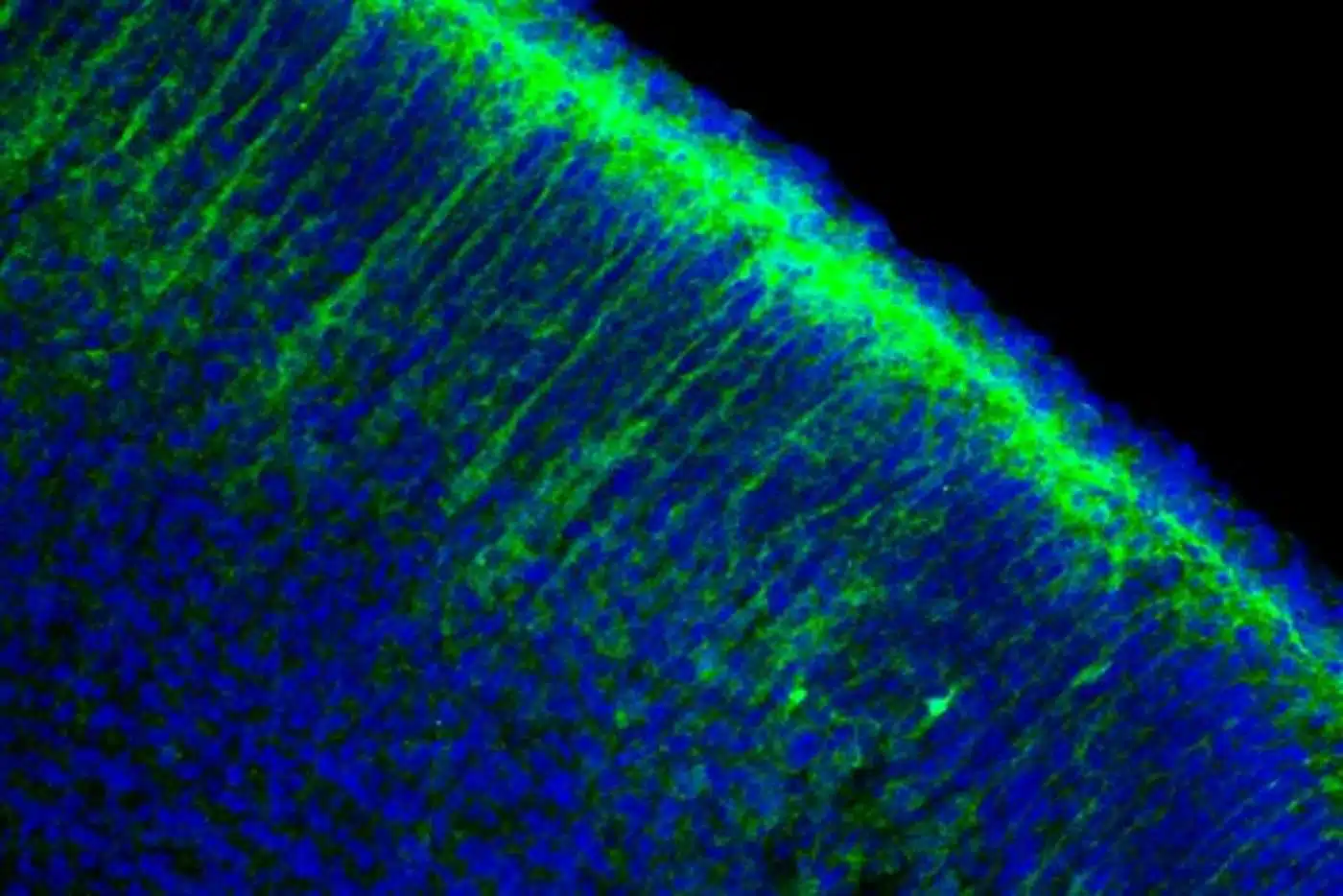
- Image Credit: Image credited to Jason Yi
- Original Research is Open Access: Nature (Oct 1, 2026). “Persistent neuronal stress signaling underlies Angelman syndrome phenotypes.” Authors: Kwang-Soo Kim, Cory Gardner, Alissa Cullen, Jalin A. Stelzer, Kevin Cho, Ashish Sharma, Mati T. Nemera, Travis Law, Huma Naz, Guoyan Zhao, Harrison W. Gabel, Gary J. Patti, Erik S. Musiek, Tae-Hyuk Ahn & Jason J. Yi.
- DOI: 10.1038/s41586-026-11165-4
Abstract
Persistent neuronal stress signaling underlies Angelman syndrome phenotypes
Angelman syndrome is a severe neurodevelopmental disorder caused by the loss of UBE3A, a gene that encodes an E3 ubiquitin ligase. The mechanisms that underlie Angelman syndrome are not well understood, and in particular, the link between UBE3A substrates and disease phenotypes remains uncertain.
Here, using gain- and loss-of-function mutations in UBE3A along with unbiased proteomics, we show that asparagine synthetase (ASNS) is a target of UBE3A. We find that ASNS protein abundance is increased in the brains of Ube3a-null mice and in human neurons.
Genetic correction of ASNS overabundance rescues microcephaly and many behavioural deficits. Detailed molecular analyses show that ASNS overabundance activates stress signalling and causes a global reduction in neuronal protein synthesis. Our results suggest that loss of UBE3A traps neurons in a state of persistent stress and stunts neuronal growth during developmentally sensitive periods.
Moreover, our results indicate that targeting ASNS and the stress response could hold therapeutic potential in Angelman syndrome.


