Imaging technique offers novel way to monitor neurodegenerative disorders in live animal models of Parkinson’s disease.
Using a two-photon microscope capable of peering deep within living tissue, researchers at the University of California, San Diego School of Medicine have found new evidence that alpha-synuclein protein build-up inside neurons causes them to not only become “leaky,” but also to misfire due to calcium fluxes.
The findings – the first recorded in vivo using a transgenic mouse model of Parkinson’s disease – are published in the July 18 issue of The Journal of Neuroscience and provide new insights into how Parkinson’s disease and other neurodegenerative disorders known as synucleinopathies work and progress at the cellular level.
Previous in vitro studies using cell cultures had suggested abnormal accumulation of alpha-synuclein dysregulated intracellular handling and movement of calcium, which is used as a signaling molecule and neurotransmitter. It was unclear, however, whether calcium alterations occurred in more complex, living animals.
“This is the first time we’ve been able to verify the role of alpha-synuclein aggregates in vivo,” said senior author Eliezer Masliah, MD, professor of neurosciences and pathology.

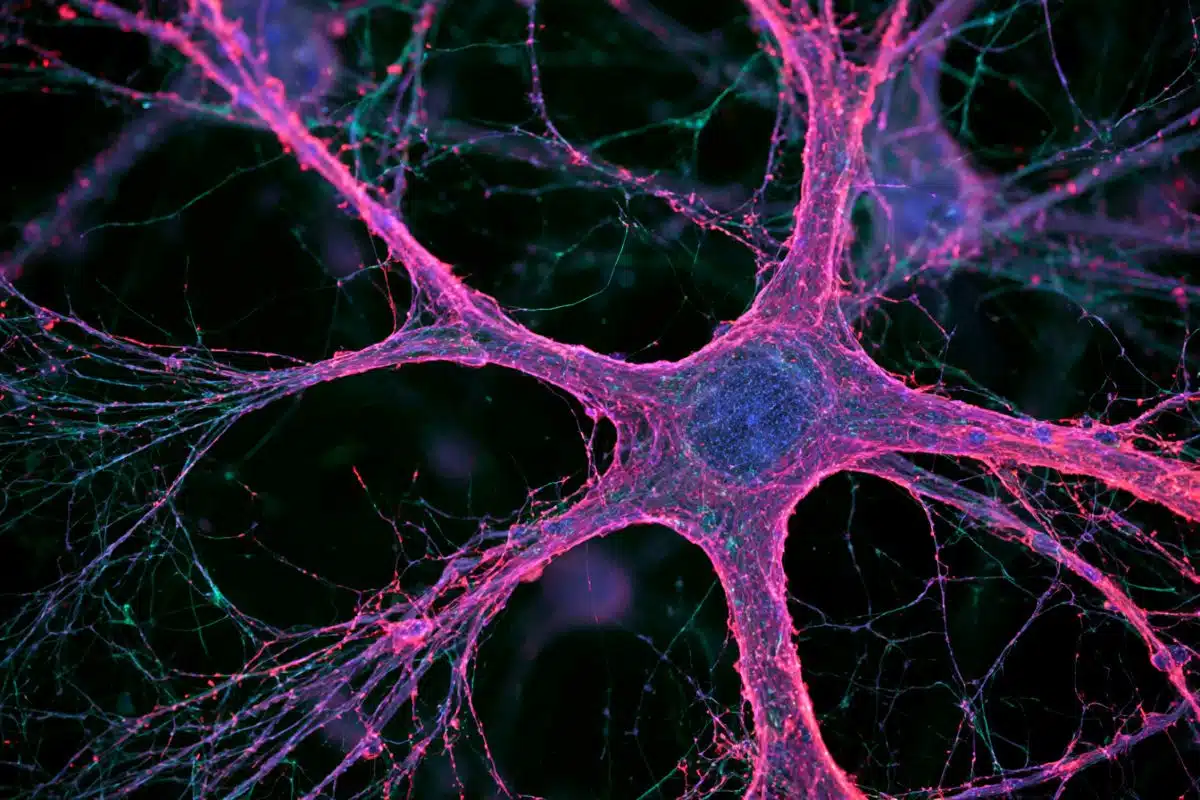
“The aggregates affect the cell membrane of neurons, making them more porous. They also affect the membranes of organelles inside neurons, such as the mitochondria that are part of the cell’s machinery for generating energy. Energy is necessary to pump calcium in and out of the cell. If mitochondria membranes are compromised, calcium accumulates, further damaging the neuron and causing it to misfire.”
Masliah said the new revelations, made using imaging technologies developed by first author Anna Devor, PhD, associate adjunct professor of neuroscience, may help scientists and doctors quantify and repair neuronal damage caused by alpha-synuclein accumulation.
“We have already started to utilize this discovery as a bio-marker and reporter of neuronal damage,” said Masliah. “We have compounds developed in collaboration with others to ‘plug’ the holes in the neurons and mitochondria and prevent the abnormal calcium currents. We can monitor in real-time in live animals how our drugs revert the toxic effects of alpha-synuclein. This represents a unique and fast strategy to evaluate novel compounds.”
Notes about this neuroscience research article
Co-authors are Lidia Reznichenko, Qun Cheng, Krystal Nizar, Payam A. Saisan, Edward M. Rockenstein, Tanya Gonzalez, Christina Patrick, Brian Spencer and Paula Desplats, Department of Neurosciences, UCSD; Sergey L. Gratiy, Department of Radiology, UCSD; Anders M. Dale, departments of Neurosciences and Radiology, UCSD; Anna Devor, departments of Neurosciences and Radiology, UCSD; and Athinoula A. Martinos Center for Biomedical Imaging, Massachusetts General Hospital, Harvard Medical School.
Funding for this research came, in part, from the National Institute on Aging (grant AG-02270), The National Institute of Neurological Disorders and Stroke (grants NS-051188, NS-057198 and NS-0507096), the National Institute of Biomedical Imaging and Bioengineering (grants EB-009118 and EB-000790) and the Short Family Fund.
Contact: Scott LaFee – University of California, San Diego
Source: University of California, San Diego press release
Image Source: Alpha-synuclein protein image is adapted from a RCSB Protein Data Bank image and is in the public domain. Feel free to use.
Original Research: Abstract for “In Vivo Alterations in Calcium Buffering Capacity in Transgenic Mouse Model of Synucleinopathy” by Lidia Reznichenko, Qun Cheng, Krystal Nizar, Sergey L. Gratiy, Payam A. Saisan, Edward M. Rockenstein, Tanya González, Christina Patrick, Brian Spencer, Paula Desplats, Anders M. Dale, Anna Devor, and Eliezer Masliah in Journal of Neuroscience 18 July 2012, 32(29):9992-9998; doi:10.1523/JNEUROSCI.1270-12.2012