

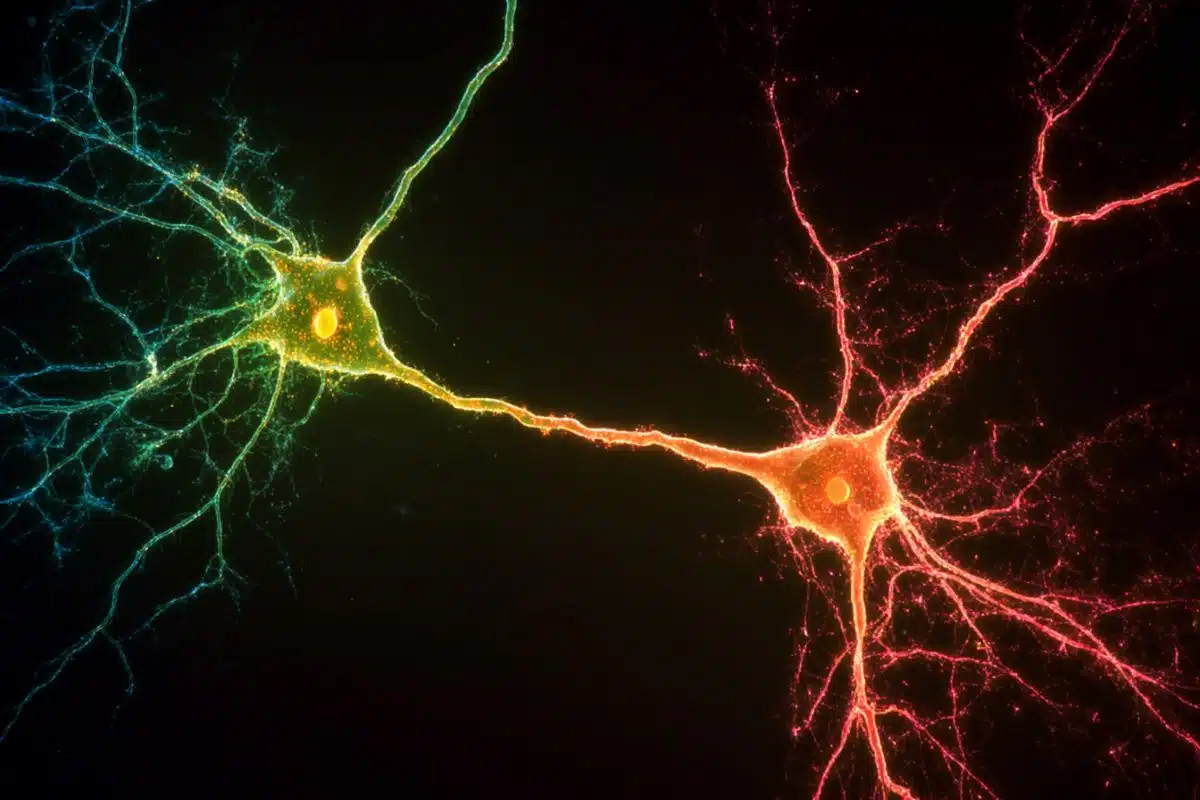
This shows serotonin neurons.
Fluoxetine treatment triggers early, transient prodynorphin (Pdyn) expression in one serotonin neuron population while slowly activating anti-depressive thyrotropin-releasing hormone (TRH) pathways in a separate subpopulation. Credit: Neuroscience News

SSRIs Push Serotonin Neurons in Opposite Directions

Summary: Researchers constructed a high-resolution spatial map of the molecular changes induced by selective serotonin reuptake inhibitors (SSRIs) within the brain’s primary serotonin hub. Investigators utilized spatial transcriptomics to trace gene expression shifts over short- and long-term treatment with fluoxetine.

The findings upend the traditional view of the serotonin system as a uniform network, demonstrating instead that two distinct neuron populations respond in opposite directions to the same drug. This structural divergence perfectly mirrors the clinical timeline of antidepressant therapy, where transient side effects precede therapeutic relief.

Conversation with Gemini

let’s go

How we sleep may have lasting impacts for our brain health as we age. A new University of Arizona study has found that several common sleep behaviors may be linked to signs of brain aging. 

The study, published in the journal Alzheimer’s & Dementia, used existing brain scans and questionnaire responses from more than 23,000 middle-aged and older adults from a large biomedical database. The work is part of a broader collaborative project between the U of A Department of Psychology, the Zuckerman College of Public Health and the University of Southern California. 

The researchers identified three sleep behaviors distinctly associated with a marker of brain aging in healthy people: sleeping outside the recommended seven-to-nine-hour range, frequent daytime napping and sleeplessness. All three were linked to greater volume of white matter lesions, areas of damage in the brain that can accumulate with age and are tied to a higher risk of dementia, including Alzheimer’s disease. 

Madeline Ally, the study’s lead author and a graduate researcher at the Department of Psychology, said that sleep is often studied as one overall measure rather than a collection of distinct patterns and habits, which can obscure how sleep relates to brain aging. 

“Sleep is a universal but complex behavior, and there is still much to learn about how different aspects of sleep relate to brain health,” Ally said. 

For the study, participants completed a baseline questionnaire from 2006 to 2010 on five sleep behaviors: sleep duration, daytime napping, sleeplessness, unintentional daytime dozing and snoring. About nine years later, the same participants underwent brain MRI scans, which the researchers used to measure white matter lesion volumes. The study was conducted in collaboration with David Raichlen, the lead collaborator at the University of Southern California, and a professor of human and evolutionary biology. 

All five behaviors were initially associated with greater lesion volume. But after the researchers accounted for related blood vessel health and lifestyle factors that can also affect the brain, such as high blood pressure, smoking and physical inactivity, three behaviors continued to stand out: sleeping outside the recommended range, frequent daytime napping and greater sleeplessness. Snoring and unintentional daytime dozing did not.

The findings on daytime napping were particularly interesting, since research shows short naps may also be helpful for alertness and cognition. Gene Alexander, the study’s senior author and a professor in the Department of Psychology, said that the questionnaire did not capture details on the length or timing of individual naps. Future work will need to test whether shorter, occasional naps have different effects on the brain over time compared to longer, more frequent ones.

In a follow-up analysis, the researchers took a closer look at sleep duration and found that participants sleeping fewer than seven hours per night had increased lesion volume compared to those sleeping within the recommended range.

“Our findings suggest that having too little sleep may lead to greater white matter lesion volumes in the brain as we age,” said Alexander. “We didn’t see greater white matter impacts in people who reported longer sleep durations, but this needs to be followed up in cohorts with more long sleepers.”

Nevertheless, Alexander said the three behaviors share a feature that makes them particularly important to study: each can be changed. 

“Sleep is one of those potentially modifiable risk factors. If we can improve the quality of our sleep, it may help reduce the impacts of brain aging and maybe even lower the risk for dementias like Alzheimer’s disease,” Alexander said. 

The Chronobiological Ledger: University of Arizona Ties Irregular Sleep Duration, Napping, and Sleeplessness to Increased White Matter Lesion Volumes

Summary

A large-scale neuroimaging and public health study led by the University of Arizona has isolated specific sleep behaviors that serve as early indicators of structural brain aging in healthy adults. Published in Alzheimer’s & Dementia, the investigation utilized longitudinal brain MRI data from over 23,000 middle-aged and older individuals to map the accumulation of white matter lesions—tissue damage closely tied to cognitive decline and an elevated risk of dementia. By tracking distinct habits rather than treating sleep as a single uniform metric, researchers proved that sleep durations outside the recommended seven-to-nine-hour window, frequent daytime napping, and persistent sleeplessness are directly linked to increased lesion volumes, independent of cardiovascular or lifestyle confounding factors.

Key Facts

  • The 23,000-Subject Dataset Audit: In collaboration with the University of Southern California and the Zuckerman College of Public Health, researchers evaluated questionnaire responses and subsequent brain scans from more than 23,000 middle-aged and older adults.
  • The White Matter Lesion Marker: The primary neuroimaging metric analyzed was the volume of white matter lesions—localized regions of tissue damage that accumulate with age and elevate the risk of developing Alzheimer’s disease.
  • Isolation of Three Risk Habits: While five sleep parameters were initially reviewed, three behaviors continued to stand out significantly after statistically adjusting for high blood pressure, smoking, and physical inactivity:
    • Sub-Optimal Duration: Consistently sleeping fewer than seven hours per night.
    • Frequent Daytime Napping: Regular daytime sleep episodes.
    • Sleeplessness: Persistent difficulties falling or staying asleep.
  • The Longitudinal Evaluation Timeline: Participants completed baseline sleep questionnaires between 2006 and 2010, tracking duration, napping, sleeplessness, unintentional daytime dozing, and snoring. Brain MRI scans were performed approximately nine years later to measure structural tissue changes.
  • The Lower-Limit Duration Threshold: Follow-up analysis verified that sleeping fewer than seven hours per night significantly increases lesion volumes compared to the standard recommended range, though further research is required to evaluate the long-term impact on long-sleeping cohorts.
  • The Napping Metric Nuance: Although brief naps can improve alertness, frequent napping correlated with higher tissue damage. Senior author Dr. Gene Alexander notes the baseline data did not isolate nap duration or timing, which will be the focus of future tracking.
  • Modifiable Intervention Horizons: Because sleep duration, napping frequency, and sleeplessness are modifiable risk factors, lead author Madeline Ally and the research team emphasize that improving sleep quality provides a defined, practical pathway to reduce the physical impacts of brain aging.

Neuroimaging Matrix: Visualizing Sleep Habit Disparity vs. White Matter Integrity

Sleep Behavior TrackedInitial Statistical AssociationPost-Lifestyle & Vascular Adjustment StatusNeuro-Structural Outcome on MRI
Short Sleep Duration (<7 Hours)Associated with higher tissue damage.Maintained: continues to stand out as a primary risk vector.Increased Lesion Volume: drives higher brain tissue atrophy.
Frequent Daytime NappingAssociated with higher tissue damage.Maintained: remains significantly linked to lesion accumulation.Increased Lesion Volume: correlates with accelerated structural aging.
Greater SleeplessnessAssociated with higher tissue damage.Maintained: persists as an independent indicator of risk.Increased Lesion Volume: linked to greater overall white matter decay.
Unintentional Daytime DozingAssociated with higher tissue damage.Eliminated: statistical link drops off after adjusting for health data.Baseline Static: shows no independent impact on lesion volumes.
Chronic SnoringAssociated with higher tissue damage.Eliminated: statistical link drops off after adjusting for health data.Baseline Static: shows no independent impact on lesion volumes.

3 Quick Q&A

  1. Q: Why are “white matter lesions” so dangerous when tracking how fast the human brain ages?
    • A: Because white matter lesions represent areas of physical tissue damage that accumulate inside the brain over time. When these damaged spots expand, they disrupt internal neural communication and directly elevate an individual’s long-term risk for developing dementias like Alzheimer’s disease.
  2. Q: If short naps are known to improve daily focus, why did frequent daytime napping link to brain damage in this study?
    • A: The baseline questionnaires recorded only the general frequency of naps rather than their exact duration or timing. While brief, occasional naps aid cognitive function, frequent daytime napping may signal poor nighttime sleep quality or underlying health shifts that accelerate tissue damage.
  3. Q: Does a healthy lifestyle prevent short sleep durations from causing brain damage?
    • A: No. Even after the University of Arizona researchers completely accounted for lifestyle and vascular health factors like high blood pressure, smoking, and physical inactivity, sleeping fewer than seven hours a night still independently predicted higher lesion volumes.

Concise Excerpt

Can an inconsistent night of sleep physically accelerate the structural aging of your brain? A longitudinal neuroimaging study from the University of Arizona, published in Alzheimer’s & Dementia, links short sleep duration, frequent daytime napping, and sleeplessness to increased white matter lesion volumes in middle-aged and older adults. Analyzing a massive database of over 23,000 individuals, a research team led by graduate researcher Madeline Ally tracked five core sleep behaviors via baseline questionnaires, followed by structural brain MRIs nine years later. The findings show that after controlling for smoking, inactivity, and blood pressure, sleeping fewer than seven hours, napping frequently, and experiencing chronic sleeplessness directly correlate with advanced white matter tissue damage. Because these habits represent modifiable risk factors, Senior Author Dr. Gene Alexander notes that targeted improvements in sleep architecture provide an objective pathway to reduce dementia and Alzheimer’s vulnerabilities.

Metadata & Logistics

  • SEO Excerpt: A University of Arizona study in Alzheimer’s & Dementia links short sleep, napping, and sleeplessness to white matter brain lesions.
  • Keywords: University of Arizona sleep brain aging, Madeline Ally Alzheimers Dementia study, Gene Alexander white matter lesion volumes, sleep duration daytime napping sleeplessness, brain MRI tissue damage dementia risk, modifiable risk factors cognitive decline.
  • SEO URL: /neuroscience/university-arizona-sleep-habits-white-matter-lesions/
  • Alt 70-Char Title: Irregular sleep habits linked to increased brain tissue damage.
  • Author Format: Madeline Ally and Gene Alexander.

Alternative Titles

  • The Lesion Map: Identifying Modifiable Sleep Behaviors Linked to Structural Brain Decay
  • Alzheimer’s & Dementia: UArizona Tracks 23,000 Adults to Expose the Risks of Short Sleep
  • Beyond Cardiovascular Factors: Why Sleeplessness Drives Independent White Matter Loss

Social Media Post

Headline: Mapping the Aging Mind: University of Arizona Tracks 23,000 Adults to Prove Short Sleep, Frequent Napping, and Sleeplessness Increase White Matter Lesions! 🧠⏰📉 sleep-metrics

When we evaluate the primary lifestyle choices required to support long-term brain health, we often look at sleep as a single, generalized metric. We check whether we feel tired in the morning, track our total hours on a wearable app, and assume that as long as our cardiovascular health is stable, our sleep habits aren’t causing structural changes to our anatomy. But according to a large-scale longitudinal study published in the journal Alzheimer’s & Dementia, specific sleep behaviors serve as independent indicators of physical brain aging.

A collaborative research program led by graduate researcher Madeline Ally and professor Dr. Gene Alexander at the University of Arizona has analyzed the structural costs of poor sleep architecture:

  • The White Matter Metric: Using a biomedical database of more than 23,000 middle-aged and older adults, researchers collected sleep profiles and conducted follow-up brain MRI scans nine years later to measure white matter lesion volumes—areas of tissue damage linked directly to dementia and Alzheimer’s disease.
  • The Isolated Risk Elements: While parameters like chronic snoring dropped off after adjusting for health data, three behaviors independently predicted greater tissue damage: sleeping fewer than seven hours a night, frequent daytime napping, and high rates of sleeplessness.
  • The Clean Adjustment: These structural tissue changes remained highly significant even after filtering out the impacts of smoking, physical inactivity, and high blood pressure.

Because the baseline questionnaire did not capture the exact length of individual naps, future work will focus on tracking whether short, occasional naps affect the brain differently than long, frequent ones. The core takeaway is that sleep duration, napping frequency, and sleeplessness are completely modifiable risk factors. By proactively auditing and improving our sleep quality, we gain a practical, data-backed method to minimize tissue decline and lower our long-term vulnerability to cognitive decline. High operational performance depends on tracking baseline metrics, removing scheduling friction, and ensuring our biological infrastructure remains secure.

#Neuroscience #SleepResearch #UArizona #AlzheimersDementia #BrainImaging #WhiteMatterLesions #MadelineAlly #PrecisionHealth #ScienceNews

let’s go

How we sleep may have lasting impacts for our brain health as we age. A new University of Arizona study has found that several common sleep behaviors may be linked to signs of brain aging. 

The study, published in the journal Alzheimer’s & Dementia, used existing brain scans and questionnaire responses from more than 23,000 middle-aged and older adults from a large biomedical database. The work is part of a broader collaborative project between the U of A Department of Psychology, the Zuckerman College of Public Health and the University of Southern California. 

The researchers identified three sleep behaviors distinctly associated with a marker of brain aging in healthy people: sleeping outside the recommended seven-to-nine-hour range, frequent daytime napping and sleeplessness. All three were linked to greater volume of white matter lesions, areas of damage in the brain that can accumulate with age and are tied to a higher risk of dementia, including Alzheimer’s disease. 

Madeline Ally, the study’s lead author and a graduate researcher at the Department of Psychology, said that sleep is often studied as one overall measure rather than a collection of distinct patterns and habits, which can obscure how sleep relates to brain aging. 

“Sleep is a universal but complex behavior, and there is still much to learn about how different aspects of sleep relate to brain health,” Ally said. 

For the study, participants completed a baseline questionnaire from 2006 to 2010 on five sleep behaviors: sleep duration, daytime napping, sleeplessness, unintentional daytime dozing and snoring. About nine years later, the same participants underwent brain MRI scans, which the researchers used to measure white matter lesion volumes. The study was conducted in collaboration with David Raichlen, the lead collaborator at the University of Southern California, and a professor of human and evolutionary biology. 

All five behaviors were initially associated with greater lesion volume. But after the researchers accounted for related blood vessel health and lifestyle factors that can also affect the brain, such as high blood pressure, smoking and physical inactivity, three behaviors continued to stand out: sleeping outside the recommended range, frequent daytime napping and greater sleeplessness. Snoring and unintentional daytime dozing did not.

The findings on daytime napping were particularly interesting, since research shows short naps may also be helpful for alertness and cognition. Gene Alexander, the study’s senior author and a professor in the Department of Psychology, said that the questionnaire did not capture details on the length or timing of individual naps. Future work will need to test whether shorter, occasional naps have different effects on the brain over time compared to longer, more frequent ones.

In a follow-up analysis, the researchers took a closer look at sleep duration and found that participants sleeping fewer than seven hours per night had increased lesion volume compared to those sleeping within the recommended range.

“Our findings suggest that having too little sleep may lead to greater white matter lesion volumes in the brain as we age,” said Alexander. “We didn’t see greater white matter impacts in people who reported longer sleep durations, but this needs to be followed up in cohorts with more long sleepers.”

Nevertheless, Alexander said the three behaviors share a feature that makes them particularly important to study: each can be changed. 

“Sleep is one of those potentially modifiable risk factors. If we can improve the quality of our sleep, it may help reduce the impacts of brain aging and maybe even lower the risk for dementias like Alzheimer’s disease,” Alexander said. 

I seem to be encountering an error. Can I try something else for you?

let’s go

How we sleep may have lasting impacts for our brain health as we age. A new University of Arizona study has found that several common sleep behaviors may be linked to signs of brain aging. 

The study, published in the journal Alzheimer’s & Dementia, used existing brain scans and questionnaire responses from more than 23,000 middle-aged and older adults from a large biomedical database. The work is part of a broader collaborative project between the U of A Department of Psychology, the Zuckerman College of Public Health and the University of Southern California. 

The researchers identified three sleep behaviors distinctly associated with a marker of brain aging in healthy people: sleeping outside the recommended seven-to-nine-hour range, frequent daytime napping and sleeplessness. All three were linked to greater volume of white matter lesions, areas of damage in the brain that can accumulate with age and are tied to a higher risk of dementia, including Alzheimer’s disease. 

Madeline Ally, the study’s lead author and a graduate researcher at the Department of Psychology, said that sleep is often studied as one overall measure rather than a collection of distinct patterns and habits, which can obscure how sleep relates to brain aging. 

“Sleep is a universal but complex behavior, and there is still much to learn about how different aspects of sleep relate to brain health,” Ally said. 

For the study, participants completed a baseline questionnaire from 2006 to 2010 on five sleep behaviors: sleep duration, daytime napping, sleeplessness, unintentional daytime dozing and snoring. About nine years later, the same participants underwent brain MRI scans, which the researchers used to measure white matter lesion volumes. The study was conducted in collaboration with David Raichlen, the lead collaborator at the University of Southern California, and a professor of human and evolutionary biology. 

All five behaviors were initially associated with greater lesion volume. But after the researchers accounted for related blood vessel health and lifestyle factors that can also affect the brain, such as high blood pressure, smoking and physical inactivity, three behaviors continued to stand out: sleeping outside the recommended range, frequent daytime napping and greater sleeplessness. Snoring and unintentional daytime dozing did not.

The findings on daytime napping were particularly interesting, since research shows short naps may also be helpful for alertness and cognition. Gene Alexander, the study’s senior author and a professor in the Department of Psychology, said that the questionnaire did not capture details on the length or timing of individual naps. Future work will need to test whether shorter, occasional naps have different effects on the brain over time compared to longer, more frequent ones.

In a follow-up analysis, the researchers took a closer look at sleep duration and found that participants sleeping fewer than seven hours per night had increased lesion volume compared to those sleeping within the recommended range.

“Our findings suggest that having too little sleep may lead to greater white matter lesion volumes in the brain as we age,” said Alexander. “We didn’t see greater white matter impacts in people who reported longer sleep durations, but this needs to be followed up in cohorts with more long sleepers.”

Nevertheless, Alexander said the three behaviors share a feature that makes them particularly important to study: each can be changed. 

“Sleep is one of those potentially modifiable risk factors. If we can improve the quality of our sleep, it may help reduce the impacts of brain aging and maybe even lower the risk for dementias like Alzheimer’s disease,” Alexander said. 

The Sleep Ledger: University of Arizona Ties Short Sleep, Napping, and Sleeplessness to Brain Tissue Damage

Summary

A large-scale neuroimaging study led by the University of Arizona has isolated specific sleep behaviors that serve as early indicators of structural brain aging in healthy adults. Published in Alzheimer’s & Dementia, the investigation utilized longitudinal brain MRI data from over 23,000 middle-aged and older individuals to map the accumulation of white matter lesions—tissue damage closely tied to cognitive decline and an elevated risk of dementia. By tracking distinct habits rather than treating sleep as a single uniform metric, researchers proved that sleep durations outside the recommended seven-to-nine-hour window, frequent daytime napping, and persistent sleeplessness are directly linked to increased lesion volumes, independent of cardiovascular or lifestyle confounding factors.

Key Facts

  • The 23,000-Subject Dataset Audit: In collaboration with the University of Southern California and the Zuckerman College of Public Health, researchers evaluated questionnaire responses and subsequent brain scans from more than 23,000 middle-aged and older adults.
  • The White Matter Lesion Marker: The primary neuroimaging metric analyzed was the volume of white matter lesions—localized regions of tissue damage that accumulate with age and elevate the risk of developing Alzheimer’s disease.
  • Isolation of Three Risk Habits: While five sleep parameters were initially reviewed, three behaviors continued to stand out significantly after statistically adjusting for high blood pressure, smoking, and physical inactivity:
    • Sub-Optimal Duration: Consistently sleeping outside the recommended seven-to-nine-hour window, particularly fewer than seven hours per night.
    • Frequent Daytime Napping: Regular daytime sleep episodes.
    • Sleeplessness: Persistent difficulties falling or staying asleep.
  • The Longitudinal Evaluation Timeline: Participants completed baseline sleep questionnaires between 2006 and 2010, tracking duration, napping, sleeplessness, unintentional daytime dozing, and snoring. Brain MRI scans were performed approximately nine years later to measure structural tissue changes.
  • The Lower-Limit Duration Threshold: Follow-up analysis verified that sleeping fewer than seven hours per night significantly increases lesion volumes compared to the standard recommended range, though further research is required to evaluate the long-term impact on long-sleeping cohorts.
  • The Napping Metric Nuance: Although brief naps can improve alertness, frequent napping correlated with higher tissue damage. Senior author Dr. Gene Alexander notes the baseline data did not isolate nap duration or timing, which will be the focus of future tracking.
  • Modifiable Intervention Horizons: Because sleep duration, napping frequency, and sleeplessness are modifiable risk factors, lead author Madeline Ally and the research team emphasize that improving sleep quality provides a defined, practical pathway to reduce the physical impacts of brain aging.

Neuroimaging Matrix: Visualizing Sleep Habit Disparity vs. White Matter Integrity

Sleep Behavior TrackedInitial Statistical AssociationPost-Lifestyle & Vascular Adjustment StatusNeuro-Structural Outcome on MRI
Short Sleep Duration (<7 Hours)Associated with higher tissue damage.Maintained: continues to stand out as a primary risk vector.Increased Lesion Volume: drives higher brain tissue atrophy.
Frequent Daytime NappingAssociated with higher tissue damage.Maintained: remains significantly linked to lesion accumulation.Increased Lesion Volume: correlates with accelerated structural aging.
Greater SleeplessnessAssociated with higher tissue damage.Maintained: persists as an independent indicator of risk.Increased Lesion Volume: linked to greater overall white matter decay.
Unintentional Daytime DozingAssociated with higher tissue damage.Eliminated: statistical link drops off after adjusting for health data.Baseline Static: shows no independent impact on lesion volumes.
Chronic SnoringAssociated with higher tissue damage.Eliminated: statistical link drops off after adjusting for health data.Baseline Static: shows no independent impact on lesion volumes.

3 Quick Q&A

  1. Q: Why are “white matter lesions” so dangerous when tracking how fast the human brain ages?
    • A: White matter lesions represent areas of physical tissue damage that accumulate inside the brain over time. When these damaged spots expand, they disrupt internal neural communication and directly elevate an individual’s long-term risk for developing dementias like Alzheimer’s disease.
  2. Q: If short naps are known to improve daily focus, why did frequent daytime napping link to brain damage in this study?
    • A: The baseline questionnaires recorded only the general frequency of naps rather than their exact duration or timing. While brief, occasional naps aid cognitive function, frequent daytime napping may signal poor nighttime sleep quality or underlying health shifts that accelerate tissue damage.
  3. Q: Does a healthy lifestyle prevent short sleep durations from causing brain damage?
    • A: No. Even after the University of Arizona researchers completely accounted for lifestyle and vascular health factors like high blood pressure, smoking, and physical inactivity, sleeping fewer than seven hours a night still independently predicted higher lesion volumes.

Concise Excerpt

Can an inconsistent night of sleep physically accelerate the structural aging of your brain? A longitudinal neuroimaging study from the University of Arizona, published in Alzheimer’s & Dementia, links short sleep duration, frequent daytime napping, and sleeplessness to increased white matter lesion volumes in middle-aged and older adults. Analyzing a massive database of over 23,000 individuals, a research team led by graduate researcher Madeline Ally tracked five core sleep behaviors via baseline questionnaires, followed by structural brain MRIs nine years later. The findings show that after controlling for smoking, inactivity, and blood pressure, sleeping fewer than seven hours, napping frequently, and experiencing chronic sleeplessness directly correlate with advanced white matter tissue damage. Because these habits represent modifiable risk factors, Senior Author Dr. Gene Alexander notes that targeted improvements in sleep architecture provide an objective pathway to reduce dementia and Alzheimer’s vulnerabilities.

Metadata & Logistics

  • SEO Excerpt: A University of Arizona study in Alzheimer’s & Dementia links short sleep, napping, and sleeplessness to white matter brain lesions.
  • Keywords: University of Arizona sleep brain aging, Madeline Ally Alzheimers Dementia study, Gene Alexander white matter lesion volumes, sleep duration daytime napping sleeplessness, brain MRI tissue damage dementia risk, modifiable risk factors cognitive decline.
  • SEO URL: /neuroscience/university-arizona-sleep-habits-white-matter-lesions/
  • Alt 70-Char Title: Irregular sleep habits linked to increased brain tissue damage.
  • Author Format: Madeline Ally and Gene Alexander.

Alternative Titles

  • The Lesion Map: Identifying Modifiable Sleep Behaviors Linked to Structural Brain Decay
  • Alzheimer’s & Dementia: UArizona Tracks 23,000 Adults to Expose the Risks of Short Sleep
  • Beyond Cardiovascular Factors: Why Sleeplessness Drives Independent White Matter Loss

Social Media Post

Headline: Mapping the Aging Mind: University of Arizona Tracks 23,000 Adults to Prove Short Sleep, Frequent Napping, and Sleeplessness Increase White Matter Lesions! 🧠⏰📉 sleep-metrics

When we evaluate the primary lifestyle choices required to support long-term brain health, we often look at sleep as a single, generalized metric. We check whether we feel tired in the morning, track our total hours on a wearable app, and assume that as long as our cardiovascular health is stable, our sleep habits aren’t causing structural changes to our anatomy. But according to a large-scale longitudinal study published in the journal Alzheimer’s & Dementia, specific sleep behaviors serve as independent indicators of physical brain aging.

A collaborative research program led by graduate researcher Madeline Ally and professor Dr. Gene Alexander at the University of Arizona has analyzed the structural costs of poor sleep architecture:

  • The White Matter Metric: Using a biomedical database of more than 23,000 middle-aged and older adults, researchers collected sleep profiles and conducted follow-up brain MRI scans nine years later to measure white matter lesion volumes—areas of tissue damage linked directly to dementia and Alzheimer’s disease.
  • The Isolated Risk Elements: While parameters like chronic snoring dropped off after adjusting for health data, three behaviors independently predicted greater tissue damage: sleeping fewer than seven hours a night, frequent daytime napping, and high rates of sleeplessness.
  • The Clean Adjustment: These structural tissue changes remained highly significant even after filtering out the impacts of smoking, physical inactivity, and high blood pressure.

Because the baseline questionnaire did not capture the exact length of individual naps, future work will focus on tracking whether short, occasional naps affect the brain differently than long, frequent ones. The core takeaway is that sleep duration, napping frequency, and sleeplessness are completely modifiable risk factors. By proactively auditing and improving our sleep quality, we gain a practical, data-backed method to minimize tissue decline and lower our long-term vulnerability to cognitive decline. High operational performance depends on tracking baseline metrics, removing scheduling friction, and ensuring our biological infrastructure remains secure.

#Neuroscience #SleepResearch #UArizona #AlzheimersDementia #BrainImaging #WhiteMatterLesions #MadelineAlly #PrecisionHealth #ScienceNews

Optimized Image Prompt

A 3D medical layout on a charcoal grey background. A central stylized human brain profile features an organized stream of horizontal neon blue electrical wave patterns flowing across it from left to right. Positioned over the center of the stream, a sleek silver magnifying glass icon focuses on a small, isolated wave segment, causing that specific pattern to split open into three stacked, perfectly aligned silver layout lines. The design is completely free of text, labels, or numbers. Pristine studio lighting with clean edge highlights. 16:9 aspect ratio.

Sentence Caption Neuroimaging data published in Alzheimer’s & Dementia by the University of Arizona demonstrates that short sleep duration, frequent daytime napping, and sleeplessness are distinctly associated with increased white matter lesion volumes independent of lifestyle and vascular health factors.

Irregular sleep habits linked to increased brain tissue damage

format in title format

Irregular Sleep Habits Linked to Increased Brain Tissue Damage

let’s go

Studies in mice reveal a new target for potentially treating and preventing life-threatening cardiovascular complications in the millions of patients with sleep apnea worldwide. The study, presented at ASM Microbe 2026, showed how microbes modify bile to help protect mice from sleep apnea’s heart and metabolic toll.

Obstructive sleep apnea is a widespread sleep disorder where a person’s breathing repeatedly stops and starts throughout the night. This deprives the body of oxygen and builds up carbon dioxide, causing a variety of issues in the body. Previous research has shown that the lack of oxygen alters bile acids, which are compounds made by the liver, stored in the gallbladder and released in the intestines to digest fats. However, bile acids also act as chemical messengers to different receptors in the body.

In previous papers, the researchers showed that bile acids can be modified by microbes and affect how much of the fatty plaques on the heart (atherosclerosis) are present at the end of the study. Since bile acids are absorbed into the bloodstream, they can bind to receptors all over the body and cause changes in physiology. “We were pretty sure from our previous studies that bile acids, especially microbially modified ones, were a key to regulating the disease so we wanted to know what happens when one of the key receptors for them are missing — does the disease go away?” said study first author Celeste Allaband, DVM, Ph.D. from the University of California, San Diego.

Allaband explained that there were 2 types of mice in the study: those prone to heart disease (called ApoE knock-outs) and those prone to heart disease that also have a particular bile acid receptor missing —the farnesoid X receptor (FXR) (these mice are called ApoE/FXR knock-outs). The researchers exposed both types of mice to both normal room air sleeping conditions or sleep apnea-like sleeping conditions. Then the researchers looked at the microbes and metabolites in the gut (via fecal samples) during the study as well as the fatty plaques on the heart at the end of the study.

“Our study  shows that the FXR host receptor, which can be activated or deactivated by bile acids, plays a central role in driving the buildup of fatty plaques in the arteries during sleep apnea-like conditions,” Allaband said. “Strikingly, when this receptor was removed from the mice, the development of arterial plaques dropped significantly in some areas and disruptions to the gut microbiome were minimized.”

The researchers found that knocking out the bile acid receptor resulted in significantly fewer fatty plaques in both the aorta and aortic arch, but there were still some present on the pulmonary artery. They also saw reduced impact of sleep apnea-like conditions on the gut microbiome and metabolome. 

“These results tell us that microbially modified bile acids and how they signal through the receptor we knocked out (FXR) seem to be key to the impact of sleep apnea-like conditions in our mouse model. We also identified specific bile acids of interest to explore further,” Allaband said.

The researchers are exploring several different avenues to follow up on these results, including checking human datasets to see if they can see similar trends. “We also plan to take some of our key bile acids of interest and see if supplementation of these compounds alone can help prevent or reduce disease,” Allaband said. “We may also take some key microbes of interest and see if they can be given preventively as a probiotic. There is lots of exciting future work to come.”

The Bile Acid Conduit: UCSD Identifies FXR Receptor Target to Mitigate Sleep Apnea’s Cardiovascular Toll

Summary

A precision microbiome and cardiovascular disease study led by the University of Arizona and the University of California, San Diego (UCSD) has identified a novel therapeutic target to prevent life-threatening heart and metabolic complications in patients with obstructive sleep apnea. Presented at ASM Microbe 2026, the research demonstrates how gut microbes modify bile acids to regulate physiological disease pathways. Using gene-targeted mouse models, investigators revealed that knocking out a specific bile acid sensor—the farnesoid X receptor (FXR)—significantly lowers the accumulation of fatty arterial plaques and stabilizes the gut microbiome under sleep apnea conditions.

Key Facts

  • The Sleep Apnea Hypoxia Factor: Obstructive sleep apnea causes repeated nightly breathing interruptions, depriving tissues of oxygen while raising carbon dioxide levels. This chronic oxygen deprivation alters bile acids, turning them into pathological chemical messengers throughout the bloodstream.
  • The FXR Driver Unmasked: Researchers demonstrated that the host FXR receptor, which is activated or deactivated by circulating bile acids, plays a primary role in driving the buildup of fatty plaques (atherosclerosis) in the arteries during sleep apnea.
  • The Genetic Knock-Out Assay: To isolate the role of this pathway, lead author Dr. Celeste Allaband compared two distinct mouse models: standard heart disease-prone mice (ApoE knock-outs) and mice lacking both the disease protection and the bile receptor (ApoE/FXR knock-outs).
  • Significant Reduction in Arterial Plaques: When exposed to simulated sleep apnea conditions, mice lacking the FXR receptor showed a severe drop in the development of fatty plaques within critical vascular zones, specifically the aorta and the aortic arch.
  • Microbiome and Metabolome Stabilization: Beyond shielding the cardiac infrastructure, removing the FXR receptor minimized disruptions to the gut microbiome and protected the metabolic profile in fecal samples from sleep apnea-driven decay.
  • Pulmonary Artery Exception: While plaque accumulation was mitigated across major systemic arterial lines, investigators noted that fatty plaques were still present on the pulmonary artery, indicating a localized difference in vascular disease mechanics.
  • Future Probiotic and Supplement Pipeline: The UCSD team plans to cross-reference these findings with human clinical datasets, while launching follow-up trials to test whether targeted probiotic microbes or specific bile acid supplements can be administered preventively to lower heart disease risk.

Cardiovascular Defense Matrix: Standard Disease Baseline vs. FXR Receptor Knock-Out Axis

Vascular & Metabolic ParametersHeart Disease Baseline Model (ApoE Knock-Out)Bile Receptor Knock-Out Axis (ApoE/FXR Knock-Out)
Systemic Plaque AccumulationHigh: develops severe fatty plaques in the arteries under sleep apnea conditions.Significantly Reduced: drives a major drop in plaque volume within the aorta.
Aortic Arch PathologyCompromised: exhibits high vulnerability to sleep apnea-induced atherosclerosis.Protected: experiences a significant reduction in localized fatty deposits.
Pulmonary Artery StatusVulnerable: accumulates fatty plaque structures due to chronic respiratory strain.Unchanged: fatty plaques remain present despite the removal of the receptor.
Gut Microbiome IntegrityDisrupted: displays significant microbial imbalances due to altered bile chemistry.Stabilized: sleep apnea-induced disruptions to gut bacteria are minimized.
Primary Therapeutic ActionTraditional sleep interventions (CPAP) to mechanically keep airways open.Targeted Molecular Medicine: deactivating the signaling pathways of the receptor.

3 Quick Q&A

  1. Q: How can a chemical made in the liver to digest fat affect whether someone has a heart attack caused by sleep apnea?
    • A: Because bile acids double as systemic chemical messengers. When sleep apnea deprives the body of oxygen, it alters these bile acids, which then travel through the bloodstream and bind to receptors all over the cardiovascular system, triggering the accumulation of fatty plaques in the arteries.
  2. Q: What happened to the arteries of mice when scientists completely removed the FXR bile receptor?
    • A: The development of dangerous arterial plaques dropped significantly. By removing the FXR receptor, the altered bile acids had no way to transmit their destructive signals, resulting in far fewer fatty plaques in both the aorta and aortic arch while protecting the gut microbiome.
  3. Q: Does knocking out this specific bile receptor protect every single blood vessel in the body from sleep apnea damage?
    • A: No, the protection is localized. While removing the FXR receptor successfully shielded the aorta and the aortic arch, researchers found that fatty plaques were still present on the pulmonary artery, showing that sleep apnea impacts different blood vessels through separate biological pathways.

Concise Excerpt

Can altering how your gut handles liver chemicals prevent sleep apnea from causing fatal heart disease? A precision biochemistry study from the University of California, San Diego, presented at ASM Microbe 2026, reveals that the farnesoid X receptor (FXR) serves as a primary biological driver of cardiovascular complications in sleep apnea models. A research team led by Dr. Celeste Allaband tracked heart disease-prone mice with and without the FXR receptor under simulated sleep apnea conditions. The findings demonstrate that knocking out this specific bile receptor significantly lowers the accumulation of fatty plaques in the aorta and aortic arch, while simultaneously minimizing structural damage to the gut microbiome and metabolome. This discovery establishes microbially modified bile signaling as a critical therapeutic target, opening up new preventative pathways using targeted probiotics and direct bile acid supplementation.

Metadata & Logistics

  • SEO Excerpt: A UCSD study at ASM Microbe 2026 identifies the FXR bile receptor as a key therapeutic target to prevent sleep apnea cardiovascular complications.
  • Keywords: UCSD sleep apnea cardiovascular complications, Celeste Allaband FXR receptor bile acids, ASM Microbe 2026 atherosclerosis plaque, ApoE knock out mice gut microbiome, farnesoid X receptor arterial plaques aorta, probiotic supplement metabolic toll.
  • SEO URL: /cardiovascular/ucsd-sleep-apnea-bile-acid-fxr-receptor/
  • Alt 70-Char Title: Blocking a bile receptor lowers sleep apnea heart damage.
  • Author Format: Celeste Allaband.

Alternative Titles

  • The FXR Target: Deactivating Bile Acid Sensors to Arrest Sleep Apnea Atherosclerosis
  • ASM Microbe 2026: Mapping How Gut Microbes Shield the Aorta from Respiratory Hypoxia
  • Beyond the Airway: UCSD Focuses on Metabolic Receptors to Halt Cardiac Plaque Buildup

Social Media Post

Headline: Shifting the Heart Disease Focus: UCSD Unveils a Molecular Target at ASM Microbe 2026 That Shields the Cardiovascular System from Sleep Apnea Damage! 🫀🧬🦠 bile-defense

Obstructive sleep apnea is a widespread, systemic disorder where a person’s breathing repeatedly stops and starts throughout the night, depriving the body of oxygen while causing a severe physical toll on the heart and metabolism. Previous research has shown that this chronic oxygen deprivation fundamentally alters our bile acids—compounds synthesized by the liver that travel through the bloodstream to act as powerful chemical messengers. But until now, the exact molecular pathways linking these altered chemicals to fatal heart complications remained a critical mystery.

A precision medicine breakthrough presented at the ASM Microbe 2026 conference by Dr. Celeste Allaband at the University of California, San Diego, has officially mapped this hidden bridge:

  • The FXR Driver Unmasked: Researchers discovered that a specific host bile acid sensor—the farnesoid X receptor (FXR)—plays a central role in driving the accumulation of dangerous fatty plaques in the arteries during sleep apnea.
  • The Knock-Out Breakthrough: By comparing disease-prone models against those lacking the FXR sensor (ApoE/FXR knock-outs), scientists exposed both groups to simulated sleep apnea conditions. Strikingly, when the FXR receptor was removed, the development of arterial plaques in the aorta and aortic arch dropped significantly.
  • Microbiome Preservation: Deactivating this signaling pathway also minimized disruptions to the gut microbiome and protected the metabolic profile from sleep apnea-driven decay.

While fatty plaques still developed on the pulmonary artery, these findings provide clear proof that microbially modified bile acids and their interactions with the FXR receptor dictate how sleep apnea breaks down cardiovascular health. The UCSD team is already planning to evaluate human clinical datasets and test whether direct bile acid supplements or targeted probiotic strains can be given preventively to block heart disease. High-level clinical performance is about identifying exact biological mechanisms, stopping pathology at the receptor level, and engineering smart solutions to preserve systemic health.

#Neuroscience #CardiovascularHealth #UCSD #ASMMicrobe2026 #SleepApnea #MicrobiomeResearch #BileAcids #CelesteAllaband #ScienceNews

Optimized Image Prompt

A 3D medical layout on a charcoal grey background. A central stylized blood vessel icon representing the aorta branches upward. On the left side of the vessel wall, a localized section features small, dull neon orange raised block shapes illustrating plaque buildup. On the right side of the vessel wall, the surface is perfectly smooth and wrapped in a clean, glowing neon blue vector line matrix that terminates in a small, stylized silver padlock icon. The layout is completely free of text, labels, or numbers. Pristine studio lighting. 16:9 aspect ratio.

Sentence Caption Biochemical and cardiovascular data presented at ASM Microbe 2026 by the University of California, San Diego demonstrates that knocking out the farnesoid X receptor (FXR) significantly reduces fatty plaque accumulation in the aorta and stabilizes the gut metabolome during sleep apnea conditions.

let’s go

Working with mouse models, research led by the University of Michigan has revealed previously hidden biology of how touch-sensitive hairs create itching sensations. This fundamental discovery opens new avenues to better understand and potentially address human health conditions characterized by persistent itchiness. 

“Itch is one of the major symptoms in most chronic skin inflammation patients,” said Bo Duan, associate professor in the Department of Molecular, Cellular, and Developmental Biology. “What we’ve discovered is a pathway that we believe plays a very important role for both acute and chronic itch sensation.”

The team discovered a previously unrecognized class of hairs in mice, known as vellus-like hairs, and a specialized population of touch-sensitive neurons that connect to them. As their name suggests, these hairs are similar to the fine, short, light-colored vellus hairs found on humans, though we more commonly refer to them as peach fuzz.

The work, supported in part by funding from the National Institutes of Health, was published in the journal Neuron.

For one set of experiments, the team worked with mice that had chronic skin inflammation, which is known as eczema in humans. Mice that expressed these neurons scratched normally, as one would expect. But, for mice that lacked those neurons or in which the neurons were inactive, the itching response was greatly reduced.

While there are a number of ways to help soothe chemical itch caused by things like mosquito bites and poison ivy, those treatments are ineffective against itch caused by skin inflammation, Duan said. This study suggests treatments that target the “mechanical itch” pathway could be more successful.

“We need a new pathway to target if we want to treat chronic itch,” Duan said. “And our research suggests that this population of neurons could be a target in the future. We have ongoing projects looking at this.”

Although the team can’t run experiments to directly identify the same or related pathways in humans, the researchers are already building the case with other forms of evidence. For starters, humans do possess genes required to make these touch-sensitive neurons. 

The team also discovered proteins in mice that help transmit the itch signal from hairs to the spinal cord via the specialized neurons. Human neurons grown in cultures respond to the same proteins, the team found.

“Our study indicates that humans may have this same kind of mechanism to transmit mechanical itch,” Duan said. “It also reveals that the body has a dedicated system for this type of sensation.”

A real head-scratcher

It’s one of Duan’s favorite science demonstrations, one that he gave while interviewing for his job and one that he still shows to students joining his lab.

First, you take a tissue and roll one of its corners into a long, fine point. Then take that point and, ever so gently, stroke at the hairs around your lips. Not the thicker, darker hairs, which are called terminal hairs, but the thin, light vellus hairs. If you graze one just right, that peach fuzz will make you itch.

“Humans and animals experience this kind of itch, but no one knew the molecular and cellular mechanisms behind it,” Duan said. The new study identifies the sensory pathway that links specialized hairs to itch and, together with earlier research from Duan and his teammates, helps explain how these signals are transmitted through the nervous system.

It was more than a century ago that scientists first noted that the vellus-like hairs of mice, which are especially concentrated behind their ears, beneath their lips and at the base of their paws, were “special.” Yet these hairs have remained largely understudied in sensory science, Duan said.

Because of that, there really weren’t any standard procedures to test whether and how mice responded to mechanical itch. That meant Duan and his colleagues had to develop their own methods.

“A mouse can’t say that it’s itchy,” Duan said. “But it will scratch.”

For the new study, the team mechanically stimulated itch in mice using a small loop of thread and stroking the animal’s vellus-like hairs. Once they identified the neurons that gave rise to the itching response, the researchers could then make those neurons sensitive to blue light. Shining light on a mouse’s skin and observing it scratch in the same way it did with mechanical stimulation helped confirm the specific neurons’ role in itch.

Peach fuzz and peach fuzz-like hairs grow in higher numbers near human and mice mouths and ears, Duan said. This suggests they may have evolved as a warning system for mammals to alert them when pests or parasites are trying to get in.

But human bodies are covered in vellus hair (with some notable exceptions like the palms of our hands) and you may wonder why we’re not constantly scratching if we’re coated with such sensitive touch receptors. Another one of Duan’s earlier projects studying itch in mice could also explain that: Within the spinal cord, there are “gating” circuits at work that essentially block the mechanical itch signal unless it’s activated in a particular way.

The Mechanical Itch: University of Michigan Identifies Peach Fuzz Neurons That Trigger Eczema-Linked Scratches

Summary

A fundamental neurobiology study led by the University of Michigan has uncovered a previously hidden sensory pathway that dictates how touch-sensitive hairs generate itching sensations. Published in the journal Neuron, the research identifies a specialized population of touch-sensitive neurons connected to fine, short, vellus-like hairs in mice—analogous to human “peach fuzz”. By isolating this dedicated mechanical circuit, investigators successfully minimized scratching responses in chronic skin inflammation models, providing a novel therapeutic target for human conditions characterized by persistent, treatment-resistant itchiness.

Key Facts

  • The Vellus Hair Discovery: Researchers identified a previously unrecognized class of vellus-like hairs in mice that match the thin, light-colored vellus hairs (peach fuzz) found across the human body.
  • The Mechanical Itch Pathway: Unlike chemical itches triggered by mosquito bites or poison ivy, chronic skin conditions like eczema drive a “mechanical itch” that travels along a distinct, dedicated network of touch-sensitive neurons.
  • Eczema Response Suppression: In experiments with mice suffering from chronic skin inflammation, knocking out or deactivating these specialized sensory neurons caused the animals’ itching and scratching responses to drop drastically.
  • Blue-Light Circuit Validation: Because mice cannot verbally report an itch, researchers engineered the target neurons to be sensitive to blue light. Shining blue light on the mice’s skin replicated the exact scratching behavior caused by physical thread stimulation, confirming the specific nerve population’s role.
  • The Transmit Protein Bridge: The team discovered specific proteins in mice that ferry the itch signal from the peach fuzz hairs to the spinal cord. Human neurons grown in lab cultures responded to these exact same proteins, indicating a shared evolutionary mechanism.
  • The Evolutionary Perimeter Shield: Peach fuzz-like hairs grow in dense concentrations around the mouths and ears of both humans and mice. Scientists believe this layout evolved as an early warning system to alert mammals to encroaching pests or parasites.
  • Spinal Gating Circuit Control: To prevent mammals from constantly scratching their vellus-covered bodies, the spinal cord utilizes internal “gating” circuits that block low-level mechanical itch signals unless they are activated in a specific, high-priority pattern.

Sensory Transduction Matrix: Chemical Itch Pathways vs. Mechanical Peach Fuzz Circuits

Operational ParametersChemical Itch PathwayMechanical Peach Fuzz Circuit Axis
Primary Trigger AgentMosquito bites, histamine release, and irritating plants like poison ivy.Physical contact: light grazing of fine, short vellus hairs.
Anatomical Hair TargetThick, dark terminal hairs or general skin surfaces.Vellus-like hairs: localized peach fuzz (concentrated near ears/mouth).
Primary Clinical AssociationAcute allergic responses and immediate surface irritations.Chronic inflammation: drives persistent scratching in eczema states.
Standard Treatment EfficacyHigh: responsive to conventional anti-itch creams and soothing topical agents.Zero: standard chemical treatments fail to soothe mechanical pathways.
Signal Gateway CenterTravels through standard chemical pain and irritation lines to the spine.Gated Network: managed by spinal circuits that filter baseline touch.
Optogenetic SensitivityUnaffected by targeted visible light wavelengths.Blue-Light Reactive: confirmed via light-sensitive neural activation.

3 Quick Q&A

  1. Q: Why are standard anti-itch creams completely useless against the intense itching caused by chronic eczema?
    • A: Because eczema leverages a physical “mechanical itch” pathway rather than a chemical one. Traditional treatments soothe chemical triggers like bug bites, but eczema itch is driven by a distinct network of touch-sensitive neurons connected to fine body hairs, requiring entirely new therapeutic targets.
  2. Q: If our bodies are completely covered in ultra-sensitive peach fuzz hairs, why don’t we feel constantly itchy all day long?
    • A: The nervous system utilizes built-in filtering networks called “gating” circuits inside the spinal cord. These circuits actively block low-level mechanical signals from your peach fuzz, preventing constant itching unless the pathway is stimulated in a specific, repetitive way.
  3. Q: How did scientists prove a specific neuron caused an itch if laboratory mice cannot talk?
    • A: By using a combination of thread stimulation and light engineering. After mapping the neurons that fired when a mouse’s vellus hairs were stroked, researchers made those specific cells sensitive to blue light. When blue light was shone on the skin, the mice immediately began to scratch, verifying the exact circuit responsible.

Concise Excerpt

Why does grazing the fine “peach fuzz” hairs on your skin trigger an immediate desire to scratch? A neurobiology study from the University of Michigan, published in Neuron, identifies the precise molecular and cellular mechanisms behind mechanical itch sensations. Led by associate professor Bo Duan, the team discovered a specialized class of touch-sensitive neurons linked to vellus-like hairs in mice. In models presenting with chronic skin inflammation (eczema), deactivating these specific neurons drastically reduced the scratching response. While conventional treatments successfully soothe chemical itches like insect bites, they fail to arrest mechanical itch pathways. By mapping how these signals travel to the spinal cord via specific proteins—and confirming that cultured human neurons react to the same proteins—this research establishes a dedicated target to treat persistent human itch conditions.

Metadata & Logistics

  • SEO Excerpt: A University of Michigan study in Neuron discovers a dedicated mechanical itch pathway linked to peach fuzz hairs, opening new targets for eczema treatment.
  • Keywords: University of Michigan mechanical itch, Bo Duan Neuron peach fuzz hairs, vellus like touch sensitive neurons, eczema chronic skin inflammation scratching, blue light optogenetics spinal gating, chemical vs mechanical itch proteins.
  • SEO URL: /neuroscience/university-of-michigan-peach-fuzz-mechanical-itch/
  • Alt 70-Char Title: UMich finds peach fuzz neurons that trigger mechanical itch.
  • Author Format: Bo Duan.

Alternative Titles

  • The Peach Fuzz Network: Unmasking the Touch Neurons That Drive Chronic Eczema Itches
  • Neuron Journal: How University of Michigan Scientists Isolated the Cellular Blueprint of Scratching
  • Beyond Histamine: Deactivating Vellus-Like Hair Circuits to Halt Resistant Skin Inflammation

Social Media Post

Headline: Cracking the Mechanical Code: University of Michigan Neuroscientists Isolate the “Peach Fuzz” Neurons and Spinal Pathways That Trigger Chronic Eczema Itches! 🧠hairs-scratch

When dealing with chronic skin inflammation like eczema, the persistent, exhausting urge to scratch is often the most disruptive symptom patients face. While medicine has developed numerous ways to soothe chemical itches—such as the histamine reactions caused by mosquito bites or poison ivy—these traditional remedies remain completely ineffective against the itch driven by structural skin conditions. Now, a fundamental neurobiology study published in the journal Neuron has finally exposed the hidden mechanical circuit responsible for this irritation.

A research team led by associate professor Dr. Bo Duan at the University of Michigan has mapped an entirely unrecognized sensory line:

  • The Vellus Hair Connection: Investigators identified a specialized population of touch-sensitive neurons wired directly to vellus-like hairs in mice—the evolutionary equivalent to human “peach fuzz”.
  • Arresting the Scratch Cycle: In models presenting with chronic eczema, disabling or deactivating this specific group of neurons caused the physical itching and scratching response to drop significantly.
  • The Blue-Light Proof: To confirm their findings, scientists made these target neurons sensitive to blue light. Piercing the skin barrier with light triggered the exact same instinctive scratching behaviors as physical thread contact, proving the circuit’s direct control.

Because humans possess the exact genes required to build these identical touch-sensitive neurons, and cultured human cells respond to the same signal-transmitting proteins found in mice, the lab is actively compiling evidence to translate these targets into clinical therapies. These fine body hairs likely evolved concentrated near our mouths and ears to serve as an early warning shield against parasites, while our spinal cords deploy internal “gating” circuits to keep us from scratching constantly from minor baseline movements. Unlocking this mechanism gives science an objective, data-backed blueprint to develop precise, non-chemical interventions for chronic inflammation sufferers.

#Neuroscience #Neurobiology #UniversityOfMichigan #NeuronJournal #EczemaRelief #MechanicalItch #BoDuan #SensoryScience #ScienceNews

image info for that post?

Optimized Image Prompt

A 3D medical layout on a charcoal grey background. A central stylized skin tissue cross-section features a few fine, translucent silver vellus hairs extending upward. Beneath the surface, a detailed network of thin neon blue neural pathways connects to the base of the hairs. On the left side, a subtle neon blue light wave graphic softly illuminates the nerve roots. The design is completely free of text, labels, or numbers. Pristine studio lighting with sharp edge definitions. 16:9 aspect ratio.

Sentence Caption Neurobiology data published in the journal Neuron by the University of Michigan demonstrates that a dedicated population of touch-sensitive neurons connects to fine vellus hairs to transmit mechanical itch sensations, offering a new cellular target for chronic skin inflammation therapies.

Mahar Fatima1,9 ∙ Hankyu Lee1,9 ∙ Hwayeon Cha1,9 ∙ Chia Chun Hor1 ∙ Feng Wang2 ∙ Jingyi Liu1 ∙ Jonathan Damblon2 ∙ Wenwen Zhang3 ∙ Katie Qu1 ∙ Yumena Nagai1 ∙ Abbey Dinh1 ∙ Ziyan Wu1 ∙ Ranveer Ajimal1 ∙ Ailin Emily Xiong1 ∙ Madeleine Chai1 ∙ Alyssa Asmar1 ∙ Wei Cai3,6 ∙ Xiaowei Zhou1 ∙ Anuraag Balaji4 ∙ Haili Pan1,7 ∙ Lorraine Horwitz1 ∙ Lam C. Tsoi4 ∙ Hongzhen Hu5 ∙ X. Z. Shawn Xu3,8 ∙ Yves De Koninck2 ∙ Bo Duan

format names

Mahar Fatima, Hankyu Lee, Hwayeon Cha, Chia Chun Hor, Feng Wang, Jingyi Liu, Jonathan Damblon, Wenwen Zhang, Katie Qu, Yumena Nagai, Abbey Dinh, Ziyan Wu, Ranveer Ajimal, Ailin Emily Xiong, Madeleine Chai, Alyssa Asmar, Wei Cai, Xiaowei Zhou, Anuraag Balaji, Haili Pan, Lorraine Horwitz, Lam C. Tsoi, Hongzhen Hu, X. Z. Shawn Xu, Yves De Koninck, and Bo Duan.

let’s go

While E. Josie Clowney would never suggest that neuroscience is simple, a new study by her team at the University of Michigan could drastically reduce complexity in future studies. 

Their work focused on instinctual behaviors in fruit flies, but it has the potential to accelerate work to better understand the neurobiology that underlies behavior and decision-making in mammals, including humans.

The research establishes a new way to understand neurons, their connectivity and the behaviors they control. Within this new framework, the researchers can circumvent the conventional approach of considering each type of neuron individually and instead focus on groupings defined by shared structure and by two sets of regulatory genes. 

The work was supported by the Pew Charitable Trust and the McKnight Endowment Fund for Neuroscience, with additional funding from the National Institutes of Health and U.S. National Science Foundation.

While there are more than 8,000 kinds of neurons in the fruit fly cerebrum—the part of its brain where instinctual behaviors are hardwired—there are less than 200 major structural groups, or ground plans. Led by Najia Elkahlah, who recently defended her doctoral thesis in the Clowney lab, the team’s discoveries revealed how these ground plans get set up. There is a sort of order or hierarchy, where one set of genes coordinates the formation of the ground plan, and the other set produces small differences in shape and connectivity among neurons within each ground plan.

“Instead of studying all 8,000 kinds of neurons, we can instead understand how circuits work by studying these 200 modular elements that are wired together in various ways for different functions,” said Clowney, associate professor in the Department of Molecular, Cellular and Developmental Biology.

These gene sets have homologues in mammals, and many of them are known to be critical in mammalian neural development. This raises the possibility of discovering similar simplifying frameworks in other organisms.

“At this moment, it’s not yet possible to ask if the same rules apply to analogous parts of mammalian brains, because we don’t know enough about the relationships among circuits, genes or developmental programs that operate there,” Clowney said. “But I feel strongly that there will be simplifying rules of some sort in the mammal as well, and that we or others will be able to discover them if we take inspiration from the way we went about making this discovery.”

The research was published in the journal Nature.

Taste and cease

Scientists have been studying the humble fruit fly as a biological model since before they knew genes were made of DNA. That history has yielded fundamental biological discoveries, as well as a substantial body of work on which to build new ones.

“The reasons we work with this animal today are because it has useful characteristics that simplify our experiments and interpretations, and because we want to take advantage of 100 years’ worth of knowledge,” Clowney said. “In my opinion—though others in the field might disagree—we don’t study this animal because it is ‘special,’ but rather as a generic example of ‘an animal.'”

Within the Drosophila cerebrum, researchers including Clowney had previously discovered specific neural circuits linked to specific instinctual behaviors. And this specificity helped the team discover the broader ground plans that can help simplify their quest to link molecular and cellular biology to behavior.

The researchers discovered that there are two sets of regulatory genes at work. The first set controls the basic shape of the neuron, while the second set influences finer variations and connectivity.

It’s this first set that gives rise to the roughly 200 ground plans. Of these 200, there’s one ground plan that’s connected to sensing a taste and stopping a behavior. Within that ground plan, there’s neural circuitry that detects unsavory taste information and quashes feeding behavior. Another circuit detects undesirable pheromonal tastes and blocks mating behavior. The team was able to identify the second set of genes that gave rise to these two distinct neural pathways and behaviors.

“Thinking about these two sets of genes separately allowed us to relate the developmental programs to the function of circuits,” Clowney said. “We identified two sets of genes that give neurons in the decision-making center of the brain their gross versus fine characteristics, and defined a new way to study these circuits.”

U-M research lab technician Joe Carter and doctoral students Yunzhi Lin and Yijie Pan also contributed to the study. The Clowney lab worked in collaboration with Troy Shirangi, a professor at Villanova University. Additional support for the project was provided by the U-M Advanced Genomics Core and the U-M Single Cell Spatial Analysis Program.

The Structural Blueprint: University of Michigan Reorganizes 8,000 Fruit Fly Neurons Into 200 Modular Ground Plans

Summary

A developmental neurobiology study led by the University of Michigan has established a simplified framework to analyze complex neural circuits by categorizing individual neurons into broad structural groupings. Published in the journal Nature, the research team focused on instinctual, hardwired decision-making behaviors in fruit flies (Drosophila). By mapping the developmental rules of the brain, investigators discovered that two distinct sets of regulatory genes work hierarchically to organize over 8,000 unique neuron types into fewer than 200 foundational structural “ground plans,” providing a scalable blueprint to decipher mammalian neural architecture.

Key Facts

  • Circumventing Neuronal Complexity: Instead of evaluating all 8,000 individual neuron types in the fruit fly cerebrum manually, the new framework allows scientists to study how circuits function using fewer than 200 modular ground plans wired together for different tasks.
  • The Dual-Gene Hierarchy: The discovery unmasks a strict genetic hierarchy that sets up these core ground plans:
    • The First Gene Set: Coordinates and establishes the gross, macro-structural ground plans of the neurons.
    • The Second Gene Set: Governs the fine-scale modifications, dictating precise shape differences and localized circuit connectivity.
  • The “Taste and Cease” Axis: To validate this framework, researchers isolated a single ground plan dedicated to sensing a stimulus and stopping a behavior. Within this single macro-structure, they identified two distinct neural lines governed by the second gene set: one that detects unpalatable tastes to halt feeding, and another that registers undesirable pheromones to block mating.
  • Mammalian Homologue Potential: The regulatory gene sets identified in the fruit fly have direct evolutionary homologues in mammals that are critical to neural development, raising the probability that similar circuit-simplifying frameworks exist in the human brain.
  • Collaborative Support Infrastructure: Led by Dr. Najia Elkahlah from the lab of Associate Professor E. Josie Clowney, the study was conducted in collaboration with Villanova University, with funding from the Pew Charitable Trust, the McKnight Endowment Fund for Neuroscience, the NIH, and the NSF.

Genetic Architecture Matrix: Gross Ground Plans vs. Fine Connectivity Controls

Neurological Assembly PhasePrimary Genetic DriverAnatomical Scale GovernedBehavioral Circuit Manifestation
Foundational ScaffoldingFirst set of regulatory genes.Gross Ground Plan: clusters neurons into <200 structural modules.Establishes the broad behavioral intent (e.g., sensing an input and stopping an action).
Circuit SpecializationSecond set of regulatory genes.Fine Characteristics: dictates precise shape variations and micro-wiring.Diverges into specific pathways (e.g., quenching feeding vs. blocking a mating attempt).

3 Quick Q&A

  1. Q: How does reducing 8,000 neuron types down to 200 structural groups change how scientists study the brain?
    • A: It removes immense computational complexity. Instead of analyzing thousands of individual neurons one by one, researchers can treat the brain as a network of 200 repeating, modular building blocks that are simply wired together in different combinations to execute actions.
  2. Q: How do the two different sets of genes work together to build a functional neural pathway?
    • A: They operate in a strict hierarchy. The first set acts as a general contractor, building the basic, unrefined shape or “ground plan” of the neuron. The second set then acts as an interior decorator, introducing the fine structural tweaks and exact wiring connections needed for a specific behavior.
  3. Q: Can this fruit fly brain discovery be applied directly to treating human neurological diseases right now?
    • A: Not yet. While mammals share the exact same regulatory gene families, scientists do not yet know enough about mammalian circuit relationships to apply these rules directly. However, the study provides an objective framework to guide future mammalian mapping projects.

Concise Excerpt

Can an 8,000-variable brain equation be simplified into just 200 modular steps? A developmental neuroscience study from the University of Michigan, published in Nature, demonstrates that the vast cellular complexity of the fruit fly cerebrum can be organized into fewer than 200 foundational “ground plans.” A research team led by Dr. Najia Elkahlah and Associate Professor E. Josie Clowney discovered that two distinct sets of regulatory genes operate hierarchically to build neural architecture. The first set dictates the gross, macro-shape of the neuron to form the ground plans, while the second set governs fine variations and connectivity. By tracking a specific ground plan that controls “taste and cease” behaviors, the team isolated how these genetic layers split circuits into distinct actions, such as halting feeding or blocking mating. Because these regulatory genes are shared by mammals, this framework offers a scalable strategy to decode the neurobiology of human decision-making.

Metadata & Logistics

  • SEO Excerpt: A University of Michigan study in Nature reorganizes 8,000 fruit fly neurons into 200 modular ground plans using dual regulatory gene sets.
  • Keywords: University of Michigan neuroscience fruit fly, E Josie Clowney Nature journal neuron ground plans, Najia Elkahlah regulatory genes neural development, Drosophila cerebrum instinctual circuits behavior, taste and cease feeding pheromone mating, mammalian homologues computational neuroscience.
  • SEO URL: /neuroscience/university-of-michigan-fruit-fly-neuron-ground-plans/
  • Alt 70-Char Title: UMich groups 8,000 fly neurons into 200 structural plans.
  • Author Format: Najia Elkahlah and E. Josie Clowney.

Alternative Titles

  • The Core Ground Plans: Deciphering the Hierarchical Genetic Rules of Circuit Architecture
  • Nature Journal: Reorganizing the Drosophila Cerebrum into Two Hundred Structural Modules
  • Beyond Cellular Isolation: Using Fly Genetics to Simplify Mammalian Neurobiology Models

Social Media Post

Headline: Cracking the Wiring Code: University of Michigan Groups 8,000 Complex Neurons Into 200 Modular Ground Plans in Landmark Brain Mapping Study! 🧠🪰📊 structural-neuroscience

When evaluating how the brain processes information, maps environments, and executes rapid decision-making, neuroscientists have historically faced an overwhelming barrier of sheer cellular complexity. Within the fruit fly cerebrum alone—the epicenter where instinctual behaviors are hardwired—there are more than 8,000 distinct types of neurons. Trying to track the individual micro-connections of each cell type to understand human behavior has long seemed mathematically unmanageable. But according to a major developmental study published in the journal Nature, this complex layout is governed by a surprisingly simple, highly structured genetic hierarchy.

A research team led by Dr. Najia Elkahlah and Associate Professor E. Josie Clowney at the University of Michigan has fundamentally reorganized how we view neural circuits:

  • The 200 Ground Plans: Instead of evaluating all 8,000 neuron types individually, researchers proved that the brain organizes these cells into fewer than 200 foundational structural frameworks, or ground plans.
  • The Dual-Gene Hierarchy: This structural order is controlled by two distinct sets of regulatory genes. The first set acts as a master coordinator to lay down the macro-shape of the ground plan, while the second set steps in to manage the fine-scale connectivity and shape variations among individual neurons within that group.
  • The Taste and Cease Model: The team isolated this mechanism within a ground plan dedicated to detecting an external stimulus and stopping an ongoing action. While one sub-circuit senses foul tastes to halt feeding, another detects undesirable pheromones to block mating—both fine-tuned by the secondary gene layer.

Because these exact regulatory gene families have direct evolutionary homologues in mammals, this discovery establishes a powerful framework that could drastically simplify how we map human neural development. True performance in brain science is about moving past chaotic variables, unmasking the core structural blueprints of biology, and finding the clean mathematical rules that organize life.

#Neuroscience #BrainMapping #UniversityOfMichigan #NatureJournal #Genetics #FruitFlyModel #NeuralCircuits #JosieClowney #ScienceNews

Optimized Image Prompt

A 3D medical layout on a charcoal grey background. A central stylized insect brain silhouette contains a cluster of exactly five identical, thick silver wire shapes that form an organized layout. Radiating outward from the ends of these silver shapes, a dense network of hundreds of ultra-thin, highly complex neon blue branching vectors fills the remaining space. The entire design is completely free of text, numbers, or labels. Pristine studio lighting with clean edge details. 16:9 aspect ratio.

Sentence Caption Neurodevelopmental data published in the journal Nature by the University of Michigan demonstrates that two sets of regulatory genes work hierarchically to group over 8,000 distinct neuron types into fewer than 200 modular structural ground plans.

let’s go

Researchers from VIB, KU Leuven, the UK-DRI and Muna Therapeutics, funded by, among others, ERC, have uncovered a critical biological transition that may determine whether Alzheimer’s disease pathology leads to dementia. Studying brain tissue from older adults with and without cognitive decline, as well as cognitively healthy centenarians, the team identified distinct cellular programs and immune-cell states associated with disease progression and resilience. Their findings, published in Nature Medicine, suggest that changes in microglia—the brain’s resident immune cells—could represent an important target for future Alzheimer’s therapies. 

“This has been an exciting journey with many partners. The study, entirely based on human donor material, provides insight into one type of resilience mechanism in the progression of AD to dementia,” says Prof. Bart De Strooper (VIB-KU Leuven Center for Neuroscience, KU Leuven), ERC grantee and one of the co-senior authors of the study. 

Alzheimer’s disease affects more than 55 million people worldwide and is marked by the accumulation of amyloid-β plaques and tau tangles in the brain. Yet the relationship between these hallmarks and dementia is not straightforward: some individuals remain cognitively healthy despite having plaques and tangles. Scientists increasingly believe that the answer lies in how different brain cells respond to these proteins. Among the most important players are microglia, the brain’s immune cells, whose activity changes dramatically as the disease progresses. Understanding these cellular responses could reveal why some people are resilient to Alzheimer’s disease and help identify new therapeutic targets. 

The new study reveals that individuals who remain cognitively healthy despite Alzheimer’s pathology do so through distinct biological mechanisms. By comparing the brains of people with and without dementia, as well as cognitively healthy centenarians (people over the age of 100 years), the researchers identified unique microglial responses associated with resilience against Alzheimer’s disease, providing new insights into how the brain can resist the effects of the condition. 

“Understanding better how the brain resists the disease will provide new avenues towards therapies to prevent neurodegeneration and dementia,” adds Prof. Mark Fiers (VIB-KU Leuven), co-senior author of the study. 

Mapping a critical transition in Alzheimer’s disease 

To investigate this resilience, the research team combined technologies that can analyze tissues at the level of single cells (spatial transcriptomics and single-cell sequencing), and they identified six distinct tissue domains representing different stages of Alzheimer’s disease progression. A key turning point emerged between domains associated primarily with amyloid-β plaques and those linked to tau pathology and neurodegeneration. 

This transition was accompanied by a striking change in microglia. Early in the disease process, these cells adopted an inflammatory state associated with amyloid plaques. Later, they switched to a distinct antigen-presenting state that appeared alongside the emergence of tau pathology. The findings suggest that this cellular transition may represent a critical step determining whether Alzheimer’s pathology progresses toward dementia. 

Two different routes to resilience 

The study also revealed that resilience to Alzheimer’s disease can arise through different biological mechanisms. Octogenarians who accumulated amyloid plaques but remained free of dementia showed an early microglial response but did not transition into the later immune state associated with disease progression. 

Centenarians displayed a different pattern. Although they activated the later microglial program, this response occurred largely independently of tau accumulation. In other words, a cellular state linked to neurodegeneration in some individuals appeared to be uncoupled from harmful effects in others. These findings suggest that resilience is not simply the absence of pathology, but the brain’s ability to alter how it responds to it. 

These insights could help guide the development of more precise therapies. Molecules aimed at preserving beneficial early microglial responses and involved in microglial state transitions could represent valuable therapeutic targets. Moreover, interventions may be most effective when applied before the brain reaches the tipping point where inflammatory responses become linked to tau pathology and cognitive decline. 

“These findings open new opportunities to target microglial states — especially pathways such as TREM2 — and extend resilience rather than simply focusing on plaque removal. We are excited to continue this journey and understand the causal role of microglial transitions leading to the identification of novel therapeutic approaches to delay or prevent disease progression,” concludes Niels Plath, CSO of Muna Therapeutics   

The Microglial Pivot: VIB and KU Leuven Identify Immune State Tipping Point Governing Alzheimer’s Resilience

Summary

A collaborative human post-mortem and single-cell genomics study led by VIB, KU Leuven, the UK Dementia Research Institute (UK-DRI), and Muna Therapeutics has unmasked a critical cellular transition that dictates whether Alzheimer’s disease pathology triggers clinical dementia. Published in Nature Medicine, the research analyzed brain tissue from older adults, including cognitively healthy centenarians, to map how the brain’s resident immune cells—microglia—alter their behavioral states in response to pathological proteins. The findings establish that cognitive resilience is an active cellular mechanism driven by distinct microglial programs that can uncouple amyloid-β and tau accumulation from neurodegeneration, offering high-priority therapeutic pathways to arrest disease progression before a definitive cognitive tipping point is crossed.

Key Facts

  • The Pathology Paradox: Alzheimer’s disease affects over 55 million people globally, but the presence of classic amyloid-β plaques and tau tangles does not automatically guarantee a dementia diagnosis. Some individuals maintain flawless cognitive health despite heavy biomarker burdens, pointing to an active cellular resilience mechanism.
  • Mapping Six Distinct Tissue Domains: Utilizing high-resolution spatial transcriptomics and single-cell sequencing on human donor material, the team successfully identified six distinct tissue zones that characterize the spatial and temporal stages of Alzheimer’s progression.
  • The Inflammatory to Antigen-Presenting Transition: Investigators unmasked a profound behavioral pivot in microglial state programming:
    • Early Stage: Microglia adopt a highly localized inflammatory state tightly bound to amyloid-β plaques.
    • Late Stage: The cells transition into an antigen-presenting immune state that emerges alongside destructive tau pathology and active neurodegeneration.
  • Two Distinct Routes to Resilience: The data revealed that the brain can actively resist clinical decline through two separate age-dependent biological pathways:
    • The Octogenarian Track: Individuals in their 80s who accumulated extensive plaque burdens without developing dementia showed the early microglial response but successfully blocked the transition into the late-stage degenerative immune state.
    • The Centenarian Track: Cognitively healthy individuals over the age of 100 activated the late-stage microglial program, but the response was entirely uncoupled from tau accumulation and harmful neurodegenerative effects.
  • Targeting the Tipping Point: Lead authors Professor Bart De Strooper and Professor Mark Fiers emphasize that future therapeutic intervention must target these specific microglial shifts—particularly pathways like TREM2—to preserve early beneficial responses before inflammatory states cross the threshold into tau-driven cognitive decline.

Neurological Trajectory Matrix: Early-Stage Plaque Inflammation vs. Late-Stage Antigen Transition

Pathological Phase MarkersEarly-Stage Amyloid DomainLate-Stage Antigen-Presenting Axis
Primary Biomarker AssociationTightly bound to the accumulation of amyloid-β plaques.Linked directly to the emergence of tau pathology.
Microglial Activation StateInflammatory: active defense cells surround initial protein deposits.Antigen-Presenting: switches to an advanced immune-signaling state.
Cognitive Outcome MetricStable: core memory and processing circuits remain largely intact.Compromised: drives active neurodegeneration and dementia.
Octogenarian Resilience BehaviorActive: manifests standard early-stage plaque defensive responses.Blocked: halts progression into the destructive secondary phase.
Centenarian Resilience BehaviorActive: processes baseline amyloid plaques normally.Uncoupled: activates the state but disconnects it from tau damage.
Therapeutic OpportunityHigh: preserving early cell states protects structural brain integrity.Reactive: applied after the cellular tipping point has been crossed.

3 Quick Q&A

  1. Q: Why do some people develop severe dementia from Alzheimer’s while others with the exact same brain plaques stay sharp?
    • A: It comes down to how their brain’s immune cells react to the disease. A breakthrough study in Nature Medicine shows that resilient individuals possess unique microglial cell programs that either block the transition into dangerous immune states or completely uncouple those states from destructive tau tangles.
  2. Q: What are the two distinct biological pathways the brain uses to resist dementia as it ages?
    • A: Resilient octogenarians (people in their 80s) trigger an early inflammatory immune response to plaques but successfully prevent their microglia from transforming into a secondary, destructive state. Meanwhile, healthy centenarians (people over 100) actually activate that later state but completely disconnect it from harmful tau accumulation and brain tissue damage.
  3. Q: How will this cellular discovery change how pharmaceutical companies develop future Alzheimer’s drugs?
    • A: It shifts the focus from simply clearing plaques to actively managing cell states. Instead of just removing protein buildup, future therapies will focus on molecules like TREM2 to keep microglia in a beneficial early-stage state and stop the immune system from crossing the critical tipping point into neurodegeneration.

Concise Excerpt

Why do some individuals remain cognitively sharp despite carrying the classic structural hallmarks of Alzheimer’s disease? A milestone neurogenomics study published in Nature Medicine by VIB, KU Leuven, the UK-DRI, and Muna Therapeutics identifies a critical microglial state transition that determines whether pathology progresses toward clinical dementia. Using spatial transcriptomics and single-cell sequencing on human brain tissue, a research team co-led by Professor Bart De Strooper and Professor Mark Fiers mapped six distinct tissue domains to track how the brain’s resident immune cells respond to amyloid-β and tau proteins. They discovered that microglia shift from an early inflammatory state associated with plaques to a late antigen-presenting state linked to tau pathology and neurodegeneration. The study unmasked two distinct routes to resilience: cognitively healthy octogenarians completely blocked this late-stage transition, while healthy centenarians activated the program but uncoupled it from tau-driven damage. These insights establish microglial state transitions and pathways like TREM2 as primary therapeutic targets to prevent neurodegeneration before clinical symptoms manifest.

Metadata & Logistics

  • SEO Excerpt: A VIB and KU Leuven study in Nature Medicine discovers a critical microglial cell transition that determines whether Alzheimer’s pathology causes dementia.
  • Keywords: VIB KU Leuven Alzheimer dementia resilience, Bart De Strooper Nature Medicine microglia TREM2, single cell spatial transcriptomics tau pathology amyloid, Muna Therapeutics cognitive decline centenarians, antigen presenting microglial state neurodegeneration tipping point, human donor brain tissue tissue domains.
  • SEO URL: /neuroscience/vib-ku-leuven-alzheimers-microglia-resilience-tipping-point/
  • Alt 70-Char Title: Microglial state transition determines Alzheimer’s dementia risk.
  • Author Format: Bart De Strooper and Mark Fiers.

Alternative Titles

  • The Immune Tipping Point: How Microglial State Transitions Dictate Alzheimer’s Dementia
  • Nature Medicine: Mapping the Spatial Transcriptomics of Active Cognitive Resilience
  • Beyond Plaque Removal: VIB and KU Leuven Target TREM2 Pathways to Halt Neurodegeneration

Social Media Post

Headline: Uncoupling the Pathology: VIB and KU Leuven Isolate the Critical Microglial Immune States That Govern Active Alzheimer’s Resilience! 🧠🔬🛡️ neuro-immunology

Alzheimer’s disease currently impacts more than 55 million individuals across the globe, characterized by the aggressive accumulation of toxic amyloid-β plaques and neurofibrillary tau tangles inside the brain. Yet for decades, neuropathologists have faced a profound medical paradox: the relationship between these physical hallmarks and actual clinical dementia is not a straight line. Many individuals pass away with extensive plaque and tangle burdens while remaining completely cognitively healthy. Now, a collaborative single-cell genomics study published in Nature Medicine has unmasked the exact molecular engine behind this structural resilience.

A global research coalition led by Professor Bart De Strooper and Professor Mark Fiers at the VIB-KU Leuven Center for Neuroscience has mapped the spatial boundaries of cognitive defense entirely within human donor tissue:

  • The Six Tissue Domains: By combining single-cell sequencing with advanced spatial transcriptomics, researchers mapped six distinct tissue zones that track the precise steps of Alzheimer’s disease progression.
  • The Cellular Tipping Point: The team discovered a critical turning point where the brain’s resident immune cells—microglia—fundamentally pivot. Early in the disease, microglia adopt an inflammatory state tied to amyloid plaques; later, they transition into a distinct antigen-presenting state that appears alongside devastating tau pathology and active neurodegeneration.
  • Two Routes to Resilience: The data revealed that the aging brain can actively alter its response to pathology through two separate tracks. Cognitively healthy octogenarians (people in their 80s) generate an early microglial response but successfully block the transition into the late-stage destructive state. Conversely, sharp centenarians (over 100 years old) activate the late-stage microglial program but entirely uncouple it from harmful tau damage.

As Niels Plath, CSO of Muna Therapeutics, points out, these insights open up vital new opportunities to target microglial states and specific pathways like TREM2. Instead of focusing exclusively on late-stage plaque removal, this framework allows medicine to intervene before the brain crosses the tipping point where inflammatory responses fuse with cognitive decline. Superior clinical performance depends on identifying exact biological mechanisms, optimizing baseline cellular networks, and letting data rewrite the rules of preventative longevity.

#Neuroscience #AlzheimersResearch #VIB #KULeuven #NatureMedicine #Microglia #ResilienceMechanisms #BartDeStrooper #ScienceNews

Optimized Image Prompt

A 3D medical layout on a charcoal grey background. A central stylized human brain profile is split down the middle into two distinct halves. The left half displays small, scattered silver plaque clusters wrapped in a soft, calm neon blue glowing aura. The right half displays identical silver plaque clusters, but they are tangled with sharp neon orange fiber strands that radiate outward, causing the surrounding brain tissue to show a fractured layout effect. The composition is free of text, labels, or numbers. Pristine studio lighting with clean edge definitions. 16:9 aspect ratio.

Sentence Caption Spatial transcriptomic and single-cell sequencing data published in Nature Medicine by VIB and KU Leuven demonstrates that a critical state transition in microglial immune cells acts as a tipping point determining whether Alzheimer’s pathology progresses toward clinical dementia.

let’s go

Antidepressants are among the most widely prescribed medications in the world. In Sweden, more than one in ten people currently use an antidepressant, and SSRIs are by far the most common type. 

“Yet we still understand surprisingly little about what these drugs actually do in the brain. Our study set out to map the gene-expression changes SSRIs induce in their primary target, the brain’s serotonin neurons”, says Iskra Pollak Dorocic, Assistant Professor at the Department of Biochemistry and Biophysics at Stockholm University.

Mapping changes

The study focused on fluoxetine, one of the most widely prescribed SSRIs, examining its effects on the brain’s main serotonin-producing region, the Dorsal Raphe Nucleus. Using a cutting-edge technique called spatial transcriptomics[LE1.1], the research group mapped changes in gene activity after both short-term and long-term treatment.

“Rather than treating the serotonin system as a single uniform population, we used spatial transcriptomics to read out gene activity at high resolution and map different types of serotonin neurons in the same brain area. That allowed us to see that these neurons are far more diverse than a single label suggests, and importantly that they do not all respond to the drug in the same way”, says Iskra Pollak Dorocic.

Two different paths

The study revealed widespread changes in gene expression following SSRI treatment. Most notably, the researchers identified two distinct subpopulations of serotonin neurons that responded differently to the drug:

One group showed increased expression of the neuropeptide prodynorphin (Pdyn) after short-term treatment. Pdyn signaling has previously been linked to stress-induced depressive symptoms in other parts of the brain. However, this effect diminished with longer exposure to the antidepressant. The research suggests that this temporary increase in Pdyn could be linked to the negative effects that some patients experience when first starting SSRI treatment, such as increased anxiety or worsening mood.

A second serotonin neuron population responded in the opposite way. These cells instead expressed the neuropeptide thyrotropin-releasing hormone (TRH), and their activity increased only after prolonged treatment. TRH signaling has previously been linked to anti-depressive functions in other parts of the brain. The findings suggest that TRH may play a role in the therapeutic effects of SSRIs that typically emerge after several weeks of treatment.

Good and bad effects

The discovery highlights the complexity of the brain’s serotonin system and suggests that different serotonin neurons may contribute to different phases of antidepressant response.

“We found that two distinct serotonin neuron populations are pushed in opposite directions by the same drug, one early and transiently, and one slowly over weeks. That mirrors the clinical picture, where unpleasant effects often come first and relief comes later, and it gives us concrete molecular candidates to interrogate next”, says Iskra Pollak Dorocic.

The genes, pathways and cell types identified in the study provide valuable leads for future research into the biological mechanisms underlying depression. The findings could also help guide the development of more targeted antidepressant treatments with fewer side effects and improved effectiveness.

The Dual-Phase Atlas: Stockholm University Maps Temporal SSRI Response Across Segregated Serotonin Neurons

Summary

A precision neurogenomics study led by Stockholm University has constructed a high-resolution spatial map of the molecular changes induced by selective serotonin reuptake inhibitors (SSRIs) within the brain’s primary serotonin hub. Published in a collaborative effort, investigators utilized spatial transcriptomics to trace gene expression shifts over short- and long-term treatment with fluoxetine. The findings upend the traditional view of the serotonin system as a uniform network, demonstrating instead that two distinct neuron populations respond in opposite directions to the same drug. This structural divergence perfectly mirrors the clinical timeline of antidepressant therapy, where transient side effects precede therapeutic relief.

Key Facts

  • The Serotonin Homogeneity Fallacy: Antidepressants are globally ubiquitous, prescribed to more than 10% of the population in nations like Sweden, yet their exact impact on host gene expression inside serotonin neurons has remained poorly understood.
  • High-Resolution Spatial Mapping: Researchers focused on fluoxetine, a widely prescribed SSRI, evaluating its molecular footprint inside the Dorsal Raphe Nucleus (the brain’s main serotonin-producing center). Spatial transcriptomics allowed the team to read out gene activity at single-cell resolution without blending distinct neuron types together.
  • The Transient Phase (Group 1): Following short-term fluoxetine exposure, a specific subpopulation of serotonin neurons exhibited a sharp, temporary spike in the expression of the neuropeptide prodynorphin (Pdyn). Because Pdyn pathways are biologically tied to stress-induced depressive symptoms, this acute spike provides a concrete molecular explanation for the heightened anxiety and worsening mood patients frequently experience during their first days on an SSRI.
  • The Delayed Therapeutic Phase (Group 2): Conversely, a separate subpopulation of serotonin cells responded exclusively to prolonged, chronic treatment by escalating the expression of thyrotropin-releasing hormone (TRH). TRH signaling is historically linked to anti-depressive functions, matching the multi-week delay required for clinical symptom relief to manifest.
  • Next-Generation Drug Discovery: Lead investigator Dr. Iskra Pollak Dorocic emphasizes that identifying these opposite molecular candidate paths allows neuroscientists to bypass the unrefined “serotonin” label. These isolated pathways provide a direct blueprint to engineer targeted, next-generation antidepressants that preserve the late-stage TRH benefit while eliminating the initial Pdyn stress response.

Source: Stockholm University

Antidepressants are among the most widely prescribed medications in the world. In Sweden, more than one in ten people currently use an antidepressant, and SSRIs are by far the most common type. 

“Yet we still understand surprisingly little about what these drugs actually do in the brain. Our study set out to map the gene-expression changes SSRIs induce in their primary target, the brain’s serotonin neurons”, says Iskra Pollak Dorocic, Assistant Professor at the Department of Biochemistry and Biophysics at Stockholm University.

Mapping changes

The study focused on fluoxetine, one of the most widely prescribed SSRIs, examining its effects on the brain’s main serotonin-producing region, the Dorsal Raphe Nucleus. Using a cutting-edge technique called spatial transcriptomics[LE1.1], the research group mapped changes in gene activity after both short-term and long-term treatment.

“Rather than treating the serotonin system as a single uniform population, we used spatial transcriptomics to read out gene activity at high resolution and map different types of serotonin neurons in the same brain area. That allowed us to see that these neurons are far more diverse than a single label suggests, and importantly that they do not all respond to the drug in the same way”, says Iskra Pollak Dorocic.

Two different paths

The study revealed widespread changes in gene expression following SSRI treatment. Most notably, the researchers identified two distinct subpopulations of serotonin neurons that responded differently to the drug:
 

  • One group showed increased expression of the neuropeptide prodynorphin (Pdyn) after short-term treatment. Pdyn signaling has previously been linked to stress-induced depressive symptoms in other parts of the brain. However, this effect diminished with longer exposure to the antidepressant. The research suggests that this temporary increase in Pdyn could be linked to the negative effects that some patients experience when first starting SSRI treatment, such as increased anxiety or worsening mood.
  • A second serotonin neuron population responded in the opposite way. These cells instead expressed the neuropeptide thyrotropin-releasing hormone (TRH), and their activity increased only after prolonged treatment. TRH signaling has previously been linked to anti-depressive functions in other parts of the brain. The findings suggest that TRH may play a role in the therapeutic effects of SSRIs that typically emerge after several weeks of treatment.

 
Good and bad effects

The discovery highlights the complexity of the brain’s serotonin system and suggests that different serotonin neurons may contribute to different phases of antidepressant response.

“We found that two distinct serotonin neuron populations are pushed in opposite directions by the same drug, one early and transiently, and one slowly over weeks. That mirrors the clinical picture, where unpleasant effects often come first and relief comes later, and it gives us concrete molecular candidates to interrogate next”, says Iskra Pollak Dorocic.

The genes, pathways and cell types identified in the study provide valuable leads for future research into the biological mechanisms underlying depression. The findings could also help guide the development of more targeted antidepressant treatments with fewer side effects and improved effectiveness.

Key Questions Answered:

Q: Why do antidepressants often make people feel significantly more anxious or depressed when they first start taking them?

A: It is driven by a temporary chemical spike in a specific group of brain cells. Stockholm University discovered that short-term SSRI exposure forces one population of serotonin neurons to rapidly produce a stress-linked neuropeptide called prodynorphin (Pdyn). This distressing reaction fades away as the drug stays in the system long-term.

Q: Why does it take several weeks of continuous daily use for an SSRI to actually relieve depression?

A: Because the brain’s therapeutic pathways activate on a delayed, slower clock. A separate population of serotonin neurons increases its production of thyrotropin-releasing hormone (TRH), an anti-depressive signaling chemical, only after prolonged, chronic exposure to the medication.

Q: How will spatial transcriptomics help scientists design better mental health medications with fewer side effects?

A: By showing that “serotonin neurons” are not all identical. Instead of treating the whole system with a blanket drug, spatial transcriptomics maps different cell types in the exact same region. This allows chemists to design highly targeted drugs that can trigger the helpful TRH cells while entirely avoiding the anxious Pdyn cells.

Editorial Notes:

  • This article was edited by a Neuroscience News editor.
  • Journal paper reviewed in full.
  • Additional context added by our staff.

About this neuroscience and SSRI research news

Author: Press Office
Source: Stockholm University
Contact: Press Office – Stockholm University
Image: The image is credited to Neuroscience News

Original Research: Open access.
Effects of SSRIs on the spatial transcriptome of dorsal raphe serotonin neurons” by Charlotta Henningson, Jakub Mlost & Iskra Pollak Dorocic. Molecular Psychiatry
DOI:10.1038/s41380-026-03644-x


Abstract

Effects of SSRIs on the spatial transcriptome of dorsal raphe serotonin neurons

The serotonin system is the main therapeutic target for selective serotonin reuptake inhibitors (SSRIs) in treating depression, yet the mechanism of action of SSRIs remains incompletely understood. To investigate the molecular and transcriptional effects of SSRI administration on serotonin neurons, we performed spatial transcriptomics, a spatially resolved RNA-sequencing method in intact brain tissue.

Mouse brain sections containing the dorsal raphe nucleus and adjacent midbrain structures were analyzed, revealing six distinct serotonergic subpopulations with unique molecular signatures and spatial distributions. Both acute and chronic fluoxetine treatment induced a large number of changes in gene expression in the dorsal raphe nucleus.

Notably, Htr1a expression increased following acute treatment but decreased after chronic administration, supporting previous findings on serotonin transporter blockade effects on 5-HT1A autoreceptors. Gene enrichment and network analysis identified key pathways modulated by SSRI administration, including Ras, MAPK and cAMP signaling pathways as well as pathways involved in axonal guidance.

Additionally, we observed treatment-dependent opposing transcriptional changes in neuropeptides, particularly Thyrotropin-releasing hormone (Trh) and Prodynorphin (Pdyn), with distinct spatial localization within the dorsal raphe nucleus.

Collectively, our transcriptomic and in situ hybridization analyses reveal spatial and cell-type-specific heterogeneity in SSRI action within the dorsal raphe nucleus, providing new insights into the molecular basis of SSRI treatment effects.

Join our Newsletter
I agree to have my personal information transferred to AWeber for Neuroscience Newsletter ( more information )
Sign up to receive our recent neuroscience headlines and summaries sent to your email once a day, totally free.
We hate spam and only use your email to contact you about newsletters. You can cancel your subscription any time.