

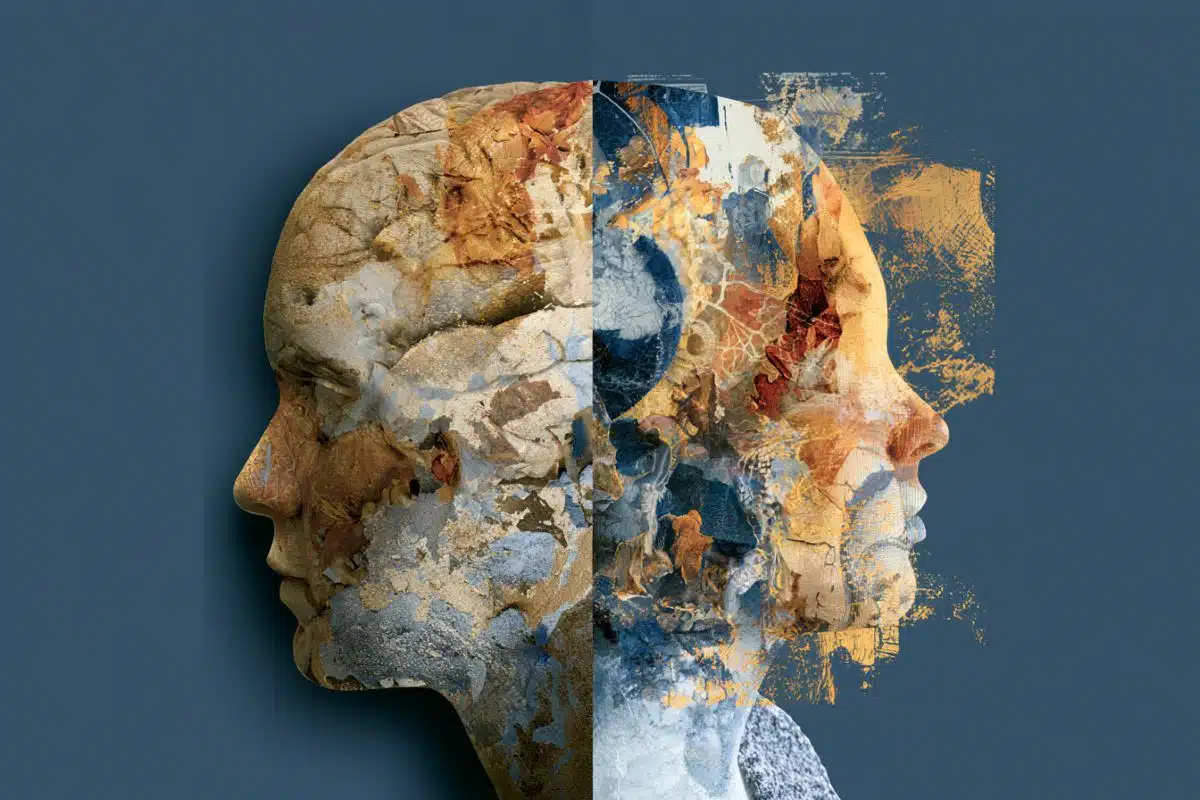
Summary: Adverse social determinants of health, such as childhood trauma, poverty, discrimination, and isolation, are directly linked to structural and functional brain changes associated with schizophrenia-spectrum disorders.
Analyzing 114 studies covering more than 10,000 participants, researchers mapped how environmental stress acts as “extra water” that can cause a vulnerable biological “cup” to overflow into psychosis. Crucially, because 30% of clinical high-risk individuals eventually remit completely, these neurobiological insights open up a vital window for early, targeted interventions to build psychological resilience and prevent full symptom onset.
Key Facts
- Massive Data Synthesis: The systematic review compiled and analyzed 114 separate scientific studies encompassing more than 10,000 participants experiencing or at risk for schizophrenia.
- The “Cup” Analogy: Biological vulnerability and environmental stressors act together like water in a cup; severe trauma, poverty, or racism adds “extra water,” causing certain individuals’ cups to overflow into full psychosis faster than others.
- Measurable Neurobiological Impacts: Greater exposure to adverse life experiences directly correlates with visible abnormalities in brain structure, localized functional connectivity, and central neurochemistry.
- Non-Linear Pathology: The schizophrenia spectrum is not a foregone conclusion; roughly 30% of individuals identified as being at “clinical high-risk” eventually remit completely and never transition to full psychosis.
- Early Intervention Window: Mapping how social stressors “get under the skin” biologically provides clinicians with a roadmap to design targeted therapies, medication protocols, and social support systems before severe symptoms emerge.
Source: Carnegie Mellon University
Carnegie Mellon University and University of California, San Francisco researchers found that childhood trauma, poverty, social isolation and other adverse life experiences are associated with brain changes linked to schizophrenia-spectrum disorders — findings that could help researchers identify people at risk earlier and develop interventions before severe symptoms emerge.
The idea that social determinants of health — non-medical conditions in which people are born, grow, live and work — have an out-sized role on our health is not new. In fact, some studies estimate that such conditions can account for between 30 and 55 percent of health outcomes. But how these factors impact downstream mental health conditions such as schizophrenia remains poorly understood.
“What we want to know is how these environmental factors, such as stress, trauma and poverty, get under the skin, so to speak, and affect our biology,” said Kaitlyn Dal Bon, a Ph.D. student in cognitive neuroscience in CMU’s Department of Psychology.
To better understand what is currently known about these links, Jessica Hua, a clinical psychologist at the San Francisco VA Health Care System and UCSF, and Dal Bon co-wrote a systematic review of 114 scientific studies that looked at early life adversity, social disconnection, racism/discrimination, poverty and food insecurity in more than 10,000 participants with schizophrenia or at risk for developing psychosis.
Their findings were published today in the peer-reviewed journal JAMA Psychiatry.
Overall, the researchers found evidence that greater exposure to adverse conditions early in life is associated with differences in brain structure, brain function and neurochemistry – all of which have been previously linked to schizophrenia-spectrum disorders.
To be clear, no one factor is known to cause schizophrenia.
“One way to understand this link is to imagine that everyone has a cup, and everyone has different amounts of water in that cup, and perhaps some cups are smaller than others,” said Dal Bon. “Adding on these other factors, such as trauma or poverty, is like adding extra water to those cups. In the end, some people’s cups will overflow quicker than others.”
Importantly, the researchers said the study sheds light on how understanding social determinants of health and their associated neurobiological abnormalities could lead to improved and more targeted clinical interventions. After all, 30 percent of individuals identified as ‘clinical high-risk’ of developing schizophrenia will never convert to full psychosis and can actually remit completely.
“We know that individuals with schizophrenia are disproportionately exposed to adverse social determinants of health compared to other populations,” said Hua. “Now we need to understand how we can build resilience in these individuals, whether through focused therapy, some type of medication, family or social support, or some other kind of protective factor.”
It’s easy to misunderstand the schizophrenia spectrum as a one-way path, an end or a foregone conclusion. But research like Hua and Dal Bon’s shows that scientists are getting closer to understanding not only the factors that make a cup overflow, but those that can prevent it from getting too full in the first place.
Key Questions Answered:
A: Social determinants of health influence biology through chronic, toxic stress. When an individual experiences prolonged trauma, poverty, or discrimination, the body continuously floods the nervous system with stress hormones like cortisol. Over time, this constant chemical bath “gets under the skin,” altering neurochemistry, weakening white matter connections, and structurally changing areas like the prefrontal cortex and hippocampus. These exact biological shifts match the neurological signatures seen in schizophrenia-spectrum disorders.
A: This percentage disproves the outdated notion that the schizophrenia spectrum is a fixed, one-way genetic destiny. Because nearly a third of high-risk individuals can recover completely without ever experiencing full psychosis, it proves that the disease pathway is malleable. By understanding exactly which social stressors are filling the biological “cup,” clinicians can step in with targeted therapies to prevent the cup from overflowing, essentially diverting someone off the path to chronic illness.
A: It demands a move away from purely reactive, post-onset psychiatric care toward proactive, preventative medicine. Instead of waiting for severe psychotic symptoms to appear before treating schizophrenia, healthcare systems must screen for environmental risks like childhood trauma and food insecurity early on. By identifying vulnerable individuals while their “cup” is still filling, teams can implement protective social, psychological, and medical frameworks to build resilience and stop the disease in its tracks.
Editorial Notes:
- This article was edited by a Neuroscience News editor.
- Journal paper reviewed in full.
- Additional context added by our staff.
About this schizophrenia research news
Author: Jason Bittel
Source: Carnegie Mellon University
Contact: Jason Bittel – Carnegie Mellon University
Image: The image is credited to Neuroscience News
Original Research: Closed access.
“Social Determinants of Health and Neurobiology Across the Schizophrenia Course: A Systematic Review” by Jessica P. Y. Hua, PhD, ABPP; Kaitlyn Dal Bon, BA. JAMA Psychiatry
DOI:10.1001/jamapsychiatry.2026.1312
Abstract
Social Determinants of Health and Neurobiology Across the Schizophrenia Course: A Systematic Review
Importance
Individuals with schizophrenia-spectrum psychotic conditions (SSPCs) are disproportionately exposed to adverse social determinants of health (SDOHs). These exposures drive health inequity in schizophrenia and are consistently linked to earlier illness onset, greater symptom severity, and poorer long-term outcomes. The brain-based mechanisms through which structural disadvantage becomes biologically embedded are not well characterized.
Objective
To examine structural, functional, neurochemical, and plasticity brain changes associated with SDOHs with, or at risk for, SSPCs.
Evidence Review
PsycInfo, PubMed, and Web of Science databases were searched from database inception until January 2026 to identify original, empirical studies that reported on the association between SDOHs (early life adversity, social disconnection, racism/discrimination, poverty, food insecurity) and neurobiological measures (brain structure, brain function, neurochemical, neuroplasticity) in individuals across the schizophrenia spectrum. Quality assessment scores using the Joanna Briggs Institute Checklist weighed the impact of individual study findings on the overall outcome summary.
Findings
The systematic literature search yielded 14 500 articles, with 114 articles meeting full inclusion criteria. Most articles examined early life adversity (n = 95) with the remaining articles focused on social disconnection (n = 13), racism/discrimination (n = 4), poverty (n = 2), and food insecurity (n = 1). Regarding brain measures, 83 articles reported on structural brain measures, 23 on functional brain measures, 10 on neurochemical measures, and none on neuroplasticity.
Together, these studies recruited 10 921 participants across the schizophrenia spectrum (high schizotypy n = 250; familial high-risk n = 1825; clinical high-risk for psychosis n = 3538; first-episode psychosis n = 1169; recent-onset psychosis n = 506; chronic schizophrenia n = 3754). Strong evidence that greater exposure to adverse SDOHs may be associated with neurobiological abnormalities, including cortical thinning, regional brain volume reduction, decreased structural connectivity and functional activation, and abnormal neurochemical levels was found.
Conclusions and Relevance
These findings support the hypothesis that social adversity becomes biologically embedded, providing evidence for an intermediary link between SDOHs and clinical outcomes in SSPC. Integrating neuroscience with social epidemiology can advance psychosis prevention, refine treatment, and address structural drivers of mental health disparities.


