

Summary: Conventional dietary advice may not be “one-size-fits-all” for those with specific genetic risks for Alzheimer’s. Researchers followed over 2,100 Swedish adults for 15 years, discovering that carriers of the APOE 3/4 and 4/4 genotypes—variants associated with a significantly higher risk of dementia—showed slower cognitive decline and a lower risk of dementia when consuming higher amounts of meat.
The researchers hypothesize that because APOE4 is the evolutionarily oldest variant of the gene, arising when ancestors consumed more animal-based diets, these carriers may metabolically benefit from such intake. While meat was protective for this specific group, the study also found that a lower proportion of processed meat was beneficial for everyone, regardless of their genetic profile.
Key Facts
- Genetic Protective Effect: For APOE 3/4 and 4/4 carriers, the highest meat intake group (median 870g per week) showed significantly slower cognitive decline compared to low-meat consumers in the same genetic group.
- Risk Disparity: At lower meat intake levels, APOE4 carriers had more than twice the risk of dementia compared to non-carriers, but this increased risk vanished in the highest meat-consumption tier.
- Longevity Link: Higher consumption of unprocessed meat was also associated with a significant reduction in all-cause mortality specifically for the APOE 3/4 and 4/4 risk groups.
- Processed Meat Warning: Regardless of genetics, a higher proportion of processed meat in the diet was consistently linked to a higher risk of dementia across the entire study population.
Source: Karolinska Institute
APOE is a gene that affects the risk of Alzheimer’s disease. In Sweden, approximately 30 per cent of the population are carriers of the gene combinations APOE 3/4 or APOE 4/4. Among people with Alzheimer’s disease, those with these genotypes account for nearly 70 per cent.
When the Swedish Food Agency presented an overview of research on the link between diet and dementia last year, more research was requested to assess a possible link between meat consumption and the development of dementia.
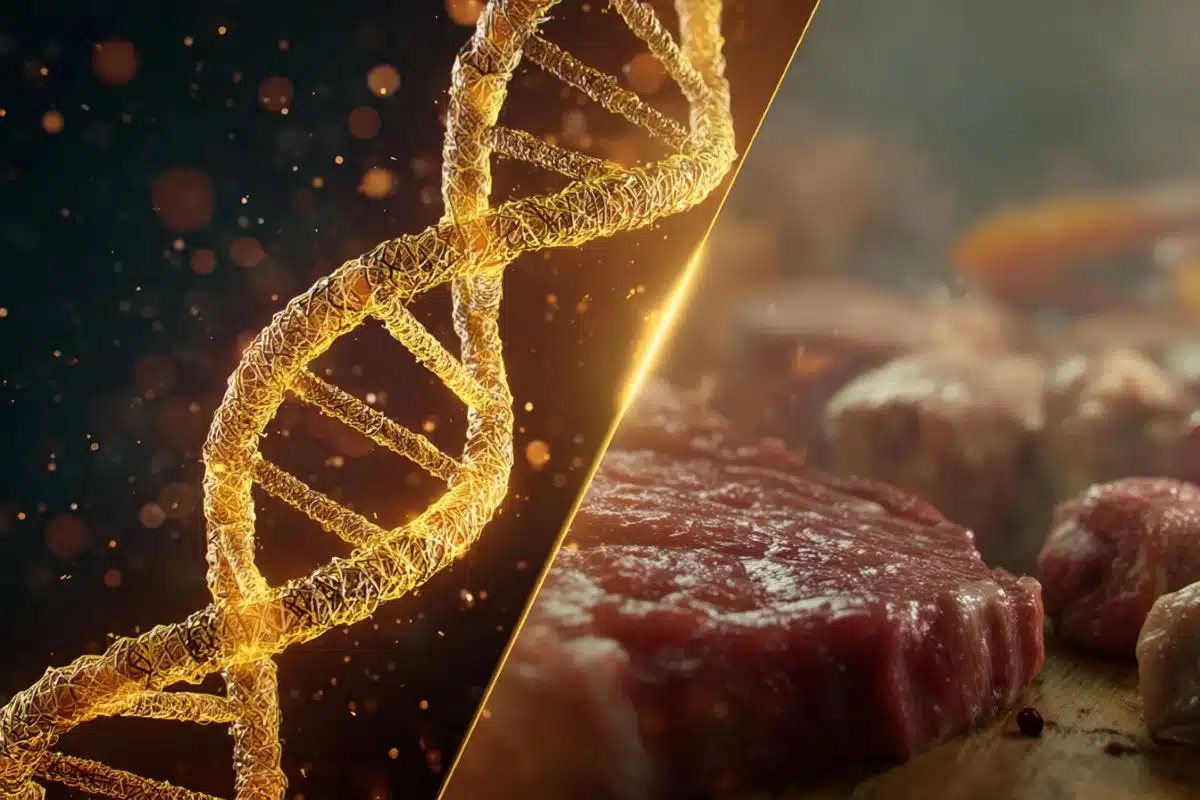
‘This study tested the hypothesis that people with APOE 3/4 and 4/4 would have a reduced risk of cognitive decline and dementia with higher meat intake, based on the fact that APOE4 is the evolutionarily oldest variant of the APOE gene and may have arisen during a period when our evolutionary ancestors ate a more animal-based diet,’ says first author Jakob Norgren, researcher at the Department of Neurobiology, Care Sciences and Society, Karolinska Institutet.
The study followed more than 2,100 participants in the Swedish National Study on Aging and Care, Kungsholmen (SNAC-K) for up to 15 years. All were aged 60 or older and had no diagnosis of dementia at the start of the study. The association between self-reported diet and cognitive health measures was analysed, adjusting for age, sex, education and lifestyle factors.
At lower meat intake, the group with APOE 3/4 and 4/4 had more than twice the risk of dementia than people without these gene variants. However, the increased risk of cognitive decline and dementia in the risk groups was not seen in the fifth of participants who consumed the most meat. Their median consumption is estimated at approximately 870 grams of meat per week, standardised to a daily energy intake of 2,000 calories.
‘Those who ate more meat overall had significantly slower cognitive decline and a lower risk of dementia, but only if they had the APOE 3/4 or 4/4 gene variants,’ says Jakob Norgren. He continues:
‘There is a lack of dietary research into brain health, and our findings suggest that conventional dietary advice may be unfavourable to a genetically defined subgroup of the population. For those who are aware that they belong to this genetic risk group, the findings offer hope; the risk may be modifiable through lifestyle changes. ‘
The study also shows that the type of meat is important.
‘A lower proportion of processed meat in total meat consumption was associated with a lower risk of dementia regardless of APOE genotype,’ says Sara Garcia-Ptacek, assistant professor at the same department, who together with senior lecturer Erika J Laukka is the study’s last author.
The findings also extend beyond brain health. In a follow-up analysis, the researchers observed a significant reduction in all-cause-mortality in carriers of APOE 3/4 and 4/4 with higher consumption of unprocessed meat.
However, the study is observational and needs to be followed up with intervention studies that can better demonstrate causal relationships.
‘Clinical trials are now needed to develop dietary recommendations tailored to APOE genotype,’ says Jakob Norgren. He continues:
‘Since the prevalence of APOE4 is about twice as high in the Nordic countries as in the Mediterranean countries, we are particularly well suited to conduct research on tailored dietary recommendations for this risk group.’
The research was funded by, among others, the Swedish Alzheimer’s Foundation, the Swedish Dementia Foundation, the Emil and Wera Cornell Foundation, the Leif Lundblad family and other philanthropists, the Swedish Research Council and FORTE. The researchers state that they have no related conflicts of interest.
Facts:
Apolipoprotein E plays a central role in the transport of cholesterol and fats in the brain and blood. The protein is encoded by the APOE gene, which exists in three main variants: epsilon 2, 3 and 4. These variants affect the risk of developing Alzheimer’s disease and cardiovascular disease. Each person inherits two APOE genes, one from each parent, giving six possible combinations (genotypes): 2/2, 2/3, 2/4, 3/3, 3/4 and 4/4.
Compared to the most common genotype 3/3, one 4 variant increases the risk of Alzheimer’s disease by about three to four times and two 4 variants by about ten to fifteen times, while the 2 variant is associated with a lower risk. However, the increase in risk varies between different ethnic groups.
Key Questions Answered:
A: No. The study found the protective effect only in people with the APOE 3/4 or 4/4 gene variants. For the rest of the population, higher meat intake didn’t show the same cognitive benefits.
A: Researchers believe it’s an evolutionary mismatch. APOE4 is our oldest gene variant, dating back to when human ancestors ate a heavily animal-based diet; carriers may be genetically “tuned” to require nutrients found in that lifestyle.
A: Absolutely. Even for the high-risk group, the study emphasized that unprocessed meat is the key. Processed meats were linked to higher dementia risk and mortality for everyone, regardless of their APOE status.
Editorial Notes:
- This article was edited by a Neuroscience News editor.
- Journal paper reviewed in full.
- Additional context added by our staff.
About this diet and dementia research news
Author: Press Office
Source: Karolinska Institutet
Contact: Press Office – Karolinska Institutet
Image: The image is credited to Neuroscience News
Original Research: Open access.
“Meat Consumption and Cognitive Health by APOE Genotype” by Jakob Norgren, Adrián Carballo-Casla, Giulia Grande, Anne Börjesson-Hanson, Hong Xu, Maria Eriksdotter, Erika J Laukka, Sara Garcia-Ptacek. JAMA Network Open
DOI:10.1001/jamanetworkopen.2026.6489
Abstract
Meat Consumption and Cognitive Health by APOE Genotype
Importance
The apolipoprotein E (APOE) ε4 allele increases Alzheimer disease risk. Understanding genotype-specific dietary needs could inform more personalized prevention strategies.
Objective
To test the hypothesis that higher meat consumption may be associated with cognitive health benefits in individuals with APOE genotypes ε3/ε4 and ε4/ε4 (APOE34/44) and to examine whether this association differs from that in other genotypes.
Design, Setting, and Participants
This population-based cohort study used panel data analyses conducted in January 2025 to January 2026 over 15 years of follow-up in the Swedish National Study on Aging and Care–Kungsholmen (SNAC-K), using strategies aligned with causal inference principles. Recruitment was done in 2001 to 2004 among adults without dementia aged 60 years or older.
Exposures
The primary exposure was total meat consumption in grams per total kilocalories assessed via validated food frequency questionnaires. The secondary exposure was the ratio of processed to total meat.
Main Outcomes and Measures
Global cognitive trajectory, measured as change in z score per 10 years, was analyzed by linear regression. Incident dementia was analyzed using Fine and Gray subdistribution hazard ratios (sHRs), treating nondementia death as a competing risk.
Results
Among 2157 older adults without dementia (mean [SD] age 71.2 [9.2] years; 1337 female [62.0%]), 1680 participants had longitudinal cognition data and 569 participants (26.4%) had APOE34/44 genotypes. During follow-up, 296 participants developed dementia and 690 died without dementia. Among participants with APOE34/44 genotypes, higher total meat consumption (top vs bottom quintile) was associated with better cognitive trajectories (β = 0.32; 95% CI, 0.07 to 0.56; P = .01) and reduced dementia risk (sHR, 0.45; 95% CI, 0.21 to 0.95; P = .04).
No associations were found in participants with APOE22/23/24/33 genotypes (cognitive trajectory: β = –0.11; 95% CI, –0.27 to 0.06; P = .20; dementia: sHR, 0.95; 95% CI, 0.57 to 1.61; P = .86). P values for APOE interaction were .004 for cognition and .10 for dementia. In the top quintile of meat consumption, dementia risk and cognitive decline were similar between APOE strata.
A higher ratio of processed to total meat was unfavorably associated with dementia (sHR, 1.14; 95% CI, 1.01 to 1.29; P = .04), showing no APOE interaction and no substantial difference between unprocessed red meat and poultry. Post hoc analyses suggested concordant APOE interaction for all-cause mortality (unprocessed meat exposure, APOE34/44: HR, 0.85; 95% CI, 0.73 to 0.99; P = 0.04; P for interaction = .03).
Conclusions and Relevance
In this study, higher meat consumption was associated with better cognitive trajectories and lower dementia risk among individuals with APOE34/44 genotypes. The expected cognitive disadvantage among individuals with APOE34/44 genotypes was not observed at high meat consumption, suggesting clinical and public health relevance.


