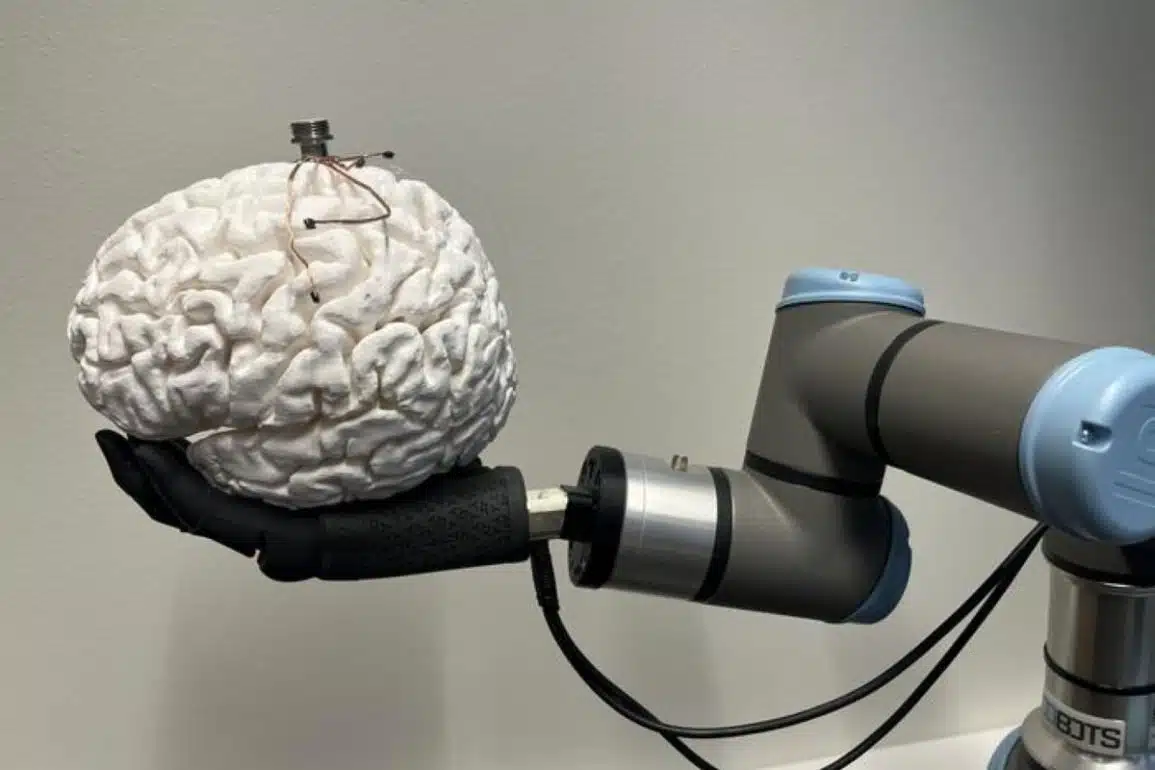
Summary: A new study demonstrates that the motor skill gap between our two hands is not innate at all. By isolating raw biological movement from complex object interaction using 3D motion capture, the team proved that our hands are remarkably equal in baseline capability. The profound asymmetry we call “handedness” is an emergent cultural phenomenon, a consequence of a lifetime of asymmetrical practice that surfaces exclusively when human beings pick up a tool.
Key Facts
- Preference vs. Dominance: The study crucially decouples two concepts that are traditionally lumped together under “handedness.” Preference (the instinctual urge to favor one hand) shows up before birth and has deep biological roots. Dominance (the actual gap in physical skill between the hands) is entirely acquired through a lifetime of habit.
- The Reaching Paradox: Under high-resolution 3D motion tracking, participants executing standard, unconstrained reaching movements showed zero performance or coordination advantage in their dominant arm compared to their non-dominant arm.
- The Weight Test: Adding heavy physical weights to the wrist did nothing to expose a dominant hand advantage. The raw muscular physics and baseline motor control networks of both arms handled the added weight with identical coordination.
- The Tool Trigger: The skill gap appeared only when researchers strapped a lightweight stick to the participants’ forearms. This seemingly simple tool fundamentally altered the physics of the movement, demanding control over a complex, curved spatial path. Suddenly, the non-dominant arm struggled significantly, exposing the dominance gap.
- The Elbow Writing Equalizer: In a dramatic secondary trial, researchers strapped pens to the participants’ elbows, forcing them to write. Because neither elbow had a lifetime of writing practice, the domestic dominance gap vanished instantly. Given equal amounts of training, both elbows improved at identical rates, with each ending up highly skilled.
- An Evolutionary Fingerprint: Because humans are the planet’s premier toolmakers and prolific tool users, researchers suggest that hand dominance is not an evolutionary requirement, but a cultural byproduct of human ingenuity. Handedness is quite literally a fingerprint of human tool-use culture.
Source: Santa Fe Institute
Most people favor one hand, and that hand tends to be the better one at writing, at throwing, at managing chopsticks. The long-standing view is that the dominant hand is “born” more capable, its skills rooted in a brain hemisphere specialized for motor control.
A new study in PNAS argues that this difference in skill is not innate at all. It is the consequence of a lifetime of practice, and it surfaces only when we pick up a tool.

The paper, by SFI External Professor John Krakauer (Johns Hopkins University) with Ahmet Arac and Nicolas Y. H. Jeong Lee at the University of California, Los Angeles, separates two ideas — preference and dominance — which are often conflated under “handedness.” Preference, meaning which hand you instinctively favor for most tasks, appears before birth and has biological roots, prior research shows. Dominance, the skill gap between the two hands, is the question the study takes on.
In a series of experiments using 3D motion capture, the researchers compared people’s two arms during ordinary reaching, reaching with a weight on the wrist, and reaching with a lightweight stick fixed to the forearm. Ordinary reaching revealed no clear advantage for the dominant arm, and the added weight made no difference either.
The gap appeared only with the stick, when the nondominant arm struggled to control the more complex, curved path it demanded. A further test sharpened the point: when participants wrote with their elbows, using a pen strapped to the arm, the dominance vanished, and with equal practice both elbows improved equally, each ending up better than the untrained nondominant hand.
“You don’t prefer your dominant hand because it’s more skilled,” Krakauer says. “It becomes more skilled because you prefer it. And you wouldn’t notice any difference between your two hands without tools and objects in the world that demand practice to use well.”
Arac takes the idea a step further. “Since humans are uniquely prolific tool users and makers, handedness may be a byproduct of our inventiveness,” he says. In that sense, he adds, handedness “can be seen as a fingerprint of human tool-use culture.”
The study reframes arm dominance as something that emerges over a lifetime — skills built asymmetrically through practice rather than wired from the start. The asymmetry isn’t stored in a gene or a hemisphere; it accumulates from using the tools we ourselves invented. It is a reminder that even a trait as seemingly fixed as handedness can be emergent, arising from the interplay of biology, behaviour, and culture rather than from any single cause.
They point to a natural next step: studying people whose preference and practice diverge, such as left-handers forced to use tools with the right hand, stroke survivors whose hand preference shifts, and amputees who develop skill with unconventional effect.
Key Questions Answered:
A: It feels clumsy not because that hand is biologically broken, but because it has been systematically starved of practice your entire life. Dr. Krakauer’s research proves that your brain doesn’t have a genetic blueprint that makes your dominant hand inherently smarter at birth. Instead, you are born with a slight, instinctual preference to reach for things with one side. Because you favor that side, you use it to pick up pencils, forks, and tools thousands of times a day. Your dominant hand isn’t naturally superior; it’s simply a elite specialist that has logged thousands of hours of tool-use practice while the other hand was left doing basic background tasks.
A: When you move your bare arm through the air, your brain is doing simple, intuitive geometry. When the researchers tracked this free movement, both arms were perfectly equal. But the moment they strapped a stick to the forearm, it completely changed the physics of the limb, forcing the joint to navigate an unfamiliar, curved pathway in space. This is the exact definition of using a tool. Suddenly, the dominant arm adapted easily because its neural circuits are highly trained to adjust to external objects. The non-dominant arm failed because it lacked a lifetime of tool-use training. The skill gap isn’t in your muscles; it’s an archive of tool practice stored in your brain.
A: This is an incredibly hopeful discovery for neuro-rehabilitation. The old, rigid view implied that if you damaged the brain hemisphere controlling your dominant hand, that specific, high-tier motor skill was gone forever because the other side of the brain simply lacked the specialized wiring. This study shatters that limitation by proving that your non-dominant limb has the exact same biological potential. When researchers forced people to write with their elbows, both sides learned and improved at the exact same rate. This proves the brain’s motor networks remain highly plastic, meaning a non-dominant limb can be systematically trained to reach elite, dominant-level precision with targeted, tool-based practice.
Editorial Notes:
- This article was edited by a Neuroscience News editor.
- Journal paper reviewed in full.
- Additional context added by our staff.
About this handedness research news
Author: Edson De la O Barquero
Source: Santa Fe Institute
Contact: Edson De la O Barquero – Santa Fe Institute
Image: The image is credited to Neuroscience News
Original Research: Open access.
“Arm dominance is an emergent effect of practice executing complex trajectory shapes required by tools and objects” by Ahmet Arac, Nicolas Y. H. Jeong Lee, John W. Krakauer. PNAS
DOI:10.1073/pnas.2601569123
Abstract
Arm dominance is an emergent effect of practice executing complex trajectory shapes required by tools and objects
Limb dominance is a human behavioral characteristic with many cultural, practical, scientific, and clinical implications. Yet why the dominant limb performs better across a range of motor skill-requiring tasks remains unanswered. Is it because of an intrinsic hemispheric advantage or instead is it the result of life-long practice with the dominant side?
We tested these alternatives using two tasks either cross sectionally or after training. The first was 3D reaching with either an inertial challenge or the need to use a stick-like tool. The second required participants to write with their dominant and nondominant elbows. We applied a geometric analysis to quantify movement-trajectory shape.
We show that 1) tool-use unmasks markedly inferior control in the nondominant arm, and this is because tools impose the need to generate unfamiliarly shaped movement trajectories; and 2) there is no general dominant limb motor control advantage, only task-specific experience or practice riding on top of an initial preference.
These results reframe dominance as predominantly about learned control of tool kinematics rather than baseline asymmetry in control of limb dynamics.