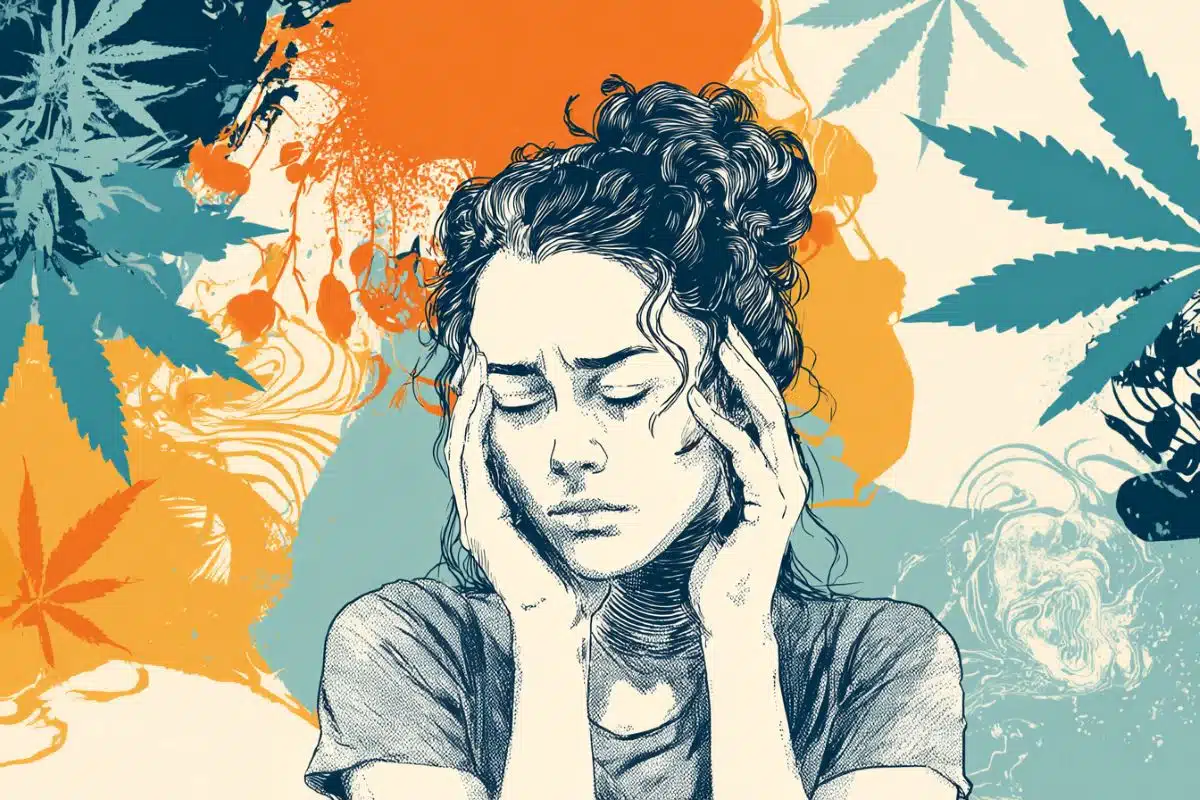
Summary: New research shows that rats with naturally higher baseline stress hormone levels are significantly more likely to self-administer cannabis vapor. Over several weeks, rats were allowed to nose-poke for cannabis, and those with elevated corticosterone displayed the strongest drug-seeking behavior.
The study also found links between cannabis use, low endocannabinoid levels, and reduced cognitive flexibility, suggesting multiple interacting biological factors. The findings point toward potential early markers of vulnerability to cannabis dependence and help explain why stress plays such a central role in habitual use.
Key Facts
- Stress Predicts Use: Rats with naturally higher baseline stress hormones self-administered far more cannabis vapor.
- Cognitive Flexibility: Animals less able to adapt to shifting rules showed stronger cannabis-seeking behavior.
- Endocannabinoid Link: Lower endocannabinoid levels combined with high morning stress hormones also predicted higher drug use.
Source: Washington State University
It isn’t just people – when given the chance rats may also use cannabis to cope with stress, according to a study by researchers at Washington State University.
Published in the journal Neuropsychopharmacology, the study was designed to examine cannabis-seeking behavior and found that rats with higher natural stress levels are far more likely to self-administer the popular recreational drug.
“We ran rats through this extensive battery of behavioral and biological tests, and what we found was that when we look at all of these different factors and all the variables that we measured, stress levels seem to matter the most when it comes to cannabis use,” said Ryan McLaughlin, associate professor in WSU’s College of Veterinary Medicine.
Looking at traits ranging from social behaviors to sex, cognition, reward, and arousal, McLaughlin and his team of undergraduate and graduate student researchers created a behavioral profile for each rat.
Then, over the course of three weeks, rats were observed for one hour daily as they were given the option to self-administer cannabis by poking their nose in a vapor port to release a three-second dispersal of cannabis vapor in an air-tight chamber.
During that one-hour period, student researchers tracked the number of “nose-pokes” by each rat and found a direct correlation to the number of nose-pokes and baseline stress hormone levels.
By measuring the stress hormone corticosterone in the rodents, the equivalent to the stress hormone cortisol in humans, the team found rats with higher natural stress hormone levels were far more likely to self-administer cannabis.
“If you want to really boil it down, there are baseline levels of stress hormones that can predict rates of cannabis self-administration, and I think that only makes sense given that the most common reason that people habitually use cannabis is to cope with stress,” McLaughlin said.
He said it’s important to note that it was a rat’s resting baseline stress levels that were associated with cannabis self-administration, not stress that fluctuates in real time with exercise or mentally challenging tasks. Stress hormone levels were also calculated after exposure to a stressor and showed no significant link to cannabis-seeking behavior.
There were also significant relationships between rates of cannabis self-administration and measures of “cognitive flexibility”, which is our ability to adapt to changing rules.
“Animals that were less flexible in shifting between rules, when we tested them in a cognitive task, tended to show stronger rates of cannabis-seeking behavior,” he said. “So, animals that rely more heavily on visual cues to guide their decision making, those rats, when we tested their motivation to self-administer cannabis vapor, were also very highly motivated rats.”
The study also identified a link between high morning corticosterone and low endocannabinoid levels to cannabis self-administration, although not as strongly as baseline stress.
Endocannabinoids are compounds produced on demand to help the body maintain a state of physiological balance, or homeostasis.
“There’s some thought behind why people might be more prone to use cannabis, and that maybe THC serves as a reasonable substitute for endocannabinoids in individuals that have lower endocannabinoid levels,” McLaughlin said. “So, perhaps there’s more of a drive to supplement that with cannabis.”
With more and more states decriminalizing cannabis and legalizing recreational cannabis, McLaughlin said it’s critical to understand the effects of the drug and the grips of drug abuse.
“Our findings highlight potential early or pre-use markers that could one day support screening and prevention strategies,” McLaughlin said. “I could certainly envision a scenario where having an assessment of baseline cortisol might provide some level of insight into whether there’s an increased propensity for you to develop problematic drug use patterns later in life.”
Key Questions Answered:
A: Rats with naturally higher baseline stress hormone levels were far more likely to self-administer cannabis vapor. This suggests that chronic, underlying stress—not moment-to-moment stress—may be a major driver of cannabis-seeking behavior.
A: Rats with lower cognitive flexibility and a stronger reliance on visual cues showed higher rates of cannabis self-administration. These traits may reflect difficulty adapting to changing rules, which predicted increased drug-seeking motivation.
A: Rats with high morning stress hormones and low endocannabinoid levels also showed greater cannabis use. This supports the idea that some individuals may turn to cannabis to compensate for low natural endocannabinoid signaling, especially when stress is chronically elevated.
Editorial Notes:
- This article was edited by a Neuroscience News editor.
- Journal paper reviewed in full.
- Additional context added by our staff.
About this stress and cannabis use disorder research news
Author: Josh Babcock
Source: Washington State University
Contact: Josh Babcock – Washington State University
Image: The image is credited to Neuroscience News
Original Research: Closed access.
“Identifying behavioral and biological predictors of cannabis vapor self-administration in rats” by Ryan McLaughlin et al. Neuropsychopharmacology
Abstract
Identifying behavioral and biological predictors of cannabis vapor self-administration in rats
The recent wave of recreational cannabis legalization in the US has underscored the importance of identifying predictors of individual variability in cannabis use. While a subset of recreational cannabis users will go on to meet diagnostic criteria for cannabis use disorder, many do not, making it critical to characterize traits that confer both vulnerability and resilience.
However, progress in identifying relevant predictors has been hindered by limited mechanistic insight and a lack of translationally relevant animal models of cannabis use.
To address this, we employed a rat model of cannabis vapor self-administration that uses whole-plant cannabis extract and mimics the intrapulmonary route of intake typically used in humans.
Using this model, we sought to identify behavioral and biological predictors of motivation to self-administer vaporized cannabis.
Male and female Long-Evans rats (N = 48) underwent a battery of assays indexing behavioral domains aligned with the NIMH Research Domain Criteria (RDoC) prior to self-administration training. After four weeks of cannabis vapor self-administration (1 h sessions daily), motivation for cannabis vapor was assessed via a 3-h fixed ratio escalation (FRE) procedure.
A series of linear regressions revealed that Social Processes, Arousal/Regulatory Systems, Cognition, and Positive Valence domains significantly predicted the number of cannabis vapor deliveries earned during the FRE test. Specifically, higher basal corticosterone (CORT), lower morning anandamide, impaired set-shifting performance, superior visual cue discrimination, and more social grooming during adolescence each predicted responding for cannabis.
The Negative Valence domain was not a significant predictor. A multivariate machine learning approach combining principal component analysis and permutation importance further identified basal CORT and set-shifting performance as the strongest predictors of responding for vaporized cannabis.
These findings highlight individual differences in stress regulation and cognitive flexibility as possible risk factors for cannabis use propensity and demonstrate the utility of leveraging RDoC framework for identifying relevant phenotypes in rodents that may extend across human psychiatric conditions.