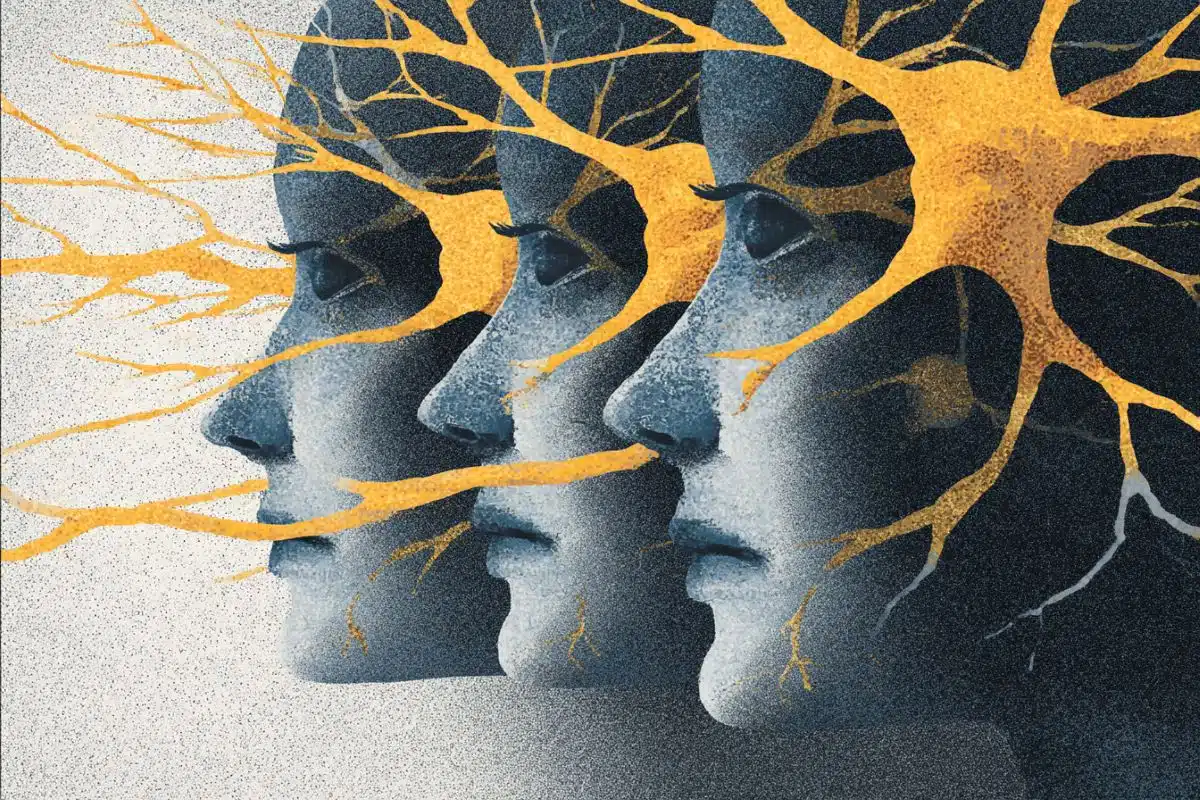
Summary: Schizophrenia treatment has been dominated by dopamine-targeting drugs for decades, but these often fail to address the debilitating cognitive and negative symptoms of the disorder. A comprehensive review synthesizes the latest neurobiological breakthroughs to map out a new era of treatment.
From TAAR1 agonists like Ulotaront to the gut-brain axis and anti-inflammatory strategies, researchers are finally moving beyond symptom management to address the root causes, including neurodevelopmental anomalies and immune dysfunction.
Key Facts
- Beyond Dopamine: While traditional antipsychotics focus on dopamine, the review highlights new drugs targeting TAAR1 (Ulotaront) and muscarinic M1/M4 receptors (KarXT).
- Cognitive Focus: New enhancers for NMDA receptors (Iclepertin) are being developed specifically to treat the cognitive impairments that often make daily life difficult for patients.
- The Immune-Gut Connection: The review identifies immune dysfunction and the gut-brain axis as critical new frontiers, suggesting that probiotics and anti-inflammatory agents could play a role in future care.
- Multimodal Insights: Advances in multi-omics, electrophysiology, and neuroimaging are allowing for more personalized treatment plans by tracking disease progression more accurately.
- Holistic Mechanisms: The researchers emphasize that schizophrenia is multifaceted—involving genetic susceptibility, neurodevelopment, and neurotransmitter dysregulation—requiring a combined therapeutic approach.
Source: Science China Press
Schizophrenia remains one of the most challenging psychiatric disorders, affecting thought, emotion, and social functioning.
In a recent comprehensive review published in a leading journal, researchers from Peking University Sixth Hospital delve into the complex mechanisms underlying schizophrenia, which are from neurotransmitter dysregulation and neurodevelopmental anomalies to immune dysfunction and genetic susceptibility.
The article emphasizes that while dopamine-targeting antipsychotics are the mainstay of treatment, their limitations in treating negative and cognitive symptoms necessitate novel approaches.
Promising directions include TAAR1 agonists like Ulotaront, muscarinic M1/M4 modulators such as KarXT, NMDA receptor enhancers like Iclepertin, anti-inflammatory agents, and probiotics targeting the gut-brain axis.
The review also covers advances in neuroimaging, electrophysiology, and multi-omics studies, which are crucial for understanding disease progression and personalizing treatment.
These insights are vital for developing next-generation therapies that go beyond symptom management to address the root causes of schizophrenia.
Key Questions Answered:
A: Most current drugs only target dopamine, which is great for stopping hallucinations (positive symptoms) but does very little for social withdrawal or memory issues (negative/cognitive symptoms). This review shows that we need to hit multiple different receptors in the brain to provide full relief.
A: It’s a new class of medication that regulates neurotransmitters without directly blocking dopamine receptors. This could lead to effective treatment with fewer side effects like weight gain or movement disorders.
A: Emerging research suggests that inflammation in the gut can signal the brain and affect mood and cognition. By using probiotics or targeting the “gut-brain axis,” doctors might be able to lower systemic inflammation that contributes to psychiatric symptoms.
Editorial Notes:
- This article was edited by a Neuroscience News editor.
- Journal paper reviewed in full.
- Additional context added by our staff.
About this psychopharmacology and schizophrenia research news
Author: Bei Yan
Source: Science China Press
Contact: Bei Yan – Science China Press
Image: The image is credited to Neuroscience News
Original Research: Closed access.
“Schizophrenia: from mechanism to therapy” by Zhe Lu, Junyuan Sun, Guorui Zhao, Yunqing Zhu, Rui Yuan, Jingying Zhou, Dai Zhang & Weihua Yue. Science China Life Sciences
DOI:10.1007/s11427-025-2990-0
Abstract
Schizophrenia: from mechanism to therapy
Schizophrenia is a multifaceted psychiatric disorder characterized by hallucinations, delusions, cognitive deficits, and social dysfunction. Its etiology involves a complex interplay of neurochemical, neurodevelopmental, genetic, and immune responses.
Despite extensive research, its precise etiology remains elusive. Multiple hypotheses have been proposed to explain its onset and progression. Neurochemical hypotheses focus on dysregulation of the dopamine and glutamate systems, leading to characteristic symptoms.
Neurodevelopmental theories suggest that prenatal and perinatal insults contribute to abnormal brain development, affecting regions such as the prefrontal cortex and the hippocampus.
Genetic predispositions play a crucial role, as evidenced by familial aggregation and genome-wide association studies that identified risk genes. Additionally, emerging research has implicated immune system dysfunction and inflammation in the pathophysiology of schizophrenia.
Current therapeutic strategies primarily focus on antipsychotic medications targeting dopamine receptors. The efficacy of these medications varies and often fails to address negative and cognitive symptoms.
Advances in the understanding of the multifactorial mechanisms underlying schizophrenia are essential for developing more effective and comprehensive treatment approaches, such as early intervention, personalized medicine, and novel pharmacological and psychosocial therapies.
The study reviewed the latest findings on the neurobiology of schizophrenia and the implications of these findings for the development of new mechanistically based treatments and precision medicine for psychotic symptoms.