Summary: For years, scientists have focused on how psychedelics “rewire” neurons. But a groundbreaking study has found a “missing link” in long-term PTSD recovery: myelin remodeling. Researchers discovered that psilocybin and MDMA do more than just alter brain activity; they trigger the physical repair of myelin—the insulating layer that protects nerve fibers and synchronizes brain signals.
By “re-insulating” the circuits that have been frayed by trauma, these drugs help harmonize the rhythm of brain networks, turning a temporary “psychedelic window” into a permanent structural recovery.
Key Facts
- The “Missing Link”: While psychedelics provide rapid relief, long-term stability requires circuit-level repair. This study identifies adaptive myelination as the key to sustaining those benefits.
- Brain Synchronization: Myelin acts as the brain’s insulation. Remodeling this layer allows disrupted brain circuits (common in PTSD) to synchronize and harmonize their electrical rhythms again.
- Mechanistic Proof: Researchers used a rat model to show that blocking myelin repair prevented the long-term anti-anxiety effects of psilocybin and MDMA, proving that structural repair is necessary for recovery.
- Oligodendrocytes Matter: The study shifts the focus from neurons to oligodendrocytes—the cells that produce myelin—as the “gatekeepers” of long-lasting psychedelic healing.
- Anti-Inflammatory Effects: In addition to repairing insulation, both drugs were found to reduce astrocyte reactivity, lowering brain inflammation associated with chronic stress.
Source: Elsevier
Post-traumatic stress disorder (PTSD) is not only characterized by strongly encoded traumatic memories, but also by disrupted coordination across brain networks.
New research shows that treatment with psychedelic drugs triggers a large-scale reconfiguration of brain network dynamics driven by the remodeling of myelin—the neuronal insulation layer.
The findings from the novel study in Biological Psychiatry show enhancing myelination might be a viable strategy to augment or sustain the therapeutic effects of psychedelic-assisted treatments for PTSD and related disorders.
Psilocybin and 3,4-methylenedioxymethamphetamine (MDMA) produce rapid clinical effects in patients with PTSD. However, durable benefits require circuit-level stabilization.
As the underlying cellular mechanisms remain incompletely understood, the current study identifies myelin as the missing link bridging the short-lived psychedelic experience and longer-term maintenance of healthier neural network dynamics.
The study shows that activity-dependent oligodendrogenesis and myelin remodeling can tune the disrupted timing and persistent response to threat observed in PTSD by synchronizing and harmonizing the rhythm of brain circuits.
John Krystal, MD, Editor of Biological Psychiatry, explains, “The focus of psychedelic and MDMA research has been the effects of these drugs on neurons and neuroplasticity. This work has largely ignored a potentially important role for other cell types in the neurobiology of their therapeutic effects.
“Oligodendrocytes play a number of roles in the brain, which produce the myelin that insulates neurons. Subgroups of oligodendrocytes take up glutamate and contribute to glutamate homeostasis, protecting the brain from neurotoxicity. Another group of oligodendrocytes is involved in immune and inflammatory functions in the brain.”
Researchers used a rat model of contextual fear conditioning and administered repeated low doses of psilocybin or MDMA. They then quantified anxiety-like and exploration behaviors and assessed spatial learning and memory.
The results showed that anxiety-like behaviors were reduced—a shift accompanied by changes in oligodendrocyte biology and multi-omic (genetic) signatures towards myelin remodeling in the dentate gyrus (part of the hippocampus, the brain’s memory center).
“To test whether myelin integrity was simply associated with behavioral change—or actually required for it—we combined the drug interventions with models that either damaged brain insulation (demyelination) or chemically enhanced it (promyelination) to see how these changes affected recovery,” explains lead investigator Mehmet Bostancıklıoğlu, PhD, Department of Physiology, Gaziantep University Faculty of Medicine, Gaziantep, Turkey.
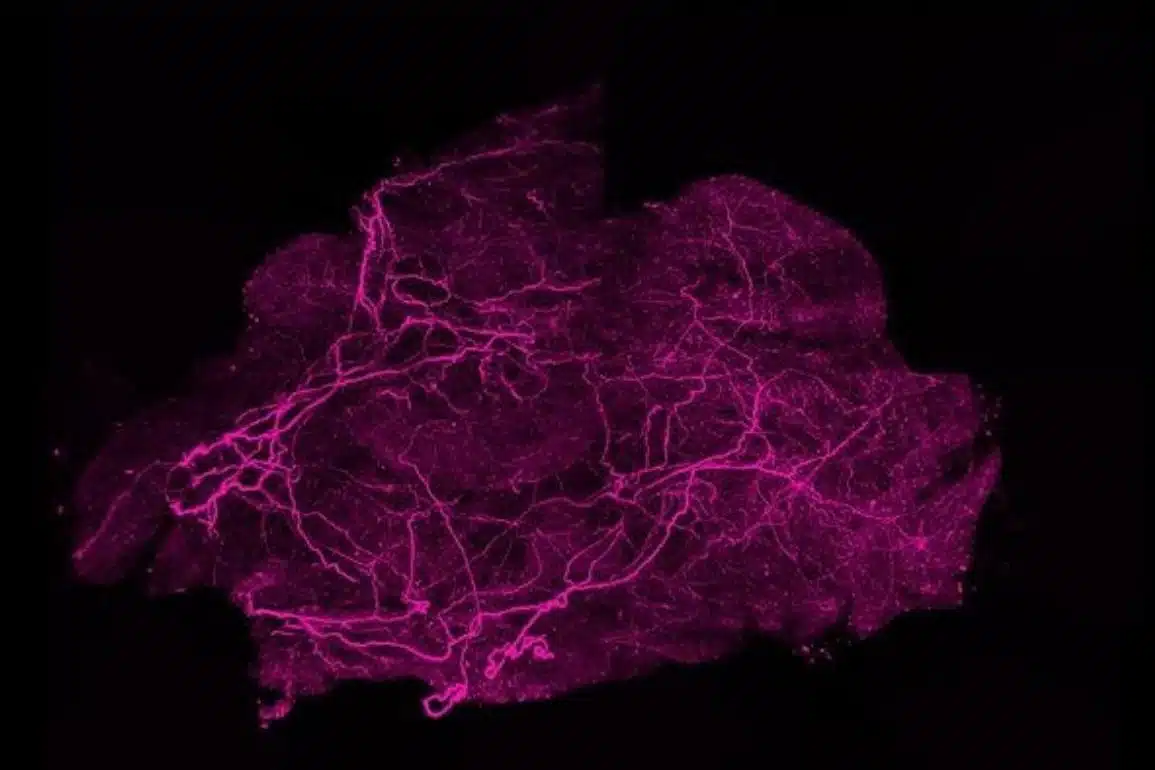
Using high-powered microscopy and genetic analysis, the researchers confirmed both psilocybin and MDMA trigger physical myelin repair. Furthermore, a serotonin receptor 5-HT2A blockade prevented both the behavioral and myelin-associated effects.
When the team used a different drug (anisomycin) to block the formation of fear memories, anxiety decreased, but the myelin remained unrepaired. This suggests that while memories can be suppressed, biological recovery requires the structural support of myelin.
“Taken together, this moves oligodendrocytes and adaptive myelination from ‘background correlates’ to a mechanistically testable gate on the durability of psychedelic-associated circuit change,” notes Dr. Bostancıklıoğlu.
“The implication of oligodendrocytes in the therapeutic effects of psychedelics and MDMA is important because of their many functions in the brain, including myelin formation, glutamate homeostasis, and neuroinflammation. The dependency of the therapeutic effects of these drugs in animals may suggest that myelin compromise may undermine their efficacy,” adds Dr. Krystal.
“Overall, these data suggest that psychedelics and MDMA, like selective serotonin reuptake inhibitors (SSRIs) and ketamine, may promote the recovery from stress-related damage to myelin, contributing to clinical recovery.”
The study also found that psilocybin and MDMA reduce astrocyte reactivity that can cause inflammation.
The investigators point out that enhancing myelination would not be expected to replace psychotherapy; rather, it could support consolidation and maintenance of healthier network communication after the acute psychedelic session, when the brain is transitioning from destabilization back towards reintegration.
Dr. Bostancıklıoğlu concludes, “We often talk about psychedelics as ‘opening a window’ for brain plasticity. Recent work emphasizes that these drugs can acutely loosen entrenched network patterns and then leave a sub-acute period in which experience can reshape circuits.
“What we show here is that myelin-producing cells may be an underappreciated part of that story—helping translate a transient window into longer-lasting circuit change, at least in a fear-based rat model.”
Key Questions Answered:
A: No—this study shows they actually help fix the wiring. Trauma “frays” the insulation (myelin) of your brain’s communication lines, leading to static and mistimed signals. Psychedelics like psilocybin and MDMA trigger the brain to physically re-wrap those wires, allowing for clearer, calmer communication.
A: In PTSD, the brain’s fear circuits are often “over-active” and poorly timed. Myelin ensures that signals travel at the right speed. By repairing this insulation, the brain can better synchronize its networks, helping to “turn down the volume” on persistent threat responses.
A: Not quite. The researchers emphasize that these drugs “open a window” of plasticity. The physical repair of myelin provides the structural support needed for that window to stay open, but it works best alongside therapy to reintegrate those healthier network patterns.
Editorial Notes:
- This article was edited by a Neuroscience News editor.
- Journal paper reviewed in full.
- Additional context added by our staff.
About this PTSD and psychedelics research news
Author: Eileen Leahy
Source: Elsevier
Contact: Eileen Leahy – Elsevier
Image: The image is credited to Neuroscience News
Original Research: Open access.
“MDMA and Psilocybin Regulate Oligodendrocyte-Lineage Cell Numbers and Anxiety-Like Behaviors in a Rat Model of Fear” by Mehmet Bostancıklıoğlu, Davut Sinan Kaplan, Ramazan Bal, Elif Yiğit, Hasan Ulusal, and Ebru Temiz. Biological Psychiatry
DOI:10.1016/j.biopsych.2026.01.016
Abstract
MDMA and Psilocybin Regulate Oligodendrocyte-Lineage Cell Numbers and Anxiety-Like Behaviors in a Rat Model of Fear
Background
Psilocybin and 3,4-methylenedioxymethamphetamine (MDMA) produce rapid, enduring therapeutic effects in post-traumatic stress disorder (PTSD); however, the underlying cellular mechanisms remain incompletely understood. This study investigated whether adult myelin plasticity contributes to the therapeutic actions of psilocybin and MDMA in a rat model of contextual fear conditioning.
Methods
Adult male Wistar rats (n = 210) received repeated low doses of psilocybin (0.5 mg/kg, i.p., for four days) or MDMA (0.1 mg/kg/day, i.p., for four days). Behavioral tests assessed anxiety-like behaviors and spatial memory. Following local and global manipulations of myelin integrity, we assessed the drugs’ effects on myelination by quantifying myelin sheath thickness, oligodendrocyte-lineage cell densities, and transcriptomic, proteomic, and metabolomic profiles in the dentate gyrus.
Results
Both compounds reduced anxiety-like behaviors. These improvements coincided with oligodendroglial changes and multi-omic signatures of myelin-related remodeling; mean g-ratio measures of myelin thickness, however, did not differ significantly between intact fear-conditioned animals with or without psychedelic treatment.
Myelin disruption abolished these anxiolytic effects, and integrative multi-omics revealed convergent upregulation of myelin-related proteins following administration of psilocybin or MDMA.
Psilocybin preferentially induced early oligodendroglial gene programs, while MDMA enhanced markers of mature myelin. Notably, 5-HT2A receptor blockade completely abolished the myelin and behavioral enhancements induced by both psilocybin and MDMA.
Conclusions
Psilocybin and MDMA promote adult oligodendrocyte and myelin plasticity. Enhancing myelination might be a viable strategy to augment or sustain the therapeutic effects of psychedelic-assisted treatments for PTSD and related disorders.