

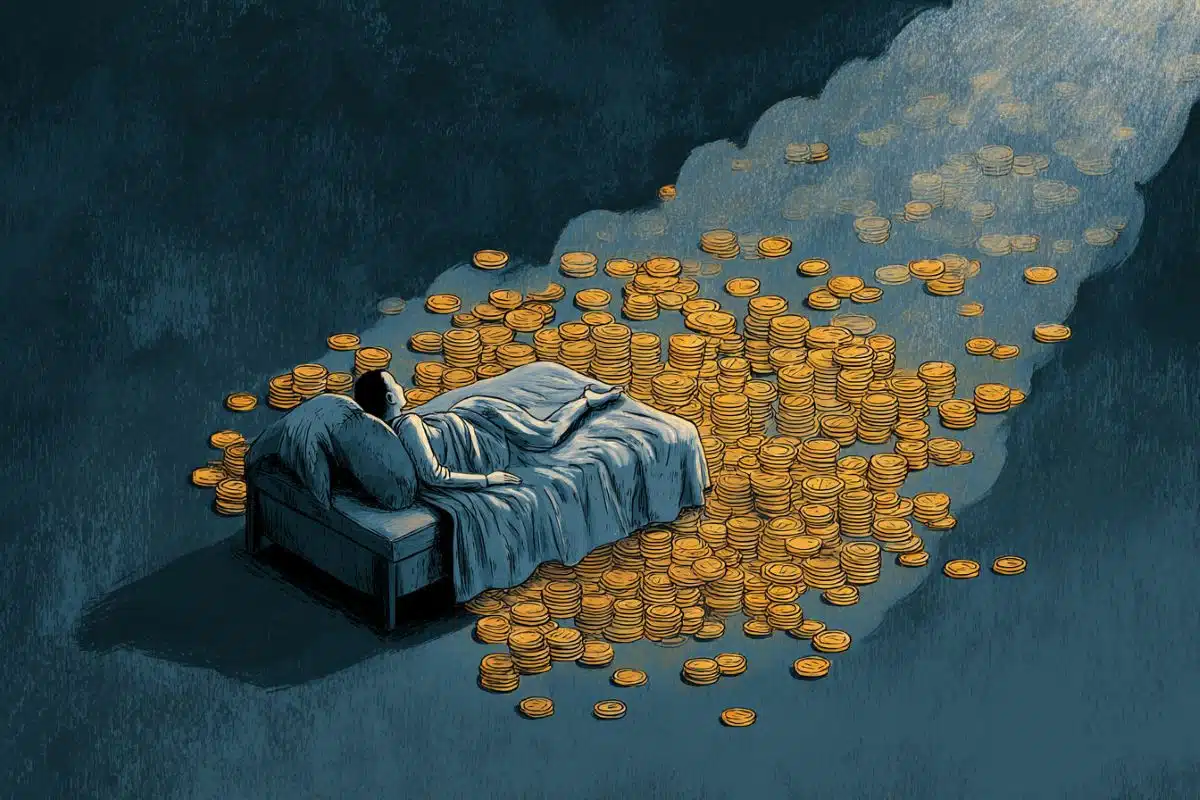
Summary: An innovative behavioral economics and sleep medicine study successfully mapped the financial worth individuals assign to their nightly rest. The investigation validated a two-factor structure for the Monetary Sleep Value Questionnaire, evaluating how demographic variables and psychological profiles dictate economic decisions around sleep.
Analyzing data from a nationwide survey of 455 adults, the study tracked two core financial dimensions: a person’s willingness to pay for enhanced sleep quality, and the monetary compensation required to willingly sacrifice their sleep. The findings reveal that age, income baseline, and psychological profiles significantly sway these values, establishing an economic framework to predict sleep compliance and design personalized health interventions.
Key Facts
- Societal Loss vs. Personal Capital: While public health groups regularly evaluate the massive macro-economic drain that sleep deprivation inflicts on society, this study shifts focus downward. It establishes a practical, personalized baseline measuring how individual workers price their own nightly boundaries.
- The Two-Factor Monetary Metric: The study validated the Monetary Sleep Value Questionnaire, demonstrating that sleep economics splits cleanly into two distinct behavioral tracks:
- Willingness to Pay (WTP): What an individual will financially invest to buy back or improve sleep quality.
- Compensation Expectations: The exact cash price an individual demands to willingly give up an hour of rest.
- The Income Compensation Scale: Retrospective analyses unmasked a direct correlation between personal earnings and sleep valuation: individuals with higher baseline incomes require significantly larger cash payouts before agreeing to sacrifice an hour of sleep nightly for life.
- The Demographical Age Inversion: Conversely, age presents an inverse relationship. Older age cohorts display significantly lower financial compensation demands to sacrifice sleep compared to younger adults, revealing changing values around sleep flexibility over time.
- Psychological Profile Divergence: Using the Sleep Value Item Bank 2.0, the team categorized participants into distinct behavioral mindsets:
- “Sleep Appreciate” Track: Individuals who actively value their rest display a significantly higher willingness to pay out-of-pocket for sleep quality gains.
- “Sleep Devalue” Track: Those who minimize the value of rest require far less money to give up an hour of sleep.
- A New Tool for Custom Public Interventions: Lead author Abigail Woolley notes that translating sleep health into concrete dollars and cents gives clinicians an objective blueprint to build health campaigns. By structuring medical advice around a patient’s personal financial lifestyle, organizations can create persuasive, high-compliance sleep interventions.
Source: AASM
A new study to be presented at the SLEEP 2026 annual meeting found that people place different financial values on sleep, with those differences linked to factors such as age, income, and existing attitudes about sleep.
Results support a two-factor structure for the Monetary Sleep Value Questionnaire, reflecting two distinct dimensions: willingness to pay for increases in sleep quality and compensation required to give up sleep.
Analyses found that older age was associated with lower compensation demands for sacrificing sleep, while higher income was associated with greater compensation expectations. Individuals with a “Sleep Devalue” profile required less money to give up sleep, while those with a “Sleep Appreciate” profile were willing to pay more for better sleep. All reported associations were statistically significant.
“How individuals financially value sleep may reflect broader attitudes about sleep, as well as their demographic characteristics such as age and income,” said lead author Abigail Woolley, who is an undergraduate researcher at Brigham Young University in Provo, Utah. “The Monetary Sleep Value Questionnaire could serve as a valuable tool for understanding the economic factors that shape how people think about their sleep.”
The American Academy of Sleep Medicine recommends that adults get seven or more hours of sleep per night, recognizing that sleep is essential to health. Insufficient sleep has been estimated to carry substantial economic costs at the societal level. However, less is known about how individuals assign value to sleep.
The study used data from a survey of 455 adults across the continental United States (mean age 45 years; 53% female; 82% white; 50% married). Participants completed the Sleep Value Item Bank 2.0, which classifies individuals into one of five sleep value profiles (Unconcerned, Appreciative, Ambivalent, Devaluing, and Concerned), and the Monetary Sleep Value Questionnaire.
The questionnaire comprises eight items assessing willingness to pay for sleep quality gains and eight items assessing compensation required for sleep losses, each ranging from one hour to one hour nightly for life. Analyses examined the questionnaire’s structure and associations with demographics and sleep value profiles.
Woolley noted that integrating economic perspectives into sleep research may open new avenues for understanding how personal sleep values can inform intervention design.
“Integrating economic perspectives into sleep health research may offer novel insights for designing interventions that align with how individuals personally value their sleep,” Woolley said.
Funding: The study was supported by a grant from the Sleep Research Society Foundation.
Key Questions Answered:
A: By measuring what people are willing to pay for it versus what they demand to give it up. Brigham Young University researchers used a specialized questionnaire that asks participants to make financial trade-offs, such as how much cash they would pay out-of-pocket for a device that guarantees better sleep quality, or exactly how much money a company would have to pay them to permanently give up an hour of sleep each night.
A: While the study notes this statistical link, it likely reflects shifts in lifestyle and sleep architecture. As people age, natural sleep patterns often change, resulting in lighter or shorter sleep durations. Because younger adults often manage demanding career builds, young families, and high cognitive loads, they may view their limited sleep windows as high-value assets that require a steeper payout to disrupt.
A: It allows doctors to tailor health advice to a patient’s personal motivations. If a clinician knows a patient has a “Sleep Devalue” profile, meaning they easily trade rest for extra cash or productivity—simply telling them “sleep is healthy” won’t work. Instead, doctors can use this economic data to frame sleep as a performance-boosting asset, showing that protecting rest actually preserves their long-term earning power and physical durability.
Editorial Notes:
- This article was edited by a Neuroscience News editor.
- Journal paper reviewed in full.
- Additional context added by our staff.
About this neuropharmacology and cancer research news
Author: Hannah Miller
Source: AASM
Contact: Hannah Miller – AASM
Image: The image is credited to Neuroscience News
Original Research: The findings will be presented at SLEEP 2026


