

Summary:
A psychological and sleep research study published in PLOS Mental Health reveals that people who frequently startle awake while drifting off to sleep, a phenomenon known as “sleep starts” or hypnic jerks, report significantly poorer sleep quality, greater insomnia severity, and heightened anxiety.
Conducted by Tanja Grünberger and Manuel Schabus at Paris Lodron University Salzburg, the investigation examined 194 adults across Austria and Germany. The researchers discovered that frequent sleep starts do not merely represent isolated motor twitches, but manifest alongside autonomic surges, sensory flashes, and cognitive-emotional hyperarousal driven by unhelpful beliefs and acute pressure to fall asleep.
Key Facts:
- Beyond the Muscle Twitch: Frequent sleep starts were characterized not only by physical jerks, but also by sensory phenomena (falling sensations, electric-shock feelings, light flashes, auditory bangs) and autonomic startle responses (racing heart, rapid breathing, acute panic).
- Significant Psychological Comorbidity: Participants experiencing sleep starts at least weekly reported significantly poorer sleep quality, higher insomnia severity, more dysfunctional sleep-related beliefs, and elevated anxiety and depressive symptoms compared to controls.
- Driven by Stress and Hyperarousal: Sleep start frequency was strongly linked to periods of psychological stress, emotional strain, and daytime anxiety, accounting for 26.9% of individual variance alongside age and gender, whereas sleep deprivation had a weaker influence.
Source: PLOS
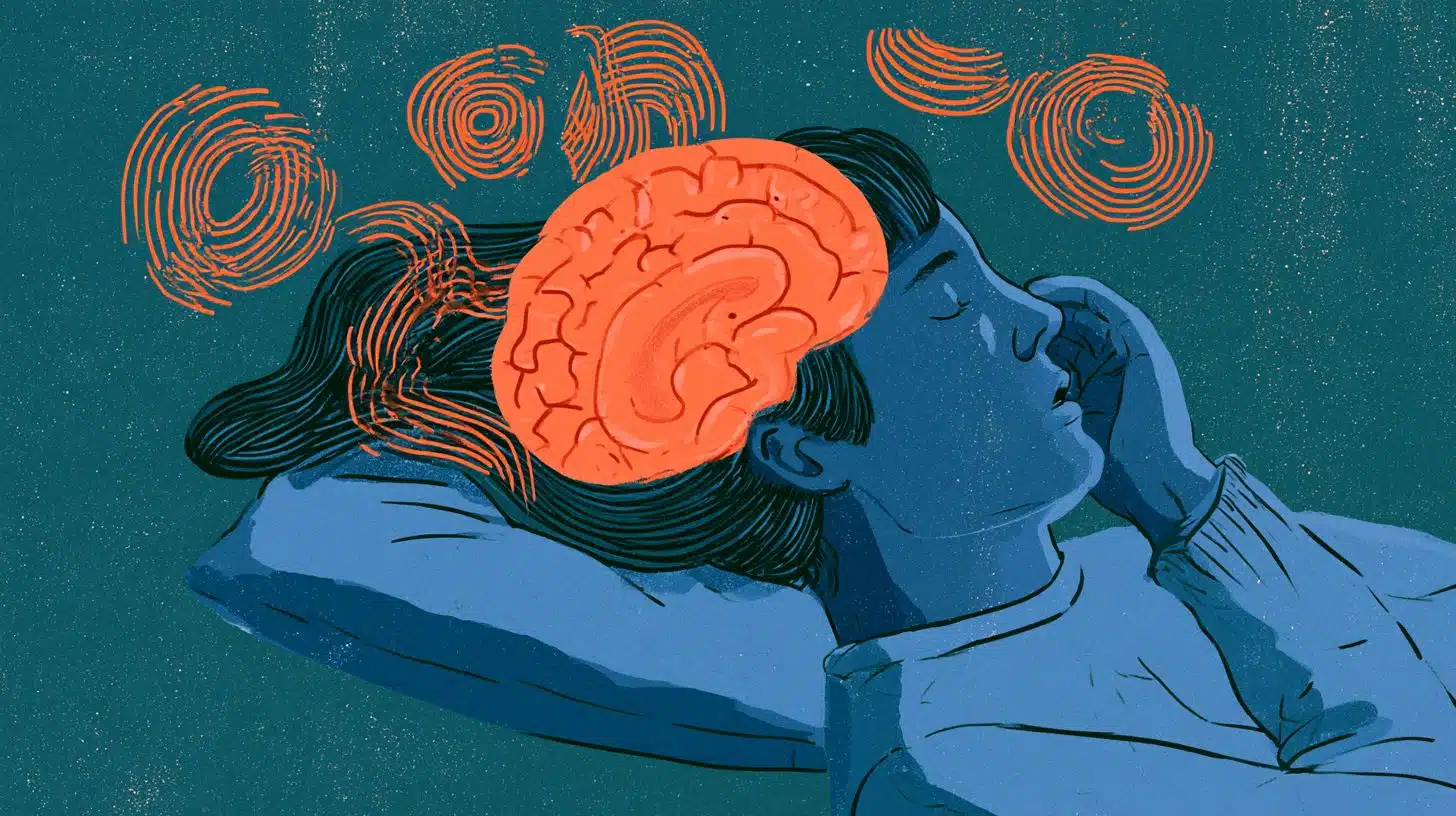
Just as consciousness begins to dissolve and the body relaxes into slumber, an abrupt, violent jolt shatters the transition. Often accompanied by the vivid sensation of tumbling into an abyss, an electric zap down the spine, or a blinding flash of light, the heart races as the sleeper gasps awake in sudden panic.
Known medically as “sleep starts” or hypnic jerks, these sudden myoclonic twitches occur at the boundary between wakefulness and non-rapid eye movement (NREM) sleep. While sporadic sleep starts are a benign, universal human experience, for a substantial subset of the population they recur persistently, transforming the threshold of sleep into a source of dread.
In a study published in the open-access journal PLOS Mental Health, researchers Tanja Grünberger and Manuel Schabus of the Centre for Cognitive Neuroscience at Paris Lodron University Salzburg, Austria, investigated the psychological and physiological profile of individuals afflicted by chronic hypnic jerks.
Their findings indicate that recurrent sleep starts are not isolated neuromuscular glitches; rather, they serve as a behavioral manifestation of sleep-related hyperarousal and cognitive-emotional anxiety.
The Full Symptom Spectrum of Sleep Starts
Because standardized psychometric tools for quantifying hypnic jerks have historically been lacking, the research team synthesized existing clinical neurology and sleep medicine literature to construct a targeted assessment battery.
They surveyed 194 adults across Austria and Germany, dividing them into two cohorts: 96 individuals who experienced abrupt awakenings accompanied by at least one secondary symptom weekly, and 98 matched control participants without frequent sleep starts. Participants completed validated measures assessing insomnia severity, subjective sleep quality, daytime sleepiness, dysfunctional beliefs about sleep, anxiety, and depression.
The resulting symptom profiles revealed that sleep starts involve a multi-sensory and autonomic cascade:
- Motor & Somatosensory Disruption: Abrupt, whole-body or limb muscle jerks, electric shock-like sensations, tingling, or localized numbness.
- Vestibular & Perceptual Illusions: Acute sensations of falling, loss of gravitational balance, brief dream-like hypnagogic imagery, flashes of light, or sudden auditory bangs.
- Autonomic Startle: Instantaneous sympathetic nervous system activation, marked by tachycardia, hyperventilation, and acute surges of fear or disorientation.
“Sleep starts are much more than a simple muscle twitch when falling asleep,” explains first author Tanja Grünberger. “Participants described not only jerks, but also sensations of falling, a racing heart, flashes of light or loud bangs, and strong feelings of alarm or fear – and those who reported sleep starts at least once a week also reported poorer sleep quality, more unhelpful beliefs about sleep and more anxiety symptoms.”
The Hyperarousal and Insomnia Cycle
When comparing the two cohorts, the differences were statistically pronounced. Individuals experiencing weekly sleep starts had significantly poorer overall sleep quality, greater insomnia severity, higher levels of general anxiety, elevated depressive symptoms, and more dysfunctional beliefs regarding sleep.
Statistical modeling revealed that how frequently people experienced sleep starts was closely tied to sleep quality, rigid sleep beliefs, and anxiety levels. Together with demographic variables (age and gender), these psychological factors accounted for 26.9% of the variance in sleep start frequency between individuals.
Importantly, participants reported that sleep starts surged during periods of psychological distress and emotional strain. In contrast, physical sleep deprivation was less influential on the frequency of episodes.
“What we found most interesting was how closely sleep starts are linked to how people think and feel about sleep,” Grünberger notes. “The more strongly participants held unhelpful beliefs about sleep and the more anxious they were, the more often they reported sleep starts – and in the moment itself, many described a strong pressure to finally fall asleep. Our data cannot show what causes what, but this pattern resembles what we know from insomnia.”
Rethinking Treatment Approaches
Traditional medical advice has often dismissed hypnic jerks as inconsequential physiological quirks requiring no clinical management. However, the Salzburg findings show that for individuals caught in chronic hyperarousal, sleep starts create a self-reinforcing loop: pre-sleep anxiety increases nervous system excitability, triggering a violent startle response, which then reinforces catastrophic beliefs about one’s inability to sleep.
“These findings support the view that sleep starts should be considered within broader frameworks of sleep-related hyperarousal and cognitive-emotional activation,” the authors write.
Looking forward, senior author Manuel Schabus highlights the therapeutic avenues this connection opens: “For most people, sleep starts are a harmless feature of falling asleep. For a subgroup, however, they go along with distress and a longer time to fall asleep. Whether approaches that reduce arousal and sleep-related worry also help with distressing sleep starts has not yet been tested – that is an important next step.”
Targeted cognitive behavioral therapy for insomnia (CBT-I), autonomic down-regulation protocols, and pre-sleep relaxation techniques could offer relief for patients whose transition into slumber is repeatedly derailed by their own nervous system.
Questions and Answers
What are sleep starts or hypnic jerks?
Sleep starts are sudden, involuntary muscle twitches or jolts that occur during the transition from wakefulness to sleep. They can be strong enough to wake a person fully and are often accompanied by sensations of falling, electric shocks, flashes of light, a racing heart, and a sudden surge of fear or alarm.
How do frequent sleep starts relate to mental health and sleep disorders?
People who experience sleep starts at least weekly report significantly worse sleep quality, greater insomnia severity, higher anxiety, and more dysfunctional beliefs about sleep compared to those who do not. The frequency of these jolts tracks closely with daytime emotional strain and psychological stress.
What causes sleep starts to happen more often?
While occasional jerks are normal, frequent episodes appear driven by central nervous system hyperarousal. Heightened stress, performance anxiety around falling asleep, and catastrophic beliefs about insomnia keep the autonomic nervous system on high alert, triggering a startle response instead of a smooth physiological descent into sleep.
Editorial Notes:
- This article was edited by a Neuroscience News editor.
- Journal paper reviewed in full.
- Additional context added by our staff.
About this sleep and anxiety Research:
- Media Contact: Charlotte Bhaskar
- Source: PLOS
- Image Credit: Image credited to Neuroscience News
- Original Research is Open Access: PLOS Mental Health (Nov 11, 2026). “Phenomenology and associations with sleep, psychological, and demographic characteristics.” Authors: Tanja Grünberger, Christopher Höhn, Manuel Schabus, and Anton-Rupert Laireiter.
- DOI: 10.1371/journal.pmen.0000737
Abstract
Phenomenology and associations with sleep, psychological, and demographic characteristics
Sleep starts (SS) are transient phenomena during sleep onset. Although traditionally characterized by sudden muscle jerks, they may also involve sensory, cognitive, emotional, and autonomic experiences. Despite their high prevalence, empirical data on phenomenology and associated characteristics remain limited. This online survey examined SS phenomenology and exploratory associations with demographic, sleep-related, and psychological variables in 194 adults.
Participants with self-reported sleep-related movement disorders or relevant medical conditions were excluded. Individuals reporting abrupt awakenings ≥1/week and ≥1 additional symptom formed the SS group (SS frequency ≥1, n = 96); all others the comparison group (SS frequency <1, n = 98). Because SS were operationalized using self-reported symptoms, they could not be distinguished from related sleep-onset phenomena (e.g., exploding head syndrome, hypnagogic hallucinations).
Standardized questionnaires (PSQI, ISI, ESS, MZS, HADS) assessed sleep quality, insomnia severity, daytime sleepiness, dysfunctional sleep-related beliefs, and anxiety/depression symptoms. Participants described diverse experiences including motor jerks, falling sensations, dream-like experiences, somatosensory symptoms, autonomic arousal, and emotional reactions, accompanied by alarm, anxiety, and confusion.
Compared with controls, the SS group reported poorer sleep quality, greater insomnia severity, stronger dysfunctional sleep-related beliefs, and higher anxiety/depressive symptoms (all p < .05). Exploratory regression analyses indicated that poorer sleep quality, stronger dysfunctional sleep-related beliefs, and higher anxiety symptoms were associated with higher SS frequency, whereas depressive symptoms were not. The final model explained 26.9% of variance (R2 = .269, adjusted R2 = .245).
More frequent SS were retrospectively reported during emotional stress, whereas sleep deprivation was perceived as less influential. Although many described SS as manageable, a substantial subgroup reported distress and sleep disruption.
This suggests that SS represent heterogeneous sleep-onset experiences associated with subjective sleep disturbance and cognitive-emotional arousal. Although causality cannot be inferred from cross-sectional self-report data, the results highlight potentially relevant links between SS and sleep-related cognitive-emotional processes.


