

Summary: Forming social connections online creates a surprising cognitive trade-off: as our networking performance soars, our engagement with and learning from actual content plummet.
A collaborative study reveals that joining online communities or following pages shifts mental energy away from “knowledge gathering” toward “social mapping”. Paradoxically, this effect is most pronounced in individuals with higher working memory, who instinctively treat their social network as an “external hard drive” for information.
Key Research Findings
- The Content-Social Trade-Off: Engaging with online communities leads to a 40% decrease in content recall (“who knows what”) but a 65% boost in social connection memory (“who knows who”).
- The Sharpness Trap: Individuals with higher working memory capacity exhibited a 50% reduction in content recall, yet a 150% increase in tracking social connections.
- Cognitive Efficiency: Rather than being “lazy,” high-capacity individuals are strategically efficient. They invest energy into understanding the network’s structure so they can retrieve content later, rather than absorbing it immediately.
- External Hard Drive Effect: Once the brain perceives that information is stored “out there” in the network, it reduces the effort spent on independent knowledge formation.
- Demographics: The study involved approximately 1,000 adults (ages 18 to 77) across five simulated social media experiments.
Source: University of Bristol
Forming social connections online and via social media reduces how much people engage with and learn from the content posted but significantly boosts their networking performance, according to new research.
The study, led by the University of Bristol in the UK in partnership with the University at Buffalo, State University of New York in the US, found this shift of focus from learning about the actual content to concentrating on the related social connections is more marked among people with a better memory.
Lead author Dr Esther Kang, Lecturer in Marketing at the University of Bristol, said: “When you follow someone on LinkedIn, join a Facebook group, or become a member of an online community, you might assume you will learn more about the content they share.
“Paradoxically, our study suggests the opposite happens, as individuals channel their mental energy away from knowledge gathering to mapping the social landscape, noting people’s individual connections and the wider network.
“Interestingly, this shift was exhibited more among people with greater working memory capacity, so the sharper you are cognitively the more likely you are to tune that content out.”
The research involved around 1,000 adults aged between 18 and 77 across five experiments. In each study, participants engaged with simulated social media environments, such as joining groups, following pages, or becoming friends with others. Their exposure to content, as well as their memory for both content (“who knows what”) and social connections (“who knows who”), was then assessed.
One of the experiments found participants engaging with an online community showed a notable drop in content learning. Overall, recall accuracy for “who knew what” decreased by around 40%. Conversely, their memory for social connections was significantly boosted, with accuracy in reporting ‘who knew whom’ increasing by around 65%.
“This pattern reflects a cognitive trade off. Rather than encoding information itself, individuals increasingly track who possesses the information. It indicates that people engage with and use the social network like an external hard drive for the brain. Once information is perceived as being stored ‘out there’ in the network, the mind reduces effort in remembering it independently,” Dr Kang explained.
“The strength of this switch also appears to be determined by working memory capacity. Individuals with higher working memory capacity showed a more than 50% reduction in content recall, but a dramatic increase (over 150%) in accuracy in tracking social connections after forming connections to others. In contrast, individuals with lower working memory capacity performed more consistently.
“These high working memory individuals are not just being lazy. Rather, they are demonstrating efficiency, recognising they can retrieve content later through their network, so they invest their attention in understanding who is connected to whom rather than in absorbing content immediately.”
The results highlight a hidden trade off in digital environments. While social networks make information easier to access, they may also reduce deep learning and independent knowledge formation.
Study co-author Dr Arun Lakshmanan, Associate Professor of Marketing in the University at Buffalo, added: “For educators, marketers, and digital platforms, the message is clear. Simply increasing connectivity or follower counts may not enhance engagement with content. Instead, strategies that encourage active processing, such as time-sensitive content or interactive knowledge sharing, may be needed to sustain meaningful attention.”
Key Question Answered:
A: Yes, regarding the actual facts. Because your brain is “sharper,” it quickly recognizes that it’s more efficient to remember who has the information than the information itself. You become an expert at networking while potentially losing “deep learning”.
A: Not necessarily, but it is changing how we use our intelligence. We are shifting from independent knowledge formation to becoming master navigators of a “social landscape”. We treat our connections like an external brain.
A: Simply increasing followers won’t work. The study suggests using “active processing” strategies, such as time-sensitive content or interactive sharing, to force the brain to engage with the content immediately rather than just “filing” it away for later retrieval through a contact.
Editorial Notes:
- This article was edited by a Neuroscience News editor.
- Journal paper reviewed in full.
- Additional context added by our staff.
About this memory and social media research news
Author: Victoria Tagg
Source: University of Bristol
Contact: Victoria Tagg – University of Bristol
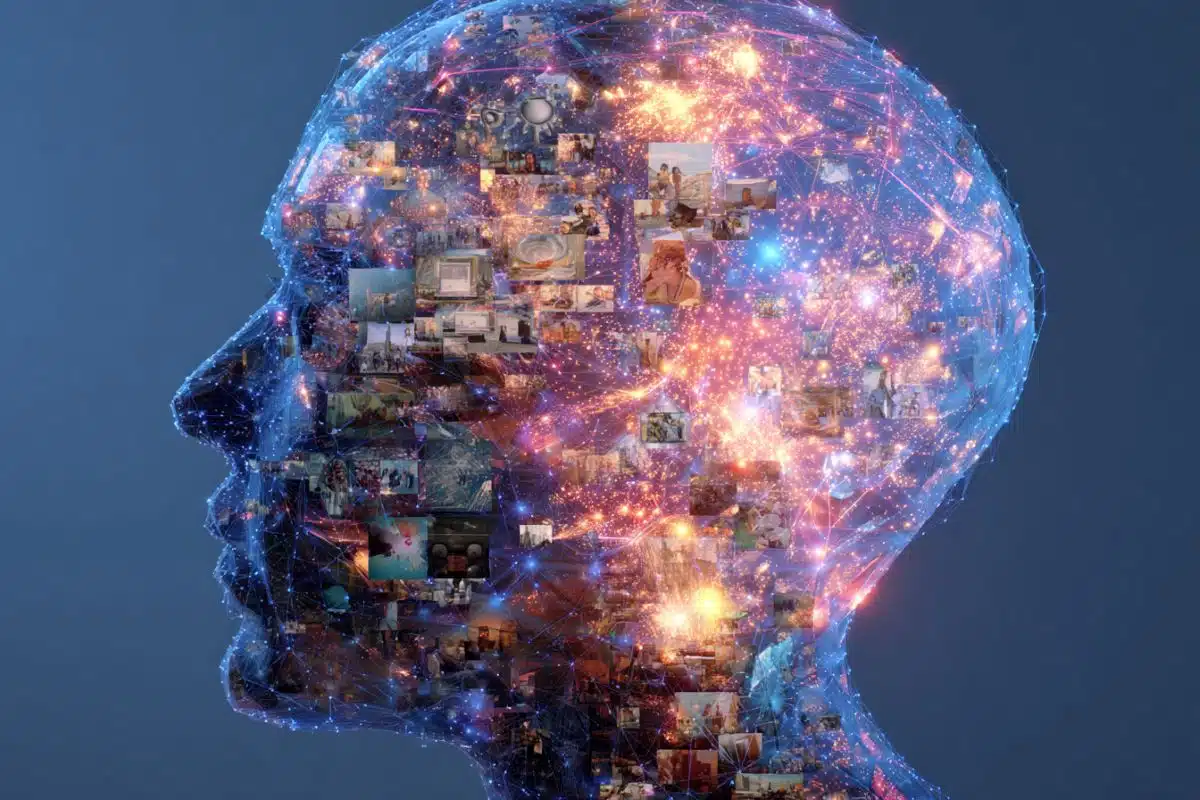
Image: The image is credited to Neuroscience News
Original Research: Open access.
“Tracking connections, not content: How working memory shapes content and social learning in online networks” by Esther Kang and Arun Lakshmanan. Journal of Experimental Social Psychology
DOI:10.1016/j.jesp.2026.104925
Abstract
Tracking connections, not content: How working memory shapes content and social learning in online networks
How do individuals navigate and prioritize social information in online networks? While social networks provide continuous streams of content, they also constitute complex webs of social connections.
Across five studies, we show that individuals with higher working memory capacity do not necessarily learn more from the content itself. Instead, they strategically allocate attention toward mapping social relationships, such as tracking who is connected to whom, effectively treating the network as an external social memory system.
This attentional reallocation leads to reduced engagement with content but enhanced encoding of relational structures.
These findings highlight a counterintuitive role of working memory in digital social cognition: cognitive resources are deployed to optimize learning about social connections rather than content, reflecting adaptive strategies for managing relational information.
Theoretically, this work advances understanding of how attention and memory support social learning in digital environments.


