Summary: Researchers have identified a powerful neural pathway that triggers the rapid loss of all body fat—including “stubborn” stores—without any reduction in food intake.
Inspired by “stable adipocytes” found in bone marrow, which typically resist diet and exercise, the team discovered that delivering the hormone leptin directly to the brain unlocks these cells. This signal puts the body into a state of low glucose and insulin, which strips away the protective proteins that usually prevent fat breakdown.
While the discovery offers a revolutionary blueprint for treating obesity, it also provides a critical roadmap for protecting patients with severe wasting disorders, where the loss of these protective fat pads leads to bone fractures and a decreased quality of life.
Key Facts
- The Leptin Trigger: Delivering sustained leptin to the brain acts as the master key, signaling the body to burn fat that is otherwise biologically “locked.”
- Targeting “Stable” Fat: The study focused on constitutive bone marrow adipocytes—cells found in the skeleton, hands, and feet that are naturally resistant to loss during day-to-day activity.
- Insulin & Glucose Override: The neural pathway works by inducing a state of low glucose and insulin, which reduces the specific inhibitors that normally prevent these stable fat cells from breaking down.
- The Double-Edged Sword: While this pathway could lead to new obesity treatments, researchers emphasize its importance in wasting diseases; losing this specific fat is a primary cause of bone fragility and fractures.
- Maintain Normal Diet: The mice in the study experienced total body fat loss within days, even while maintaining their usual caloric intake.
Source: WUSTL
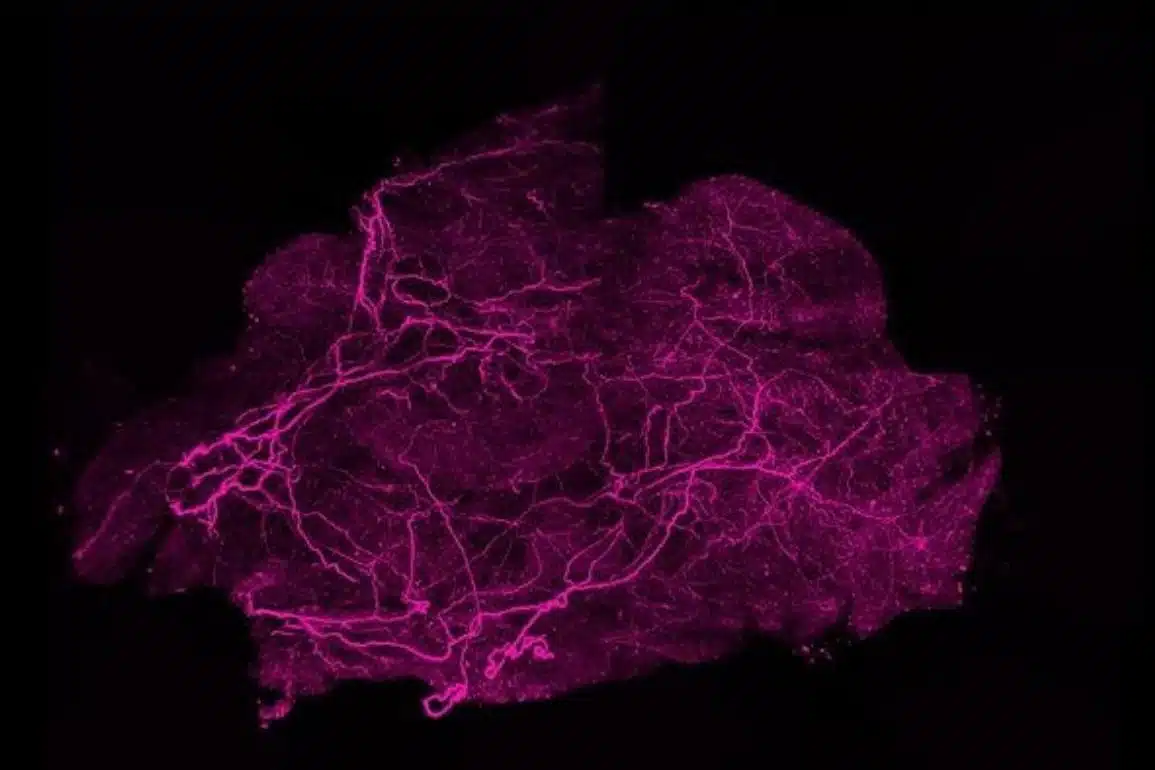
Researchers at WashU Medicine have identified a potent pathway that begins in the brain and leads to loss of all body fat without reducing food intake.
The study is reported in Nature Metabolism.
The team — led by senior author Erica L. Scheller, DDS, PhD, an associate professor in the Division of Bone and Mineral Diseases in the Department of Medicine; Xiao Zhang, PhD, a former graduate student in Scheller’s lab who is now a postdoctoral fellow at the University of Pennsylvania School of Medicine; and Sree Panicker, a graduate student in Scheller’s lab — was inspired by a unique population of fat cells located deep within the skeleton.
“About 70% of our bone marrow is filled with fat that doesn’t respond to diet or exercise,” said senior author Scheller. “We wanted to figure out why.”
The team found that these special cells, called constitutive bone marrow adipocytes, expressed high levels of proteins that inhibit fat breakdown. This causes resistance to fat loss in day-to-day settings.
“We call these cells stable adipocytes,” said Zhang, the study’s first author.
In mice, sustained injection of leptin, a hormone, into the brain was able to unlock the stable adipocytes by putting the body into a state of low glucose and insulin. This reduced the inhibitors of fat breakdown, causing complete loss of body fat within days, even though the mice were still eating normally.
This pathway is so powerful that the scientists caution against using it in humans until it is better understood. Stable adipocytes occur in places like the bone marrow, in the hands and feet, and around important glands.
In severe wasting disorders, loss of fat within these cells is associated with bone fractures and reduced quality of life. Scheller’s team hopes to prevent this loss and preserve health in patients with severe wasting disorders by defining the mechanisms of stable fat loss.
Conversely, methods to activate fat loss from stubborn adipocytes may support future treatments for obesity.
Funding: This work was funded by the National Institutes of Health (NIH).
Key Questions Answered:
A: In this study, yes. By activating a specific leptin signal in the brain, the body was triggered to eliminate fat stores—even the most stubborn ones—while food intake remained exactly the same. It turns the “burn” on at a neurological level.
A: The fat in your bone marrow, hands, and feet is known as “stable” fat. It’s designed to stay put to protect your bones and glands. This research found the first neural “override” that can force the body to use these specific energy stores.
A: Potentially, but with caution. Because these fat pads are essential for bone strength, scientists are currently using this discovery to figure out how to stop fat loss in patients with wasting diseases, while exploring how to safely target it for obesity in the future.
Editorial Notes:
- This article was edited by a Neuroscience News editor.
- Journal paper reviewed in full.
- Additional context added by our staff.
About this weight loss and neuroscience research news
Author: Jaci McDonald
Source: WUSTL
Contact: Jaci McDonald – WUSTL
Image: The image is credited to Neuroscience News
Original Research: Open access.
“A catecholamine-independent pathway controlling adaptive adipocyte lipolysis” by Xiao Zhang, Sreejith S. Panicker, Jordan M. Bollinger, Anurag Majumdar, Rami Kheireddine, Lila F. Dabill, Clara Kim, Brian Kleiboeker, Fengrui Zhang, Yongbin Chen, Kristann L. Magee, Brian S. Learman, Adam Kepecs, Gretchen A. Meyer, Jun Liu, Steven A. Thomas, Irfan J. Lodhi, Ormond A. MacDougald, and Erica L. Scheller. Nature Metabolism
DOI:10.1038/s42255-025-01424-5
Abstract
A catecholamine-independent pathway controlling adaptive adipocyte lipolysis
Several adipose depots, including constitutive bone marrow adipose tissue, resist conventional lipolytic cues. However, under starvation, wasting or cachexia, the body eventually catabolizes stable adipocytes through unknown mechanisms.
Here we developed a mouse model of brain-evoked depletion of all fat, including stable constitutive bone marrow adipose tissue, independent of food intake, to study this phenomenon.
Genetic, surgical and chemical approaches demonstrated that catabolism of stable adipocytes required adipose triglyceride lipase-dependent lipolysis but was independent of local nerves, the sympathetic nervous system and catecholamines.
Instead, concurrent hypoglycaemia and hypoinsulinaemia activated a potent catabolic state by suppressing lipid storage and increasing catecholamine-independent lipolysis via downregulation of cell-autonomous lipolytic inhibitors including G0s2.
This was also sufficient to delipidate classical adipose depots and was recapitulated in tumour-associated cachexic mice.
Overall, this defines unique adaptations of stable adipocytes to resist lipolysis in healthy states while isolating a potent catecholamine-independent neurosystemic pathway by which the body can rapidly catabolize all adipose tissues.