Summary:
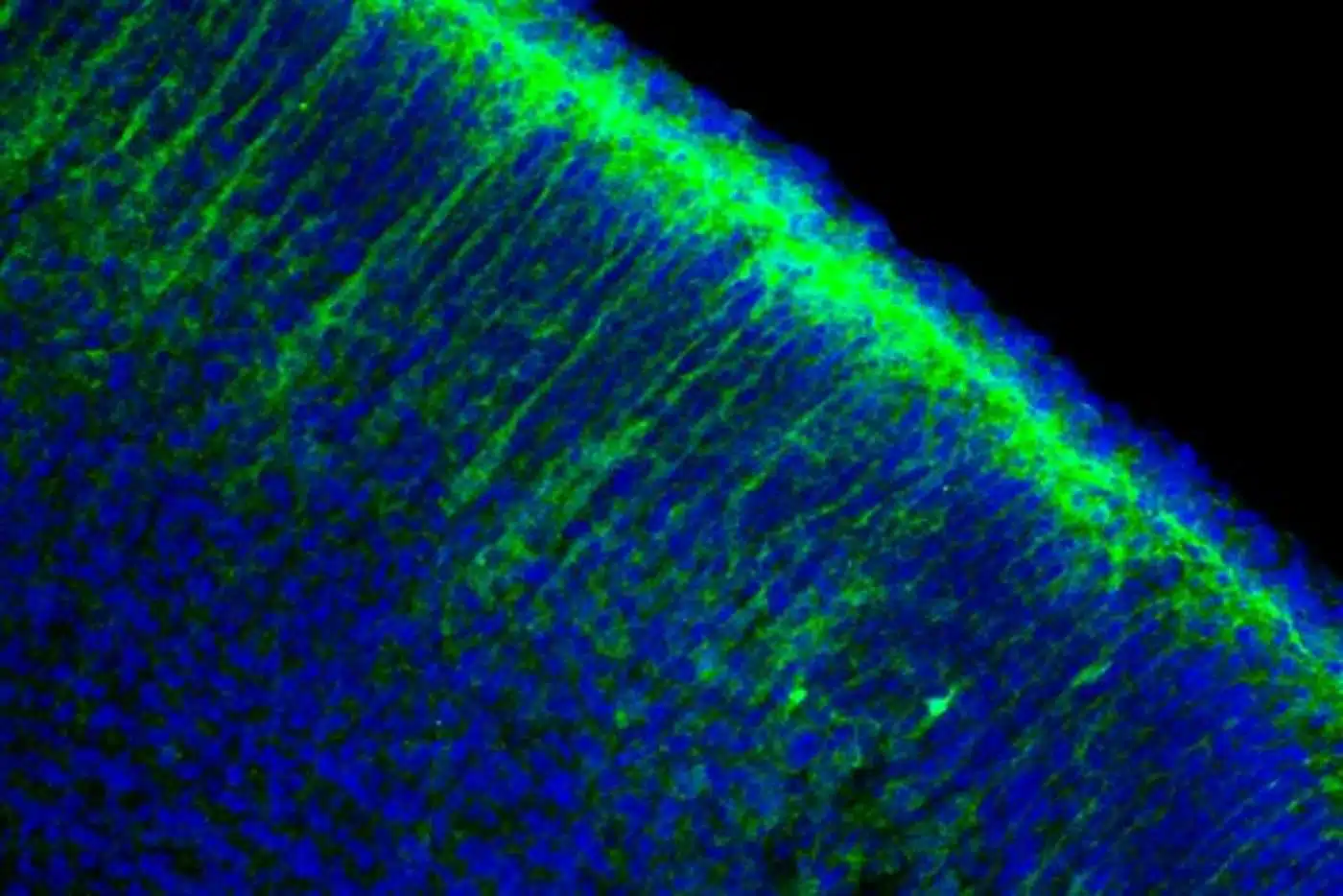
A landmark study published in Nature by researchers at Baylor College of Medicine reveals that astrocytes—the most abundant support cells in the central nervous system—are not a uniform population. By developing novel transgenic tools to separate astrocytes based on the surface receptor CD51, the team discovered that CD51-positive (CD51+) astrocytes carry out specialized duties: they build synapses via glypican 6 in the cortex, drive circuit rewiring in the hippocampus to support memory, and orchestrate functional neural recovery following ischemic stroke.
Key Facts:
- Functional Specialization: Astrocytes are divided into functionally distinct subtypes defined by the presence or absence of the surface receptor CD51, disproving the long-held assumption that astrocytes act as homogenous support cells.
- Synapse Assembly via Glypican 6: In both the developing and injured cerebral cortex, CD51+ astrocytes actively construct synaptic junctions between neurons through the secretion of glypican 6, a capacity entirely lacking in CD51- astrocytes.
- Hippocampal Rewiring & Stroke Repair: In the hippocampus, CD51+ astrocytes directly mediate circuit plasticity essential for learning and memory; following stroke, they spearhead synaptic remodeling to restore neurological motor function.
Source: Baylor College of Medicine
For more than a century, neuroscience recognized neurons as the primary specialists of the brain, categorized into intricate classes of excitatory, inhibitory, sensory, and motor cells. By contrast, astrocytes, the star-shaped glial cells that outnumber neurons across the brain and spinal cord, were largely viewed as a uniform collective of caretaker cells tasked with metabolic support, blood-brain barrier maintenance, and general homeostasis.
Now, a pioneering study from Baylor College of Medicine published in Nature overturns this dogma.
Led by senior author Benjamin Deneen, PhD, the research team demonstrated that astrocytes comprise specialized functional subtypes with dedicated physiological roles. Using newly engineered transgenic mouse lines, the investigators discovered that astrocytes marked by the surface protein CD51 perform essential architectural tasks: constructing synaptic junctions, tuning hippocampal memory circuits, and repairing neural pathways following ischemic stroke.
Developing Tools to Unmask Glial Diversity
While recent single-cell RNA sequencing studies suggested that astrocytes exhibit molecular heterogeneity across different brain regions, whether these transcriptional signatures translated into distinct functional roles in the living brain remained an open question.
The Baylor team zeroed in on CD51 (integrin alpha V), a cell-surface receptor protein expressed on a distinct subset of astrocytes.
“We set out to test whether astrocytes that carry CD51 (CD51+) and those that don’t (CD51-) work differently in living brain circuits, but no animal models or lab tools existed that would let us do that,” said co-first author Junsung Woo, PhD, assistant professor at Baylor’s Center for Cancer Neuroscience. “So we first developed a new mouse line and a set of lab tools that let us label and control CD51+ and CD51- astrocytes separately in a living brain. With these tools, we could compare the two groups side by side in the cerebral cortex and in the hippocampus across developing, adult, and injured brains.”
Division of Labor: Synaptogenesis and Memory Circuit Tuning
The experiments revealed that CD51+ and CD51- astrocytes represent entirely distinct cellular populations displaying unique morphologies, developmental timelines, and physiological duties.
In the developing and adult cerebral cortex, the brain region responsible for sensory perception, cognition, and motor control, CD51+ astrocytes functioned as master builders of neuronal connectivity.
“We discovered that CD51+ astrocytes have a specialized job: they help form synapses, the junctions where neurons pass messages to each other—in the developing and injured cortex. CD51- astrocytes don’t do this,” explained co-first author Michael Williamson, PhD, assistant professor at the University of Toronto and scientist at the Hospital for Sick Children. “CD51+ astrocytes do this job using a protein called glypican 6.”
The specialization was equally stark in the hippocampus, the brain’s epicenter for memory formation and spatial navigation. Here, CD51+ astrocytes directly governed synaptic plasticity. Rather than relying on secondary secreted factors, the surface CD51 protein itself drove the structural rewiring and adaptation of hippocampal circuits necessary for learning.
Spearheading Brain Repair After Ischemic Stroke
The therapeutic importance of this astrocyte division of labor became evident when the researchers examined models of brain injury.
Following an ischemic stroke, damaged neural networks must re-establish lost connections to restore motor and cognitive function. The team observed that CD51+ astrocytes migrated to the peri-infarct cortex and actively remodeled damaged synaptic circuits. In contrast, CD51- astrocytes failed to facilitate this structural repair, demonstrating that functional recovery after acute brain trauma depends heavily on the activity of this specialized subpopulation.
“Altogether, our findings change how we think about astrocytes,” said Dr. Deneen, professor and Dr. Russell J. and Marian K. Blattner Chair in the Department of Neurosurgery, Center for Cell and Gene Therapy, and director of the Center for Cancer Neuroscience at Baylor. “For a long time, astrocytes were considered largely uniform. We’ve shown that they include specialized subtypes with distinct jobs in the developing, adult, and injured brain, much like what we see for neurons. Going forward, studies of astrocytes in health and disease will need to consider which subtypes are involved.”
The discovery provides a new framework for neurotherapeutics. Rather than applying broad glial-targeting agents, future treatments for neurodevelopmental delays, memory disorders, and stroke rehabilitation may focus on selectively modulating CD51+ astrocytes to accelerate synaptic regeneration.
Funding: This work was supported by the National Institutes of Health (grants R35-NS132230, R01-AG071687 and R56-MH133822), the American Heart Association (grants 23POST1019413 and 25POST1363224), the David and Eula Wintermann Foundation and the Eunice Kennedy Shriver National Institute of Child Health & Human Development of the National Institutes of Health (award P50HD103555).
Editorial Notes:
- This article was edited by a Neuroscience News editor.
- Journal paper reviewed in full.
- Additional context added by our staff.
About this neuroscience Research:
- Media Contact: Graciela Gutierrez
- Source: Baylor College of Medicine
- Image Credit: Image credited to Neuroscience News
- Original Research is Open Access: Nature (Oct 1, 2026). “CD51 delineates functionally distinct astrocyte subtypes in neural circuits.” Authors: Junsung Woo, Michael R. Williamson, Dongjoo Choi, Ekin Akdemir, Thea Zlatkov, Kwanha Yu, Wookbong Kwon, Ehson Maleki, Yeunjung Ko, Kaitlyn Sanchez, Hussein Maleki, Jong Min Choi, Akdes Serin-Harmanci & Benjamin Deneen.
- DOI: 10.1038/s41586-026-11186-z
Abstract
CD51 delineates functionally distinct astrocyte subtypes in neural circuits
Astrocytes perform a diverse range of tasks that facilitate brain physiology, raising the possibility that these diverse astrocytic roles are enabled by functionally distinct subtypes. Recent studies identified molecular diversity among astrocytes; however, whether this molecular heterogeneity reflects specialized astrocyte subpopulations with distinct functions remains unclear.
Here, on the basis of previous molecular and functional studies, we generated a CD51-FLP mouse line that enables direct comparison of the functional properties between CD51+ and CD51− astrocyte subpopulations in neural circuits in vivo.
We show that CD51+ and CD51− astrocytes have unique morphological, physiological and developmental properties in both the cortex and hippocampus. Functional studies demonstrate that CD51+ astrocytes selectively promote synapse formation in the developing cortex and circuit plasticity in the hippocampus.
Mechanistically, we found that CD51+ astrocytes function through glypican 6 to promote synapse formation in the cortex, while CD51 itself drives circuit plasticity in the hippocampus.
Applying these findings to brain injury, we found that CD51+ astrocytes promote functional recovery after stroke through enhanced synaptic remodelling. Taken together, our studies identify specialized astrocyte subpopulations that exhibit distinct functional properties in the developing, mature and injured brain.