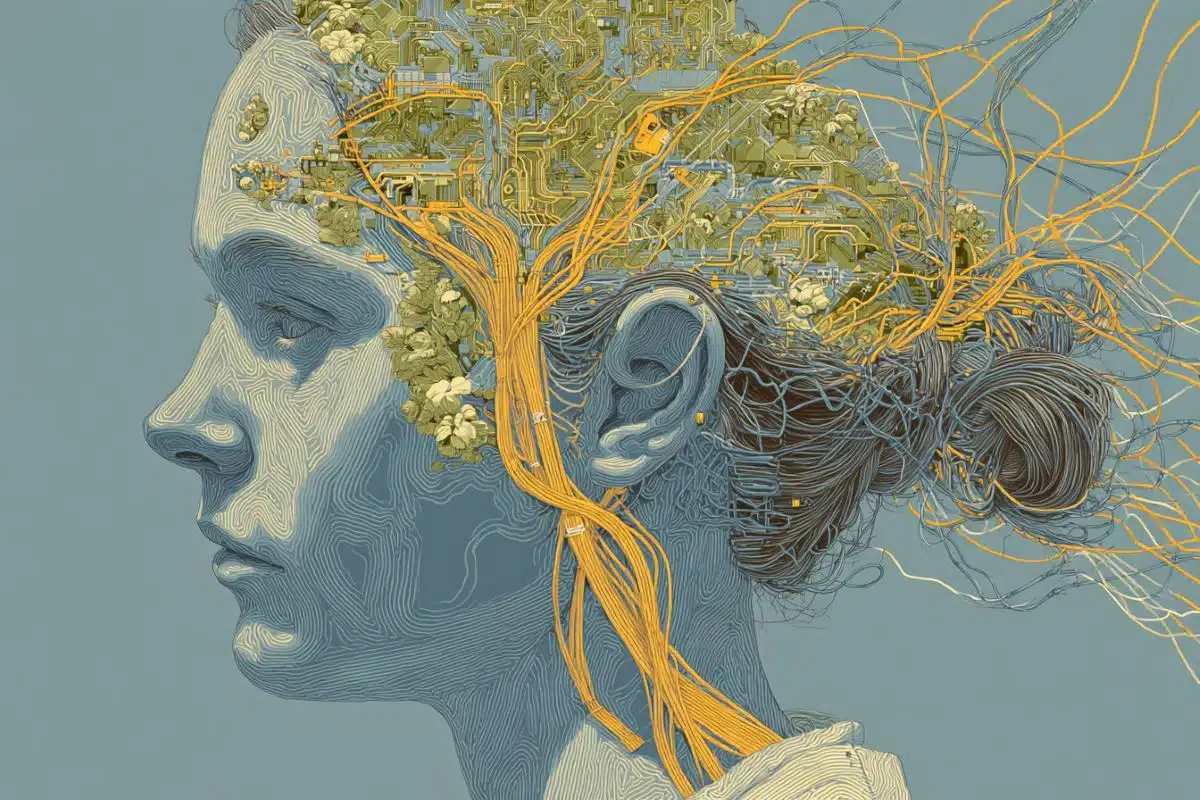
Summary: In the brains of patients with Alzheimer’s and Parkinson’s, proteins like Tau and alpha-synuclein act like “troublemakers,” misfolding and clumping together into toxic aggregates that kill neurons. But a new study has discovered a surprising natural protector: tubulin. Tubulin is the building block of the cell’s “railway tracks” (microtubules).
Researchers found that when tubulin levels are high, it “engages” these proteins, steering them back to their healthy roles of stabilizing cell structure. This discovery shifts the view of tubulin from a passive victim of disease to an active defender, suggesting that boosting tubulin levels could be a powerful new strategy to stop neurodegeneration before it starts.
Key Facts
- The “Healthy Path”: Tubulin prevents Tau and alpha-synuclein from forming toxic clumps by redirecting them toward their productive role in microtubule assembly.
- Liquid Droplets (Condensates): Both healthy and harmful protein activities happen inside tiny droplets called condensates. Rather than destroying these droplets, tubulin changes what happens inside them.
- Passive Victim to Active Protector: Previously, tubulin loss was seen as a side effect of disease. This study shows that maintaining a healthy “tubulin pool” actually prevents the disease from progressing.
- Dual-Disease Impact: Because it regulates both Tau (linked to Alzheimer’s) and alpha-synuclein (linked to Parkinson’s), tubulin-based therapies could treat multiple neurodegenerative conditions.
- Biomarker Potential: Low tubulin levels in the brain could serve as an early warning sign for the onset of toxic protein aggregation.
Source: Baylor College of Medicine
Researchers at Baylor College of Medicine have discovered a potential new strategy to fight back against Alzheimer’s and Parkinson’s diseases, conditions that are linked to the toxic accumulation of Tau and alpha synuclein protein clumps in the brain.
The team reports in Nature Communications that tubulin, the building block of microtubules, the cell’s internal ‘railway tracks,’ can stop Tau and alpha synuclein from forming toxic clumps and instead steer them into their normal, healthy roles.

“Tau and alpha synuclein are well known for their roles in neurodegenerative diseases like Alzheimer’s and Parkinson’s. In these conditions, these proteins can misfold, stick together and form harmful aggregates that damage neurons and contribute to memory loss, movement problems and other symptoms,” said first author Dr. Lathan Lucas, postdoctoral associate of biochemistry and molecular pharmacology in Dr. Allan Ferreon’s lab.
“But Tau and alpha synuclein also fulfill essential functions in healthy neurons – they help maintain cell structure and support communication by interacting with tubulin and contributing to microtubule assembly and stabilization.”
To carry out their cellular functions, harmful or healthy, Tau and alpha synuclein concentrate inside tiny droplets, also called condensates. Although preventing the formation of these droplets is a potential therapeutic approach for neurodegenerative diseases, because such droplets also play healthy roles, their disruption could alter normal neuronal function.
“This led us to the following idea: what if instead of preventing the formation of droplets, we created conditions that would drive Tau and alpha synuclein inside the droplets toward their healthy path, discouraging them from taking the disease path?” said Ferreon, associate professor of biochemistry and molecular pharmacology and co-corresponding author of the work.
“I think of Tau and alpha synuclein as troublemaker kids in school. You can keep them in the classroom with little to do but to act out or keep them engaged with schoolwork, sports or theater so they do not get in trouble,” Lucas said. “We found that tubulin can drive Tau and alpha synuclein troublemakers down a healthy path.”
The team worked with biochemical and biophysical techniques, high-resolution microscopy and neuronal-based assays to investigate tubulin’s role in modulating and preventing the formation of toxic aggregates in droplets.
“When tubulin levels are low, as it has been found in Alzheimer’s disease, microtubules are less abundant and Tau and alpha synuclein can form toxic aggregates,” Lucas said. “But when tubulin is present, Tau and alpha‑synuclein shift away from harmful aggregates and instead promote the assembly of healthy microtubules,” Lucas said. “Tubulin redirects the activity of these proteins by giving them something productive to do.”
“Our findings significantly shift tubulin’s role in neurodegeneration, from a passive casualty of disease to an active protector against toxic protein aggregation,” Ferreon said. “Boosting the tubulin pool, rather than blocking droplet formation, can curb toxic aggregation while preserving the healthy roles of Tau and alpha synuclein, offering a potential selective therapeutic strategy.”
Other contributors to this work include co-first author Phoebe S. Tsoi, My Diem Quan, Kyoung-Jae Choi and co-corresponding author Josephine C. Ferreon, all at Baylor College of Medicine.
Funding: This work was supported by NINDS-NIH grant R01 NS105874, Welch Foundation grant Q-2097-20220331 and NIGMS-NIH grant R01 GM122763.
Key Questions Answered:
A: Because they aren’t inherently “bad.” In a healthy brain, they are essential for keeping your brain cells’ internal structure strong. It’s only when they have “nothing to do” that they start clumping together and causing trouble. Getting rid of them entirely would be like removing all the students from a school just to stop a few from acting out—you’d lose the good with the bad.
A: Think of it like a coach giving a restless athlete a job to do. When tubulin is around, it gives Tau and alpha-synuclein a “productive” task: building and stabilizing the cell’s railway system. When they are busy working, they don’t have the chance to misfold or stick together into toxic clumps.
A: Not quite yet. Tubulin is a complex protein produced inside your cells. However, this research opens the door for new drugs that could boost your brain’s natural tubulin production or prevent it from breaking down, essentially keeping your internal “cleaning and construction crew” at full strength.
Editorial Notes:
- This article was edited by a Neuroscience News editor.
- Journal paper reviewed in full.
- Additional context added by our staff.
About this neurology research news
Author: Ana Rodriguez
Source: Baylor College of Medicine
Contact: Ana Rodriguez – Baylor College of Medicine
Image: The image is credited to Neuroscience News
Original Research: Open access.
“Tubulin transforms Tau and α-synuclein condensates from pathological to physiological” by Lathan Lucas, Phoebe S. Tsoi, My Diem Quan, Kyoung-Jae Choi, Josephine C. Ferreon & Allan Chris M. Ferreon. Nature Communications
DOI:10.1038/s41467-026-69618-3
Abstract
Tubulin transforms Tau and α-synuclein condensates from pathological to physiological
Proteins undergo phase separation to form membraneless condensates that spatially organize biomolecular interactions. These condensates can support cellular physiology or instigate pathological protein aggregation.
Tau and α-synuclein (αSyn) are neuronal proteins that form heterotypic Tau:αSyn condensates associated with physiological and pathological processes. Tau and αSyn regulate microtubules, but also misfold and co-deposit in aggregates linked to neurodegenerative disease, highlighting the ambivalent impact of Tau:αSyn condensation in health and disease.
Here, we show that Tubulin modulates Tau:αSyn condensates by promoting microtubule interactions and inhibiting homotypic and heterotypic pathological oligomers. In the absence of Tubulin, Tau-driven condensation accelerates formation of pathogenic Tau:αSyn heterodimers and amyloid fibrils.
Tubulin partitioning into condensates promotes microtubule polymerization and prevents Tau and αSyn oligomerization. We identify distinct Tau and αSyn structural states in pathological Tubulin-absent versus physiological Tubulin-rich condensates.
In neuronal models, microtubule loss drives pathological oligomer formation and neurite loss, whereas inducible Tau condensation stabilizes microtubules.