Summary: By tracking living circuit dynamics in transgenic mouse models, researchers discovered a profound, hidden imbalance within the motor cortex: a specialized class of cortical inhibitory neurons known as VIP (vasoactive intestinal peptide) neurons becomes dangerously underactive and nearly silent as the disease takes hold.
Leveraging a cutting-edge, light-based technique called optogenetics to artificially reactivate these suppressed cells, the researchers successfully opened a neurological “gate” for neuroplasticity, restoring normal brainwave patterns, rescuing motor learning deficits, and triggering long-lasting behavioral recovery.
Key Facts
- The Intercellular Asymmetry: Historically, cortical inhibitory cells were ignored in Huntington’s research under the assumption that they were spared from neurodegeneration. This study shatters that myth, proving that the disease induces a massive, hidden imbalance across inhibitory cell networks, forcing some cell types to become hyperactive while rendering others completely silent.
- The Silent VIP Target: Specifically, Vasoactive Intestinal Peptide (VIP) inhibitory neurons exhibit drastically reduced electrical activity. Because VIP neurons are biologically responsible for enabling the brain to reorganize, adapt, and refine its circuits during learning, their silence effectively locks the diseased brain out of its natural neuroplasticity.
- The Optogenetic Rescue: Researchers used optogenetics, introducing light-sensitive proteins into the VIP neurons and stimulating them with precise laser pulses, to artificially override the disease-induced silence.
- Lasting Cognitive & Motor Improvements: Activating the VIP cell matrix gradually retuned the entire motor cortex back to normal activity patterns. Most importantly, the mice demonstrated a massive, rapid improvement in their ability to learn and execute complex physical motor tasks.
- The Plasticity Echo: Remarkably, the therapeutic benefits did not vanish when the lasers were turned off. The motor and learning improvements persisted for days after the optical stimulation ended, proving that targeting specific cell types triggers long-term, structural repairs in brain circuitry rather than just temporary symptom masking.
- The Future of Non-Invasive Retuning: While direct optogenetic laser insertion is not yet ready for human patients, this blueprint provides an explicit roadmap for human clinical translation. Dr. Komiyama envisions a future where clinicians can non-invasively target and reactivate these specific silent cell types from completely outside the human skull using focused, novel electromagnetic or sonic approaches.
Source: UCSD
Huntington’s disease is a devastating brain disorder in which decaying nerve cells lead to progressively worsening cognitive and movement abilities. While the genetic mutation responsible for the condition is well known, the intricate details of how the disease disrupts specific brain circuits have not been clearly understood. This gap has complicated efforts to develop effective therapies, and the disease remains fatal with no known cure.
University of California San Diego neurobiologists, working with scientists in Germany, identified and tracked neurons involved in Huntington’s disease progression. They then used a cutting-edge light-based genetics technique to selectively activate these neurons and improve the debilitating deficits of the condition.
“This work shows that correcting specific imbalances in brain circuits can restore function, even in a complex neurodegenerative condition, and highlights the potential of targeting defined cell types to promote recovery,” said study senior author Takaki Komiyama, a professor in the UC San Diego Departments of Neurobiology (School of Biological Sciences) and Neurosciences (School of Medicine).
The study is published July 1, 2026, in Nature.
Huntington’s disease is caused by an inherited mutation in the Huntingtin (HTT) gene, when DNA building blocks cytosine, adenine and guanine, or “CAG,” excessively repeat, leading to motor skill and cognitive damage. But while the mutation is well known, the neural networks connected with the disease progression have been more elusive.
The new project, led by Assistant Project Scientist Sonja Blumenstock, aimed to map the neural circuits that expose the networks involved at the onset and spread of the disease’s debilitating symptoms. In transgenic mice carrying the same mutation as human patients, the researchers evaluated how different types of brain cells in the motor cortex — a region known to be critical for controlling movement — are affected in Huntington’s disease. Advanced imaging techniques allowed the researchers to track the activity of these cortical neurons as the disorder progressed.
Working with Irina Dudanova’s lab (previously based at the Max Planck Institute for Biological Intelligence, now at the University of Würzburg) in Germany, the researchers found that the disease disrupts the balance of activity across different cell types, including cortical inhibitory neurons.
“Cortical inhibitory cells have received little attention in Huntington’s disease, as for a long time they were considered to be spared from neurodegeneration,” said Dudanova.
“Surprisingly, we detected profound changes in their activity, with some cell types being overactive and some nearly silent.” In particular, a class of inhibitory neurons known as vasoactive intestinal peptide neurons, or VIP inhibitory neurons, exhibited significantly reduced activity. Previous studies in Komiyama’s lab found that VIP neuron activity is essential for normal learning, as these cells enable the brain to adapt and refine brain circuits during learning.
The research teams then probed these neurons as targets for potential therapeutic treatments. Reduced VIP neuron activity, the researchers reasoned, could be impairing the brain’s ability to function and learn properly. They sought to artificially activate these cells to re-engage brain states that support learning. They tested this idea using optogenetics, a targeted, light-based technique that allows precise control of brain cells, to stimulate VIP neurons. “By activating the VIP inhibitory cell type, we gradually restored more normal activity patterns, and, very importantly, we also saw an improvement in the ability of the mouse to learn a motor task,” said Blumenstock.
The results confirm VIP neurons as a key point of vulnerability in Huntington’s disease as well as a promising target for therapy. As to how this process works, the scientists believe the results suggest that modulating VIP neurons opens a “gate” that enables learning-related brain plasticity.
“This intervention restored more normal patterns of activity in the brain and improved movement in affected mice,” said Komiyama. “Importantly, the improvements persisted for days after stimulation ended, suggesting that the treatment triggered lasting beneficial changes in brain circuits rather than only temporary effects.”
While the technique the researchers used is not yet directly applicable in humans, the study provides important indications of where research could focus to normalize human brain function and facilitate brain recovery. Komiyama envisions a future scenario in which scientists could non-invasively activate the brain from outside the skull using novel approaches.
“Our study shows that despite the genetic defect, a precise intervention into the brain circuitry can lead to significant improvements in motor symptoms,” said Dudanova. “If we know which cells to target, we can retune the brain’s abnormal activity patterns. This giv hope for future therapies.”
From a broader disease perspective, the research shows that corrections to specific brain circuit imbalances can restore function in a highly complex neurodegenerative condition, with similar potential in other disorders.
“We have come up with a way to allow the diseased brain to learn better,” said Komiyama. “The approach can improve behavior in diseased mice, and our hope is that a related approach will help people with impairment in their learning abilities.”
Key Questions Answered:
A: This is the most profound revelation of the study. For decades, scientists assumed that because the genetic mutation is everywhere, the brain’s collapse was a uniform, untreatable wreck. Dr. Komiyama’s team proved that the genetic defect actually creates very specific bottlenecks, like a single broken gear that grinds a massive factory to a halt. By tracking the motor cortex, they found that the genetic defect specifically silences VIP neurons, which act as the gatekeepers for brain learning and adaptation. By using optogenetics to manually turn that single gear back on, the rest of the surrounding human-engineered or biological brain network immediately falls back into sync, bypassing the genetic defect to restore healthy physical movement.
A: Optogenetics is a revolutionary bioengineering technique where scientists use harmless viruses to deliver light-sensitive proteins into highly specific, targeted cell types in the brain. Once these proteins are in place, those specific neurons effectively become equipped with tiny biological solar panels. Scientists can then shine a precise laser light into the brain tissue to turn those exact cells on or off like a light switch, leaving all other neighboring cells completely untouched. This ultimate precision allowed the researchers to target only the silent VIP neurons, proving with absolute certainty that waking up this single cell class is all it takes to restore motor learning.
A: Right now, this study serves as a definitive diagnostic treasure map. Previously, human clinical trials failed because doctors were trying to treat the entire brain at once with broad drugs, which is like trying to fix a broken computer chip with a hammer. Now, we know the exact cellular target that needs to be woken up: the VIP neuron. Dr. Komiyama and Dr. Dudanova point out that neurotechnology is advancing at a breakneck pace, and this discovery provides an explicit blueprint for developing non-invasive therapies, such as focused transcranial magnetic or ultrasound stimulation, engineered to cross the human skull and retune these specific, silent circuits without a single incision.
Editorial Notes:
- This article was edited by a Neuroscience News editor.
- Journal paper reviewed in full.
- Additional context added by our staff.
About this Huntington’s disease research news
Author: Mario Aguilera
Source: UCSD
Contact: Mario Aguilera – UCSD
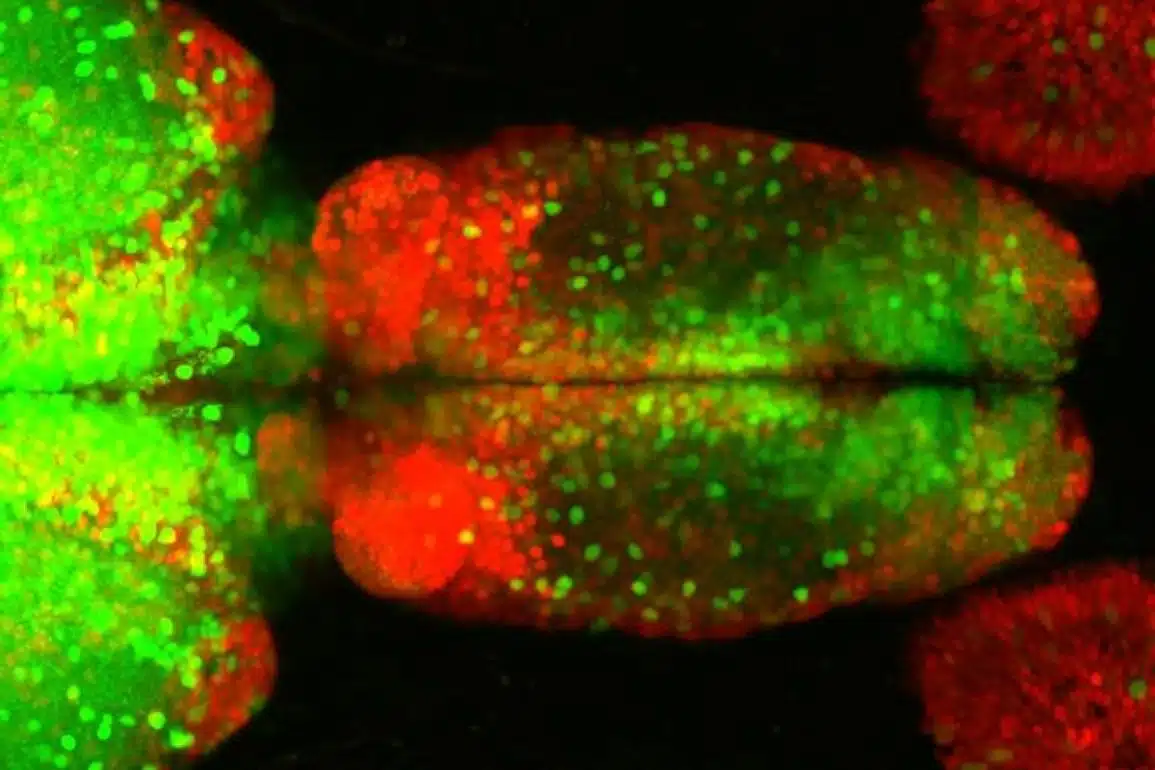
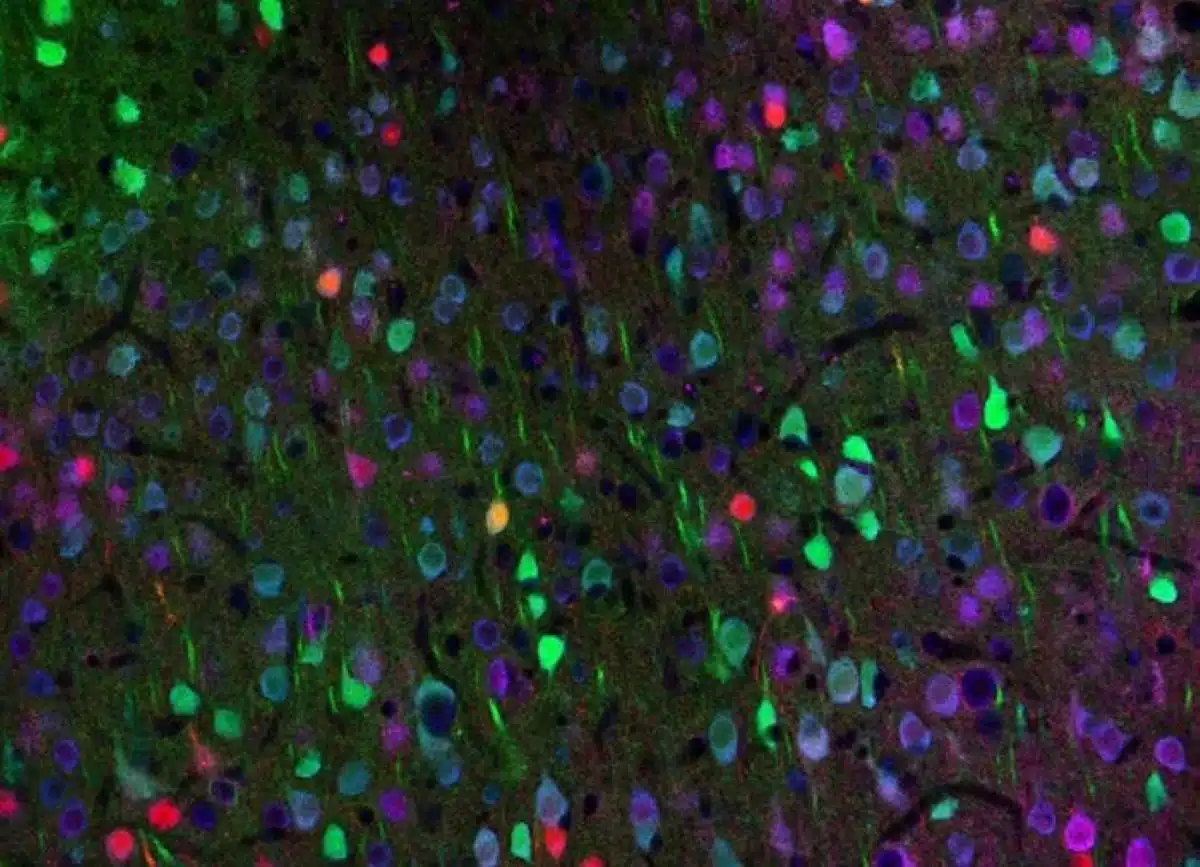
Image: The image is credited to Komiyama Lab, UC San Diego
Original Research: Open access.
“Restoring cortical disinhibition improves Huntington’s disease phenotypes” by Sonja Blumenstock, David Arakelyan, Nicholas del Grosso, Sonja Schneider, Yufeng Shao, Enida Gjoni, Rüdiger Klein, Irina Dudanova & Takaki Komiyama. Nature
DOI:10.1038/s41586-026-10671-9
Abstract
Restoring cortical disinhibition improves Huntington’s disease phenotypes
Huntington’s disease (HD) is a devastating movement disorder without a cure at present. Although the monogenic basis of HD is well defined, the complex downstream effects that underlie behavioural symptoms are poorly understood. These effects include cortical dysfunction, yet the roles of specific cortical neuronal subtypes in HD symptoms remain largely unexplored.
Here we used longitudinal in vivo two-photon calcium imaging to examine the activity of three cortical inhibitory neuron (IN) subtypes and excitatory corticostriatal (CStr) projection neurons in the motor cortex of the transgenic R6/2 HD mouse model throughout disease progression.
We found that motor deficits in R6/2 mice were accompanied by neuron subtype-specific abnormalities in movement-related activity. This included marked hypoactivity of vasoactive intestinal peptide (VIP)-INs and CStr neurons, which was also observed in the knock-in zQ175DN HD mouse model.
Optogenetic activation of VIP-INs in R6/2 mice restored healthy levels of activity in VIP-INs and their downstream CStr neurons and ameliorated motor deficits in R6/2 mice; behavioural improvements persisted for days after stimulation. Our findings highlight cortical INs as a potential therapeutic target for HD.