

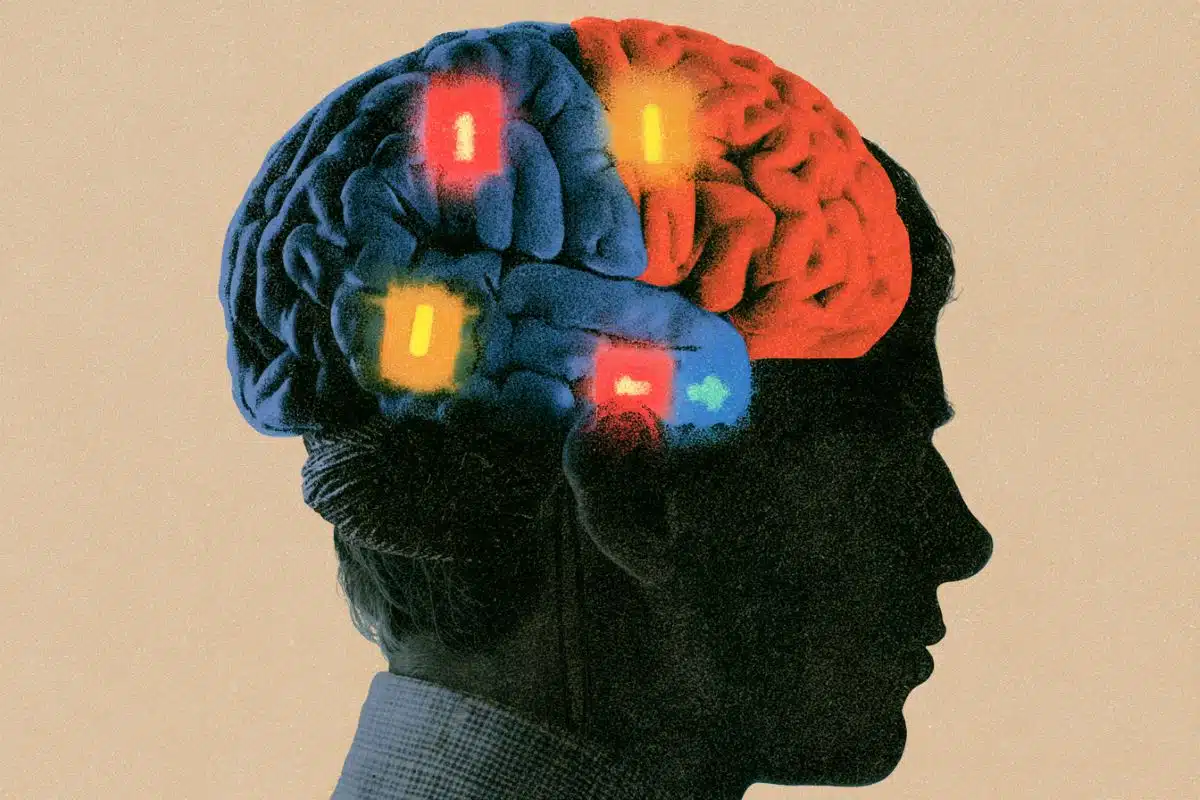
Summary: Researchers identified a dynamic physical mechanism in the adult brain that regulates learning plateaus and skill preservation. The research team demonstrated that the extracellular matrix, a scaffold-like structure surrounding brain cells, undergoes rapid, cyclical remodeling during skill acquisition, loosening within hours of practice and rebuilding within approximately 24 hours to consolidate gains.
Key Facts
- 24-Hour Remodeling Cycle: In response to practice, the auditory cortical extracellular matrix loosens within hours to allow synaptic remodeling and rebuilds within roughly 24 hours to consolidate learning.
- Adaptive Plateau Mechanism: As a skill approaches mastery, the ECM rebuilding cycle slows and eventually ceases, effectively sealing neural circuits to protect learned skills from decay or overwrite.
- Enzymatic Degradation Impacts: Breaking down the extracellular matrix with targeted enzymes slowed initial skill acquisition and degraded A-grade performance down to a B-minus level in previously mastered tasks.
- Revising Adult Plasticity Models: Demonstrates that the adult ECM is not a permanently rigid scaffold, but rather a dynamic, active regulator that opens and closes brief temporal windows for plasticity.
- Clinical Translational Value: Offers potential applications for auditory rehabilitation, particularly for timing therapeutic interventions in newly fitted cochlear implant patients before the brain stabilizes.
Source: University of Maryland
For many who have struggled to learn a new language or instrument, it’s a familiar pattern: they make rapid progress at first, then hit a plateau that no amount of diligent practice or concentration seems to break.
University of Maryland biologists identified a physical mechanism in the brain that may help explain why such plateaus occur: a scaffold-like structure surrounding brain cells, called the extracellular matrix, helps control when the brain can change during learning.
In the auditory cortex, this matrix loosens within hours of a practice session and rebuilds itself within about a day—a cycle that lets the learning from a session take hold before the next one. As a skill is mastered, the rebuilding cycle fades and eventually stops altogether, as if the brain has decided that learning is finished and it’s time to protect what’s been gained.
The team published its findings in the Proceedings of the National Academy of Sciences on August 3, 2026.
“For the first time, we’ve been able to see that the remodeling process changes as you gain experience. It happens early in learning, declines and then gradually stops,” said the study’s senior author Melissa Caras, an assistant professor of biology at UMD. “This tells us that the brain isn’t just passively storing what you learn; it’s also actively regulating when learning can happen and when it should stop, so that the skills you’ve built are protected rather than overwritten.”
For decades, scientists viewed this matrix in adult brains as a rigid barrier, a scaffold that holds brain wiring in place and makes learning harder as we age. This helps to explain why young children pick up languages effortlessly while adults must work hard for every word. In early childhood, the dense, net-like structures that stabilize brain wiring are still immature, leaving the brain more open to change. As children grow older, the matrix matures and “firms up,” trading flexibility for stability.
While earlier studies caught glimpses of the matrix changing during learning as well, researchers only sampled occasionally (often over days or weeks) and concluded that it rebuilt slowly over long periods. Caras’s team tracked the cycle over much shorter intervals, resulting in findings that suggest that the adult matrix is far more dynamic. Rather than sitting fixed in place, the researchers found that the matrix shifts on a rapid rhythm tied to training—loosening after practicing a skill to acquire it and then knitting back together by the next day.
That speed matters because it means that the matrix loosens and resets on the same timescale as the training that drives learning. Each practice session gets its own opportunity for change, and the gains from one day settle in overnight to become the starting point for the next.
To test whether the extracellular matrix truly permits learning, the team used an enzyme to break down the matrix, which slowed learning. The more the matrix was disrupted, the greater the impairment—learning a skill and mastering it became more difficult. And when the matrix was broken down after a skill was successfully mastered, performance began to slip.
“Instead of being at your best, A-plus performance, you’re now working at a B-minus level,” Caras explained. “You don’t lose your skill completely, but mastery is noticeably eroding.”
While the team’s research is still in the early stages and far from direct human application, they believe the results open intriguing possibilities, especially for how we currently approach learning and retention. Based on the team’s findings, Caras theorized that plateaus in language learning could result from the brain regions involved flipping from a “ready to learn” state into a more stable one, with the matrix sealing the gains in place.
The team’s work may also have applications for hearing rehabilitation, and specifically, helping cochlear implant patients who have to train their brains to interpret an entirely new kind of signal, Caras explained.
“Someone newly fitted with a device might be more receptive to that training than a long-time user whose brain has already settled into a stable state,” Caras said. “If there’s a safe way to briefly reopen the learning window, it could be possible to help them acquire the skills to interpret these signals from their implant.”
The researchers are now working to identify the molecules that trigger changes to the matrix, record what the brain is doing during the brief window when the matrix loosens to learn, and explore the matrix’s role in hearing loss and related disorders.
“The catch is that the same matrix seems to be needed both to learn and to hold onto what’s learned,” she said. “The long-term hope is to learn how to temporarily open up this matrix at will to make the learning process more accessible.”
Funding:
This research was supported entirely by institutional start-up funds from the University of Maryland.
Key Questions Answered:
A: When individuals hit a plateau while learning a language or instrument, the brain’s extracellular matrix may have transitioned from a dynamic “ready to learn” state to a stable, rigid configuration. By firming up around neural connections, the matrix seals the newly acquired skill into place, prioritizing circuit stability and memory protection over further flexibility.
A: Previous research sampled the extracellular matrix over weeks, leading to the conclusion that it rebuilt very slowly. By measuring at short intervals, the Caras lab revealed that the matrix operates on a rapid 24-hour cycle that matches daily practice schedules, loosening post-training to permit learning and rebuilding overnight to lock in gains before the next session.
A: Newly fitted cochlear implant patients must train their brains to interpret novel electrical signals. Understanding ECM dynamics suggests that patients are far more receptive to auditory training immediately after device fitting, while the matrix is still dynamic, before the brain seals the circuit into a stable state. Future therapies might aim to briefly re-open this matrix window on demand.
Editorial Notes:
- This article was edited by a Neuroscience News editor.
- Journal paper reviewed in full.
- Additional context added by our staff.
About this learning and synaptic plasticity research news
Author: Georgia Jiang
Source: University of Maryland
Contact: Georgia Jiang – University of Maryland
Image: The image is credited to Neuroscience News
Original Research: The findings will appear in PNAS


