

Summary:
Challenging the dogma that growing axons navigate exclusively via local cues processed at their tips, neuroscientists have discovered that a centralized genetic switch inside the neuron’s cell body directs axon steering at critical waystations. By mapping the transcriptional profiles of over 12,000 developing neurons, the researchers produced a comprehensive genetic atlas that may unlock new therapies for repairing severed neural pathways after stroke or spinal cord injuries.
Key Facts:
- Cell Body Control: Rather than relying entirely on localized signals at the growth cone tip, neurons activate and deactivate whole cohorts of genes within the soma to direct axons through sequential checkpoints.
- Midline Genetic Switching: Using single-cell RNA sequencing on commissural neurons across four developmental stages, the team revealed that crossing the spinal cord midline triggers a distinct shift in soma gene expression, sending new guidance molecules directly to the axon tip.
- Atlas for Regeneration: The study generated a massive 12,000-neuron developmental atlas offering insights into regrowing and properly steering axons to their original targets after spinal cord trauma or stroke.
Source: Brown University
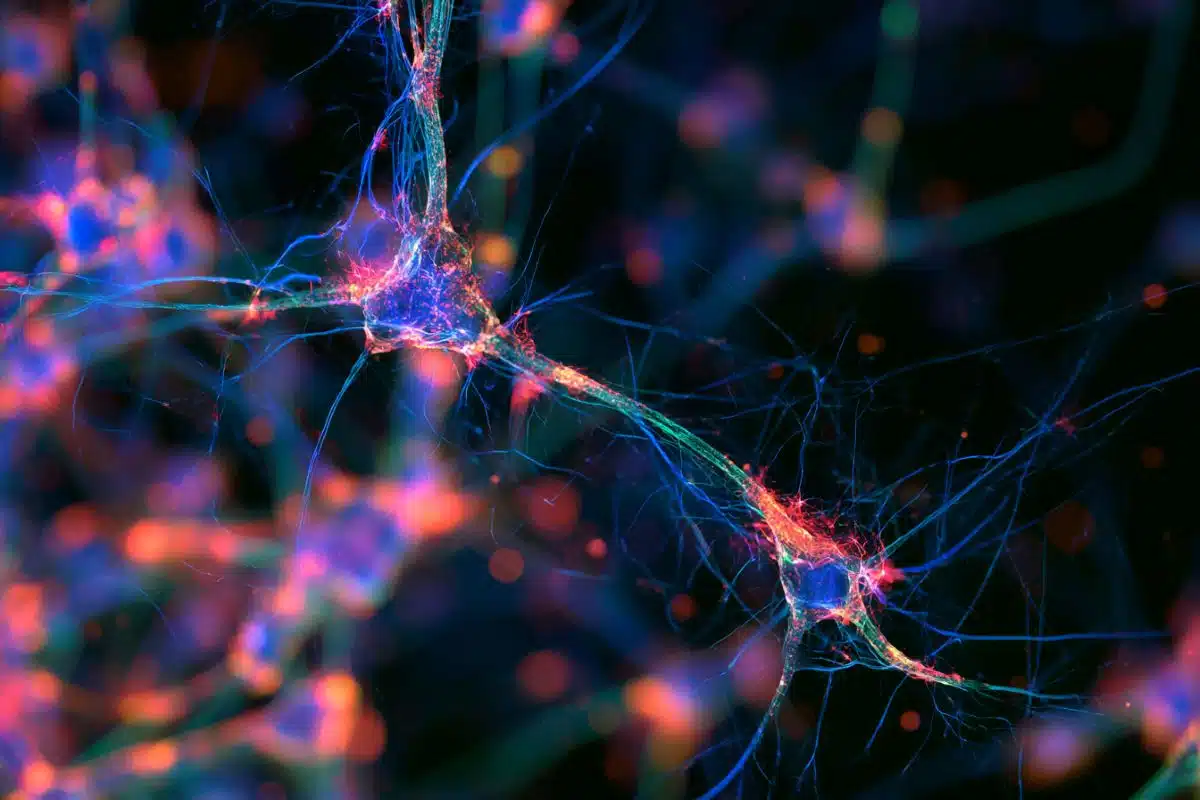
During embryonic development, billions of axons extend from neuron cell bodies like plant tendrils seeking sunlight, trekking across intricate anatomical landscapes to establish functional synapses. Some axons must navigate vast biological distances; for instance, the motor axon controlling human foot movement extends all the way from the base of the spine.
For decades, the standard dogma in neurobiology maintained that because axons span such long distances and adapt rapidly to dynamic microenvironments, all directional decision-making must be regulated locally at the axon tip.
Now, a study from the Carney Institute for Brain Science at Brown University upends that paradigm. Published in the Proceedings of the National Academy of Sciences (PNAS), the findings demonstrate that a central genetic program running in the neuron’s cell body directs axon pathfinding at critical navigational waystations.
“We discovered that during development, neurons turn on and off entire groups of genes that allow their axons to grow through different sections of their path,” said Alexander Jaworski, Ph.D., study author and associate professor of brain science at the Carney Institute. “That’s surprising.”
Charting Waystations at the Spinal Midline
During development, axons complete long-distance journeys by halting at intermediate checkpoints, known as waystations, where they pivot toward their next objective.
To trace the underlying molecular orchestration, Jaworski’s team focused on spinal commissural neurons. These specialized neurons connect the left and right halves of the central nervous system and make an abrupt, sharp trajectory shift precisely as they traverse the spinal cord midline.
Using a custom genetic isolation tool, the researchers harvested rodent commissural neurons across four distinct developmental phases and evaluated their transcriptional dynamics using single-cell RNA sequencing.
The analyses revealed that reaching the midline waystation induces a transcriptional shift in the nucleus. This switch systematically changes the repertoire of guidance receptors and signaling molecules deployed to the axon tip, enabling the axon to detach from the midline and target the next anatomical waypoint.
A Blueprint for Spinal Cord and Stroke Repair
These findings address a major hurdle in regenerative neurology. While modern bioengineering approaches can stimulate severed axons to sprout and grow following injury, guiding them back to their appropriate synaptic partners has remained notoriously difficult.
“Now that we know about this genetic switch in the neuron, we might be one step closer to finding a way to actually turn on the specific genes that allow axons to grow back to their correct targets,” Jaworski explained.
In total, the researchers mapped gene expression profiles across more than 12,000 individual neurons, creating a foundational resource for the developmental neuroscience and regenerative medicine communities.
“We’re beginning to perceive the bigger picture of axon pathfinding, moving beyond the actions of individual molecules,” added Jaworski. “How entire groups of genes collaborate to shape axon pathfinding decisions is an exciting research question the field doesn’t yet fully understand.”
Editorial Notes:
- This article was edited by a Neuroscience News editor.
- Journal paper reviewed in full.
- Additional context added by our staff.
About this Genetics and Neurology Research:
- Media Contact: Corrie Pikul
- Source: Brown University
- Image Credit: Image generated for Neuroscience News
- Original Research is Open Access: PNAS (September 15, 2026). “Gene expression programs underlying spinal commissural neuron differentiation and axon growth across the midline” Authors: Jane R. Abolafia, Hanna Hameedy, Lakshmi Prakash, Ziqi Wang, Elze Amileviciute, Srikar Dudipala, and Alexander Jaworski.
- DOI: 10.1073/pnas.2607727123
Abstract
Gene expression programs underlying spinal commissural neuron differentiation and axon growth across the midline
Spinal commissural neurons project their axons across the midline and have long served as a prime model system for axon pathfinding. However, lack of genetic access to these neurons has prevented a comprehensive analysis of their development, leaving unanswered major questions about their genesis and the transcriptional control of commissural axon guidance.
Here, we overcome this long-standing barrier and characterize the gene expression programs and birthdates of developing commissural neurons.
Our work reveals extensive heterogeneity among these neurons, but it also identifies a shared, large-scale change in gene expression that drives commissural axon crossing of the spinal cord midline. These data provide a definitive molecular atlas of commissural neuron development and link dynamic axon guidance decisions to global transcriptional regulation.


