Summary: A new study shows that observing violence can make individuals more likely to act aggressively later, but the effect depends on familiarity. Male mice who watched familiar peers attack others became more violent afterward, driven by amygdala neurons that “prime” aggression.
When these neurons were inhibited, the learned aggression disappeared, while activating them heightened violent responses. These findings highlight how social context and brain circuits combine to shape the spread of violence.
Key Facts:
- Familiarity Matters: Only observing aggression by familiar peers—not strangers—led to later violence.
- Amygdala Link: Aggression-priming neurons in the amygdala activated during familiar attacks.
- Intervention Potential: Manipulating these neurons suppressed or promoted later aggressive behavior.
Source: SfN
People who repeatedly observe aggression have a higher likelihood of engaging in violent behavior later in life.
In a new Journal of Neuroscience paper, Jacob Nordman and colleagues, from Southern University of Illinois School of Medicine, used mice to explore the environmental factors and neural mechanisms that lead to the aggression that witnesses later acquire.
In a behavioral paradigm created by this research group, mice observed known peers or unfamiliar strangers attack intruder mice.
Only male witnesses later displayed increased aggression themselves, and this happened only after watching familiar peers attack intruders.
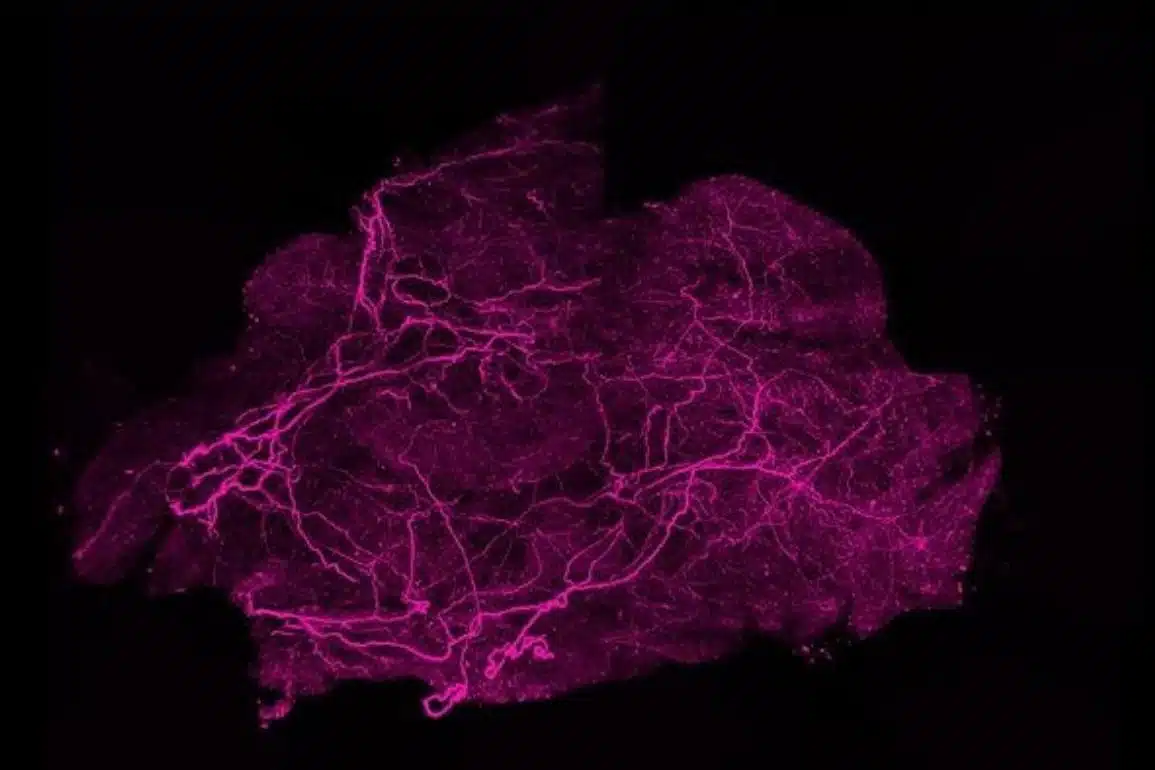
What neural mechanism might be driving this behavior in the bystander males? As male mice behaved in the paradigm, the researchers recorded activity from neurons in a part of the amygdala that is implicated in aggression priming.
Elaborating on this, says Nordman, “We previously found that these neurons are involved in an ‘aggression priming’ effect, meaning that being a perpetrator of an attack increases the likelihood of attacking again. For example, imagine getting in an argument with a coworker or family member.
“Afterwords, your agitation and frustration make you more likely to have another outburst.”
The researchers theorized that these neurons might be active in male witnesses observing violent peers because the familiarity makes them mirror their friends’ own aggression priming. Indeed, these neurons were active in males as they saw familiar—but not unfamiliar—attacks.
Notably, artificially inhibiting these neurons suppressed later aggression after witnessing peers, and activating these neurons while males watched violent strangers promoted attacking behavior in observers later.
These findings shed light on aggression learned via observation, suggesting that not only proximity, but also familiarity of attackers may be risk factors for behaving violently later, at least in males.
According to the authors, this neural mechanism could inform the development of neural and behavioral treatment interventions for learned violence.
About this neuroscience and aggression research news
Author: SfN Media
Source: SfN
Contact: SfN Media – SfN
Image: The image is credited to Neuroscience News
Original Research: The findings will appear in Journal of Neuroscience