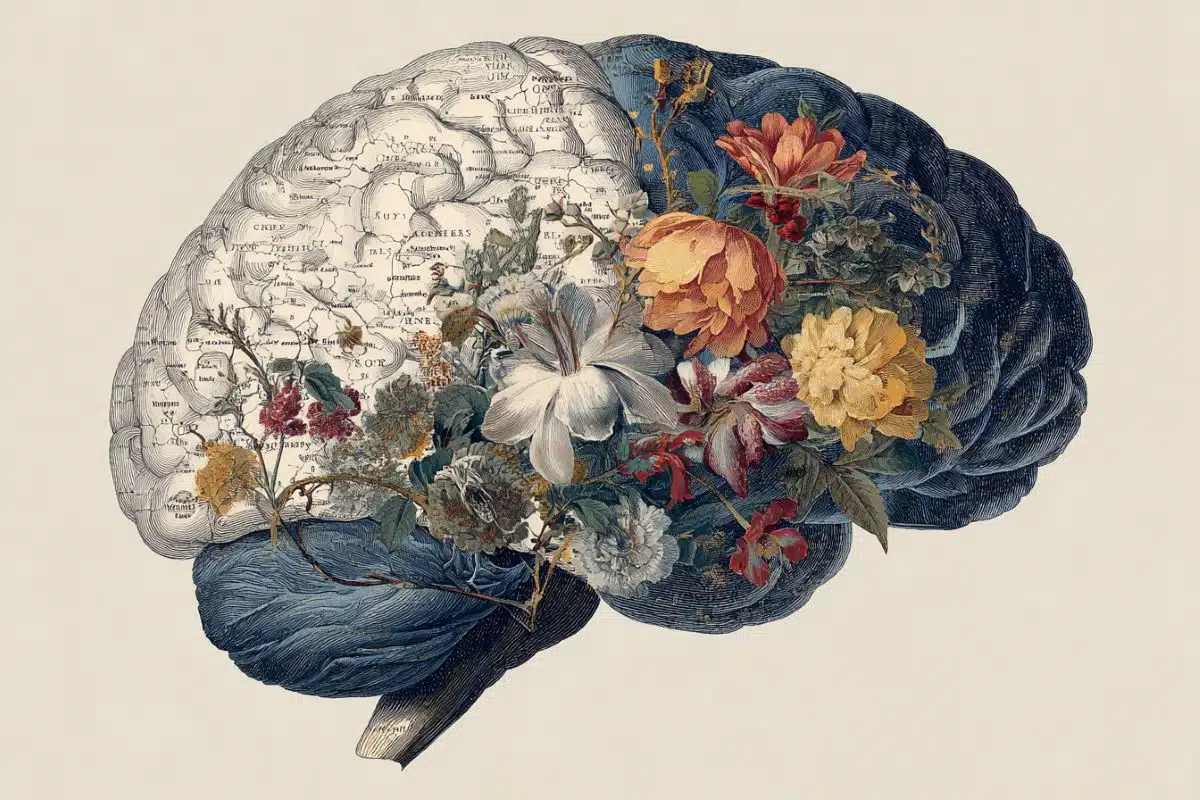
Summary: The feeling of a “full head” or “information overload” is a common human experience, especially when we fail to recall a shared moment that a partner remembers vividly. However, neuroscience clarifies that the brain is not a container that reaches capacity; it is a sophisticated filtering and reconstruction system.
While a hard drive stores fixed files, the brain relies on attention to encode information and reinforcement to keep it. Most “forgotten” memories weren’t actually lost, they were either never fully formed due to a lack of focus, or the retrieval path to them has simply grown faint.
Key Facts
- The Filtering System: The brain does not record everything. It uses Attention to notice, Emotion to weigh importance, and the Hippocampus to decide what moves into long-term storage.
- Encoding vs. Storage: If your attention is elsewhere (e.g., checking timings during a holiday), an experience is never “weakly encoded.” The memory isn’t lost; it was never effectively created.
- The Reconstruction Process: Memories are not “played back”; they are reconstructed. Every time you retell a story, you draw on fragments of sensory detail and expectation, actually reshaping the memory as you go.
- Theoretical Capacity: Researchers at the Salk Institute estimate the brain’s capacity at around one petabyte (equivalent to 13.3 years of HD video). However, because the brain constantly reorganizes and integrates data, this “limit” is rarely, if ever, reached.
- RAM vs. Hard Drive: While Working Memory (like RAM) is strictly limited to a few items at once, Long-Term Memory is a distributed network. The “full” feeling is usually a limit of processing (too many tabs open), not storage (disk full).
Source: The Conversation
My husband was recently describing something that happened on a past holiday. It wasn’t a significant event, but it sounded pleasant. I, however, had no recollection of what he was telling me. He couldn’t quite believe it.
We know that “recollections may differ”, but how can it be so different? And why do I not have this memory? I’m busy at work – have I simply run out of space?

It’s a tempting explanation. We talk about “full heads”, “information overload”, and “too much to take in” as though the brain were a container that eventually reaches capacity. But the brain does not fill up. Instead, it filters.
At any given moment, far more information is available to us than we could ever realistically store. The sights, sounds and conversations of even a single day would overwhelm any system that attempted to record them in full. Instead, the brain relies on selection. Attention determines what is noticed. Emotion helps determine what matters. Then, structures such as the hippocampus decide what is worth committing to longer-term memory.
If your attention is elsewhere, the process falters at the first step.
On that holiday, my husband may have paused long enough to register the moment. I may have been thinking about where we were going next, checking timings, or simply moving through the day without stopping to take it in.
The difference is subtle, but it matters. Without focused attention, experiences are only weakly encoded, if at all. In that sense, the memory was not lost. It was never fully formed.
Even when memories are successfully encoded, they are not stored as fixed records. Each time we recall an event, we reconstruct it, drawing on fragments of sensory detail, prior knowledge and expectation.
With repetition – through conversation, reflection or retelling – those reconstructions become stronger and more coherent. Over time, they can feel increasingly vivid and certain.
This helps explain why shared experiences can diverge so dramatically. We assume that living through the same moment should produce the same memory, but the brain does not work that way. It does not passively record experience. It actively selects, prioritises and, just as importantly, discards.
The feeling that our brains are “full” arises not because we have run out of storage, but because we have reached the limits of what we can process at once. Attention is finite. Working memory – the small amount of information we can actively hold in mind – is even more limited.
When these systems are saturated, new information struggles to gain a foothold. This is the mental equivalent of too many tabs open: nothing has been permanently lost, but everything becomes harder to manage.
Where the computer analogy breaks down
Computing analogies are useful up to a point. If working memory resembles RAM – fast, temporary, limited – then long-term memory is often compared to a hard drive. But this is where the parallel breaks down. A hard drive stores files in fixed locations, retrievable in exactly the same form in which they were saved. The brain does not work this way.
Memories are not stored as discrete files. They are distributed across networks of neurons, overlapping, reshaped, and reassembled each time they are recalled. New experiences do not simply add to what is already there – they interact with it, altering both the new and the old.
Attempts have been made to estimate how much the brain could theoretically hold. One widely cited figure from the Salk Institute puts it at around a petabyte – roughly equivalent to hundreds of years of continuous video.
It is an impressive number, but also a somewhat misleading one. It implies a storage system that fills up over time, when in reality the brain is constantly reorganising itself. Capacity is not fixed, and information is not stored in isolation. It is integrated, modified, and, when no longer useful, allowed to fade.
Which raises a slightly uncomfortable question: what happens to the memories we would like to keep?
Some of them will fade – not because the brain has run out of space, but because they are not continually reinforced. Memory is not preserved simply because it matters to us. It is preserved when it is revisited, retold, or reconnected to other experiences. Without that reinforcement, even meaningful moments can become harder to access over time.
What is lost, in most cases, is not the memory itself but our ability to retrieve it. A familiar smell, a piece of music, or an unexpected detail can bring something back that seemed entirely gone.
The trace remains, but it has slipped out of reach. And the absence of a memory is rarely evidence of a system at capacity – more often, it is the trace of a moment that was never fully stored, or one that has simply not been called upon.
Key Question Answered:
A: You’ve hit your Processing Limit, not your Storage Limit. Your Working Memory (the “now” space) is small. When you’re stressed or busy at work, your “mental RAM” is maxed out, making it impossible for new information to be encoded into your “hard drive.”
A: Because he was likely paying attention to different sensory details. If he paused to look at a sunset while you were looking at a map, your brains “recorded” two entirely different events. Over time, as he retells his version, his reconstruction becomes more vivid and “certain” to him.
A: Often, yes. The “trace” of the memory is usually still in your neural network, but the “retrieval path” is blocked. This is why a specific smell or song can suddenly “unlock” a memory you haven’t thought of in twenty years—it provides a direct link to the stored fragment.
Editorial Notes:
- This article was edited by a Neuroscience News editor.
- Journal paper reviewed in full.
- Additional context added by our staff.
About this memory research news
Author: Michelle Spear
Source: The Conversation
Contact: Michelle Spear – The Conversation
Image: The image is credited to Neuroscience News