Summary: The brain is a paradox of constant change and remarkable stability. While the structures responsible for our memories (the hippocampus) are known to reorganize and “shift” their activity over time, our long-term memories remain intact.
A new study has finally identified the “anchor” for this stability: the head-direction system. This internal compass remains structurally frozen for months, providing a permanent reference point that allows the brain to interpret shifting spatial information and maintain a consistent sense of reality.
Key Facts
- The Head-Direction System: This is a network of neurons that acts as the brain’s internal compass, tracking exactly which way we are facing at all times.
- Months-Long Stability: Using miniature head-mounted microscopes, researchers at the Peyrache Lab tracked the same individual neurons in mice for several months. They found the compass system remained identical, even as other memory regions changed.
- The “North” Reference: When entering a new environment, the brain’s compass instantly “sets” a directional reference point (deciding which way is North) and preserves that exact setting when the space is revisited weeks or months later.
- The Hippocampus Contrast: While the hippocampus—the brain’s memory center—constantly updates and reshuffles its activity, the head-direction system provides the stable “grid” upon which those memories are mapped.
- Alzheimer’s Early Warning: Because disorientation and “getting lost” are often the very first signs of Alzheimer’s, this stability is a key marker of brain health. The breakdown of this “anchor” may be what triggers early cognitive decline.
Source: McGill University
A new discovery by McGill researchers sheds light on how we retain memories over time, even though brain activity is constantly changing.
Published in Nature, the preclinical study found the brain’s internal compass remains remarkably stable over time. The findings suggest this steady sense of direction may act as an anchor for memory.

“This is a long-standing puzzle: if the brain’s memory structures keep shifting, how do our memories remain so stable? Our results offer an explanation,” said senior author Adrien Peyrache, Associate Professor at the Department of Neurology and Neurosurgery at McGill and director the Peyrache Lab at The Neuro (Montreal Neurological Institute-Hospital).
The internal compass, known as the head-direction system, is a network of brain cells that tracks which way we are facing as we move. It also links the brain’s memory centre, the hippocampus, to the rest of the brain.
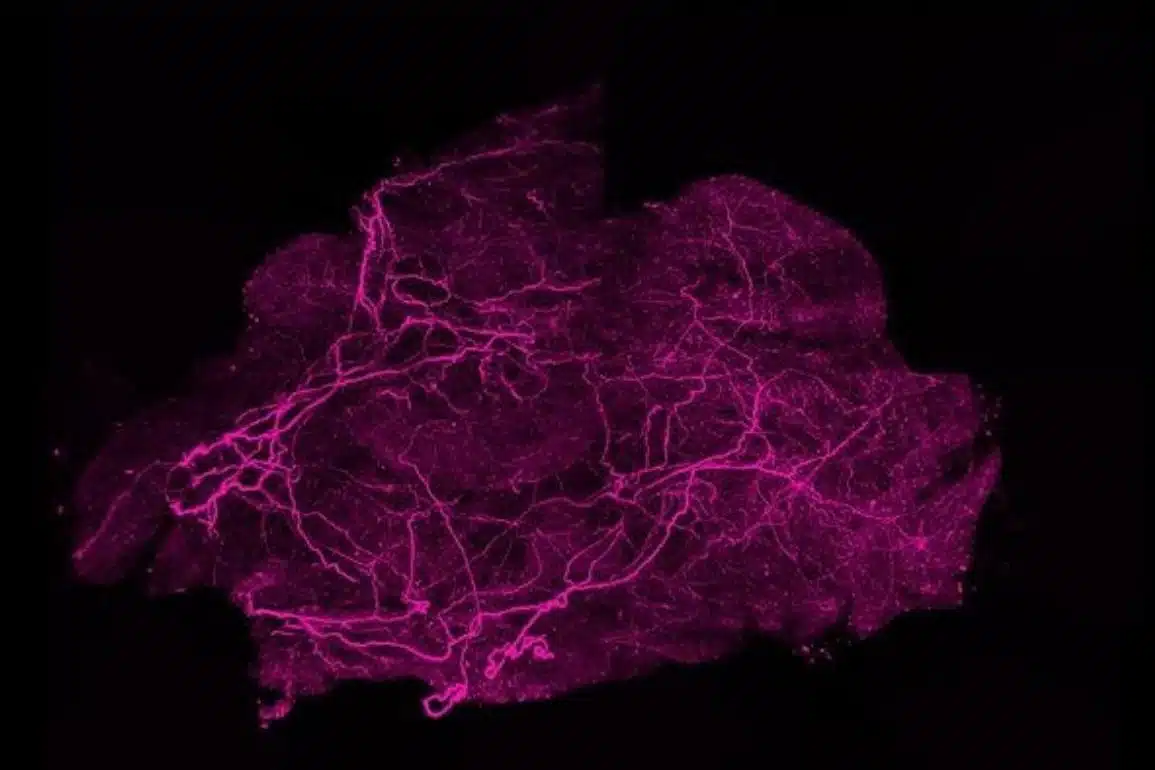
Using miniature head-mounted microscopes, researchers tracked the same brain cells in mice over several months. They found the head-direction system remained structurally intact, even as the hippocampus reorganized.
The team also found that when a new space was explored, the brain’s compass quickly set a directional reference point, essentially deciding what counted as north or south, and preserved that sense of direction when the space was revisited weeks later.
“These findings reveal a surprising contrast,” said Peyrache. “While the hippocampus may reorganize its activity over time, the head-direction system provides a highly stable foundation for interpreting spatial information.”
The results have implications for research into Alzheimer’s disease, he added, as getting lost or feeling disoriented is often one of the earliest warning signs, sometimes appearing before significant memory loss.
“Understanding how spatial stability is normally maintained may help clarify why these abilities deteriorate, opening new avenues for early detection and future therapeutic strategies,” said Peyrache.
Funding
This work was supported by the Canada Research Chairs Program, the Canadian Institutes of Health Research, the Natural Sciences and Engineering Research Council of Canada, the Canada–Israel Health Research Initiative, the New Frontiers in Research Fund, Healthy Brains for Healthy Lives and the Vanier Canada Graduate Scholarships program.
Key Questions Answered:
A: You can thank your internal compass. This study shows that while the “files” in your memory (the hippocampus) might be moved around, the “map” of your house (the head-direction system) stays exactly the same. It is a permanent architectural foundation that doesn’t care how much you “redecorate” your memories.
A: We used to think memory loss came first. But this research suggests that the stability of the compass is what fails first. If the brain can no longer “anchor” itself to a direction, every memory becomes untethered. Understanding why this compass breaks could help us catch Alzheimer’s years before a patient starts forgetting names or dates.
A: Yes. The head-direction system is an evolutionarily ancient part of the brain. Whether you are a mouse looking for cheese or a human finding your car in a parking lot, your brain uses this same “directional anchor” to ensure your world doesn’t feel like it’s spinning or shifting.
Editorial Notes:
- This article was edited by a Neuroscience News editor.
- Journal paper reviewed in full.
- Additional context added by our staff.
About this neuroscience and memory research news
Author: Keila DePape
Source: McGill University
Contact: Keila DePape – McGill University
Image: The image is credited to Neuroscience News
Original Research: Open access.
“Months-long stability of the head-direction system” by Sofia Skromne Carrasco, Guillaume Viejo & Adrien Peyrache. Nature
DOI:10.1038/s41586-025-10096-w
Abstract
Months-long stability of the head-direction system
Spatial orientation enables animals to navigate their environment by rapidly mapping the external world and remembering key locations. In mammals, the head-direction (HD) system is an essential component of the navigation system of the brain.
Although the tuning of neurons in other areas of this system is unstable—evidenced, for example, by the change in the spatial tuning of hippocampal place cells across days—the stability of the neuronal code that underlies the sense of direction remains unclear.
Here, by longitudinally tracking the activity of the same HD cells in the post-subiculum of freely moving mice, we show stability and plasticity at two levels.
Although the population structure remained highly conserved across environments and over time, subtle shifts in population coherence encoded environment identity.
In addition, the HD system established a distinct, environment-specific alignment between its internal representation and external landmarks, which persisted for weeks, even after a single exposure.
These findings suggest that the HD system forms long-lasting orientation memories that are anchored to specific environments.