

Summary:
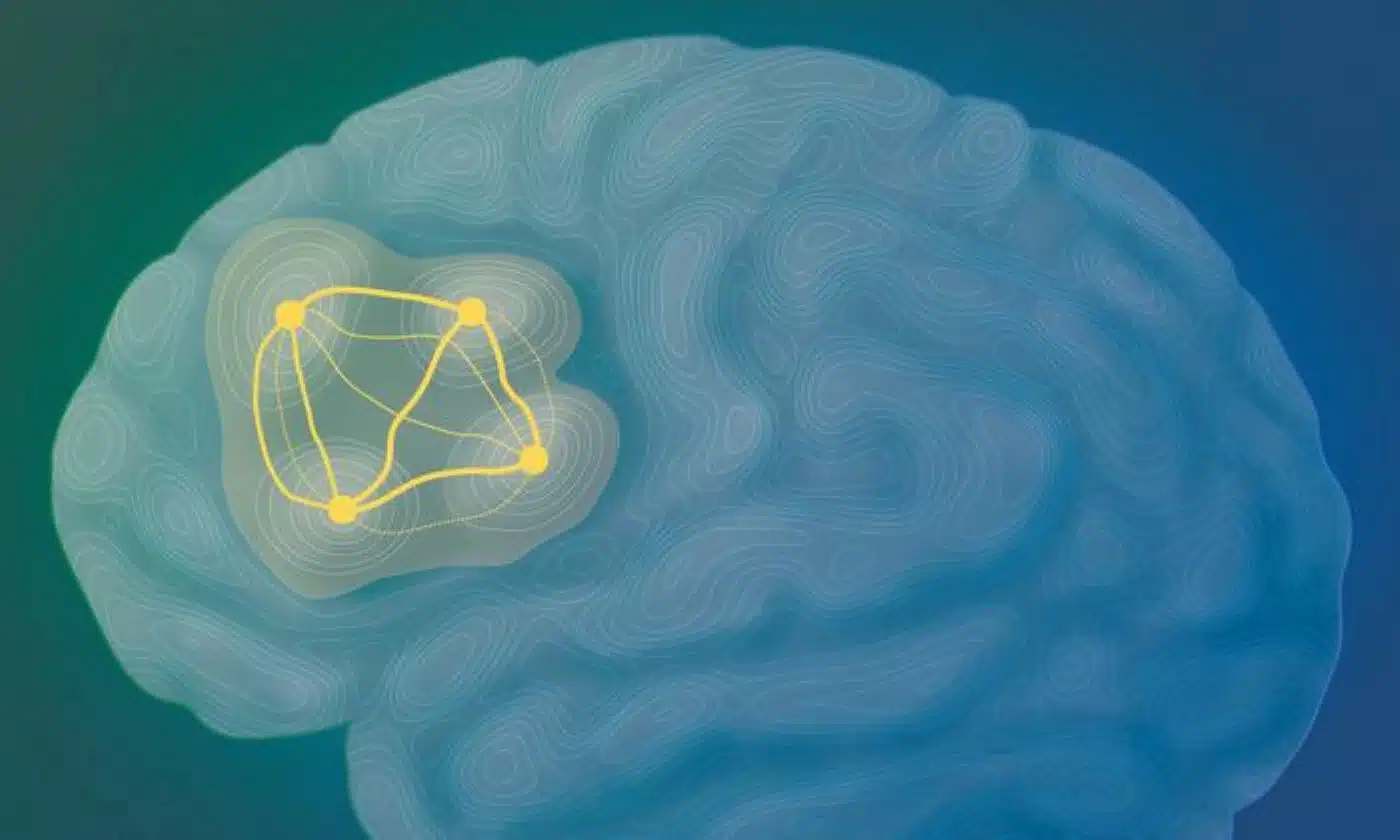
A dual-study breakthrough published in Nature by researchers at EMBL, the German Cancer Research Center (DKFZ), and the Wellcome Sanger Institute demonstrates that the notorious cellular plasticity of glioblastoma is not random. By building the most comprehensive multi-omic and spatial molecular atlas of glioblastoma to date across more than one million patient-derived cells, the team uncovered stereotyped transition trajectories between distinct cell states.
Leveraging a novel deep learning framework named scDORI, the researchers identified key master regulators, including the safeguard factor MYT1L. Overexpressing MYT1L locked malignant cells into low-plasticity states, blunting invasiveness and extending survival in preclinical models, establishing a therapeutic blueprint for cell-state reprogramming.
Key Facts:
- Plasticity Follows Structured Rules: Glioblastoma cells do not shift between stem-like, neural, and injury states at random; rather, they transition along conserved, hierarchical trajectories mapped to specific spatial microenvironments within the tumor.
- scDORI AI Decodes Cellular Drivers: Researchers developed scDORI, a deep-learning algorithm that analyzed natural regulatory variations across over one million patient-derived cells to infer gene regulatory networks and pinpoint the exact transcription factors driving cell-fate decisions.
- Reprogramming Malignancy via MYT1L: The team identified molecular “safeguard” regulators that trap cells in benign, low-plasticity states. Experimentally overexpressing the neuronal transcription factor MYT1L locked glioblastoma cells in place, significantly reducing tumor aggressiveness and extending survival in animal models.
Source: EMBL / Wellcome Sanger Institute / DKFZ / Nature
Glioblastoma represents the most common, aggressive, and universally fatal primary malignant brain tumor in adults. Despite intensive multimodal interventions, combining maximal surgical resection, temozolomide chemotherapy, and localized radiotherapy, median survival remains approximately 15 months from diagnosis, with recurrence nearly inevitable.
A primary driver of therapeutic failure is extreme intratumoral heterogeneity. Within a single tumor mass, malignant cells exist in a diverse spectrum of cellular identities: some resemble primitive neural stem cells, others mimic mature neurons or glia, and others enter a hyper-aggressive, injury-response state. Furthermore, these cells exhibit dynamic plasticity, shifting between states in response to microenvironmental stress or pharmacological pressure.
For decades, oncology dogma maintained that this state-shifting was stochastic and chaotic, creating an unpredictable moving target that easily evades single-agent therapies.
Now, two coordinated studies published back-to-back in Nature overturn this view. Led by international research consortia at the European Molecular Biology Laboratory (EMBL), the German Cancer Research Center (DKFZ), and the Wellcome Sanger Institute, scientists have proven that glioblastoma cell transitions obey strict, predictable mathematical rules—and that these transitions can be artificially reprogrammed to disarm tumor malignancy.
Building the Multi-Omic Glioblastoma Atlas
The breakthrough emerged from a foundational effort to map glioblastoma biology without relying on prior assumptions. Supported by a Wellcome Leap grant, Dr. Omer Bayraktar, Group Leader at the Wellcome Sanger Institute and professor at the UCL Cancer Institute, spearheaded the construction of a comprehensive multi-omic patient atlas.
Bayraktar’s team profiled DNA mutations, epigenetic modifications, and single-cell RNA expression across fresh tumor resections from 12 patients. By combining single-cell sequencing with high-resolution spatial transcriptomics, the researchers uncovered an organized spatial hierarchy:
- Spatial Micro-Niches: Distinct cancer cell states were not randomly scattered throughout the tumor architecture. Instead, specific cell states systematically congregated within defined spatial micro-niches across every single patient examined.
- Organoid Validation: When patient-derived glioblastoma cells were grown inside 3D brain organoid scaffolds mirroring the human cerebral environment, the identical cell-state distributions and transition trajectories spontaneously emerged.
“By integrating the single-cell data with spatial transcriptomic data, we found that there is a meticulous and very specific spatial architecture of cancer cell states,” explained Dr. Bayraktar. “And this was present in every single glioblastoma tumour in every single patient we studied.”
scDORI: Using AI to Decode Gene Regulatory Logic
To interpret the immense regulatory complexity of this dataset, Dr. Oliver Stegle’s computational team at EMBL Heidelberg and DKFZ developed scDORI (single-cell Deep learning for Operator and Regulator Inference).
Rather than viewing the tumor’s staggering genetic variation as experimental noise, scDORI leveraged this natural diversity across more than one million patient-derived cells. The deep learning system compared how transcriptional regulators and downstream target genes co-varied, deducing the gene regulatory networks that govern how glioblastoma cells decide their fate.
“A tumour generates an almost endless number of variations on its own regulatory programme,” noted Dr. Stegle. “Instead of seeing this heterogeneity only as an obstacle, we can use AI to learn from it and extract the rules that determine how cells choose their fate.”
Reprogramming Cancer: The MYT1L Safeguard
Armed with the regulatory circuit maps generated by scDORI, Dr. Moritz Mall’s group at DKFZ investigated whether manipulating these molecular switches could override tumor plasticity.
The analysis identified a crucial class of molecular “safeguards”—transcription factors that act as developmental brakes, arresting cells in stable, low-plasticity states and preventing them from shifting into therapy-resistant or invasive phenotypes.
Focusing on one such safeguard regulator, the neural transcription factor MYT1L, Mall’s laboratory experimentally overexpressed the protein in patient-derived glioblastoma stem cells:
- Loss of Plasticity: Ectopic expression of MYT1L stripped the cancer cells of their chameleon-like flexibility, locking them into a differentiated, low-malignancy neural-like state.
- Extended In Vivo Survival: When transplanted into preclinical mouse models, MYT1L-engineered tumors showed significantly blunted growth dynamics, markedly reduced invasion into healthy brain parenchyma, and prolonged overall animal survival compared to untreated controls.
“One of our premises has always been that when we understand these rules, we can not only observe what the cells are doing, but we can also change what they are doing,” said Dr. Mall. “Our approach predicts the regulators for all of the major tumour cell states, and we tested those predictions experimentally. We were able to steer tumour cells into specific states by manipulating just a handful of regulators.”
A Universal Template for Oncology
While clinical translation remains in development, the ability to predict and manipulate tumor cell identity marks a paradigm shift from cytotoxic eradication to targeted cellular reprogramming. By treating cellular heterogeneity as a rule-based computational problem, the researchers have established an AI-driven framework that can now be applied to unravel and target therapy evasion across breast, lung, and metastatic cancers.
Questions and Answers
Why has glioblastoma historically been impossible to cure?
Glioblastoma displays extreme cellular heterogeneity and plasticity. Malignant cells exist in multiple distinct states (ranging from stem-like to injury-like states) and dynamically shift identities under therapeutic attack, enabling subpopulations to survive chemotherapy and radiation.
What did the new Nature studies discover about glioblastoma plasticity?
The researchers discovered that glioblastoma cell transitions are not random. Instead, cells follow stereotyped, predictable trajectories between states that occupy distinct spatial niches within the tumor tissue.
What is scDORI and how did it identify the MYT1L regulator?
scDORI is a deep-learning method developed by EMBL and DKFZ that infers gene regulatory networks across single-cell datasets. By analyzing over one million cells, scDORI mapped the molecular switches controlling cell fate, identifying the transcription factor MYT1L as a safeguard that locks cells into less malignant, low-plasticity states.
Editorial Notes:
- This article was edited by a Neuroscience News editor.
- Journal paper reviewed in full.
- Additional context added by our staff.
About this brain cancer Research:
- Media Contact: Lisa Vollmar
- Source: EMBL
- Image Credit: Image credited to Maria Oliveira/EMBL
- Original Research is Open Access: Nature (Nov 3, 2026). “Decoding the regulatory programs governing glioblastoma plasticity.” Authors: Manu Saraswat, Laura Rueda-Gensini, Elisa Heinzelmann, Tannia Gracia, Fani Memi, Grant de Jong, Jannes Straub, Cedar Schloo, Dirk C. Hoffmann, Erik Jung, Tim Kindinger, Louis Masclef, Bettina Weigel, Bryce Lim, Faustus Tuschmann, Sophie Weil, Oliver Gould, Richard Mair, Katharina Mikulik, Martin Rohbeck, Wolfgang Wick, Frank Winkler, Omer Ali Bayraktar, Oliver Stegle & Moritz Mall.
- DOI: 10.1038/s41586-026-11177-0
Abstract
Decoding the regulatory programs governing glioblastoma plasticity
Glioblastoma is incurable and resistant to therapy despite genomic stability under treatment, suggesting that non-genetic cellular plasticity is a central driver of progression. Whether such plasticity reflects stochastic state switching or is governed by predictable gene regulation has remained unclear.
Here we introduce scDORI (single-cell deep multi-omic regulatory inference)—a deep-learning framework that infers enhancer-driven gene-regulatory networks at single-cell resolution—and apply it to single-nucleus multiome profiles of more than one million cells from primary glioblastomas.
Integrating computational inference with systematic perturbation screens across patient-derived models, we show that a structured regulatory program with an asymmetric interplay of activators and repressors governs cellular plasticity in glioblastoma.
The resulting transition landscape is hierarchical and predictable, but permits cross-lineage trajectories that are absent from normal neurodevelopment. Within this landscape, low-plasticity states such as the neuronal-like state are not stable differentiation end points but actively maintained configurations, stabilized by a network of safeguard repressors that silence alternative fates.
We identify MYT1L as the dominant member of this network, and show that it binds to and represses master regulators of every alternative state to consolidate neuronal-like identity. MYT1L restricted plasticity even under standard-of-care therapy and suppressed tumour growth and invasion in vivo. Conversely, loss of MYT1L reactivated plasticity and accelerated malignant features, indicating that low-plasticity identity requires continuous repression.
These findings reframe malignant cell state stability as a balance between activation and continuous repression, and nominate safeguard repressors as candidate therapeutic targets that are distinct from differentiation-inducing activators, with potential relevance across cancers in which phenotypic switching drives therapy resistance.


