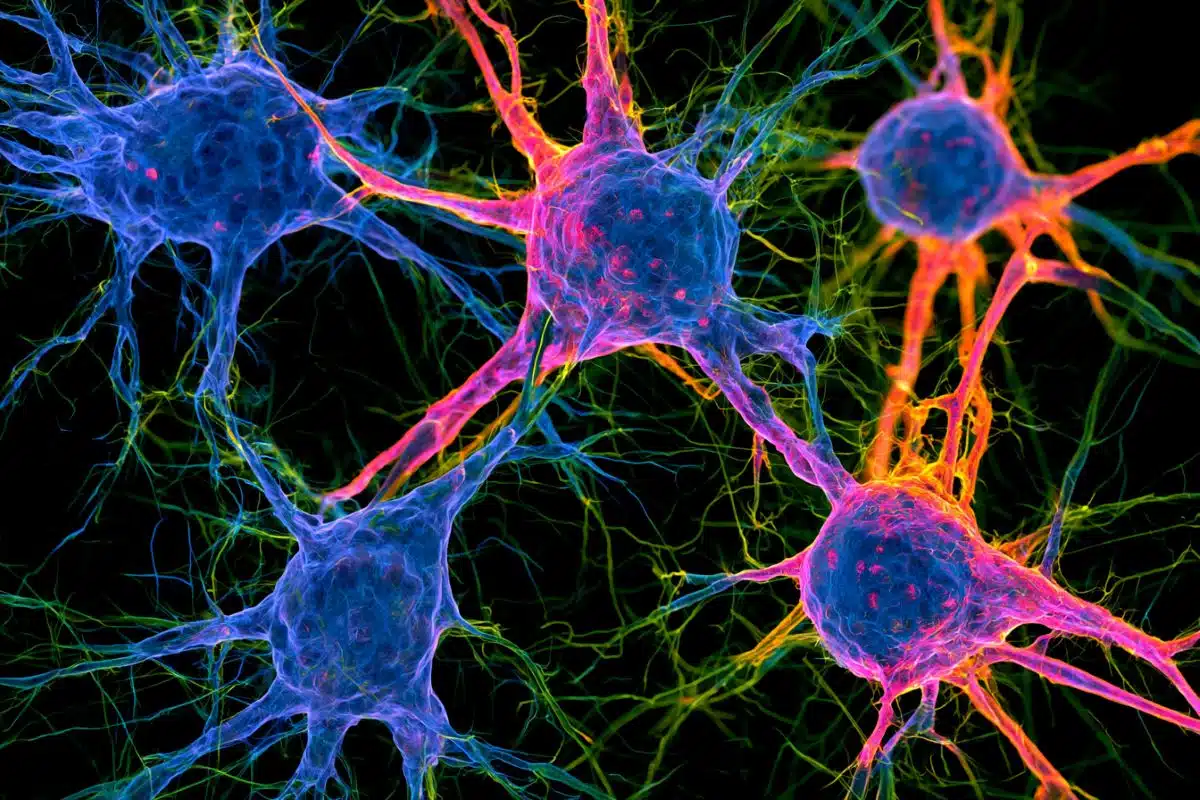
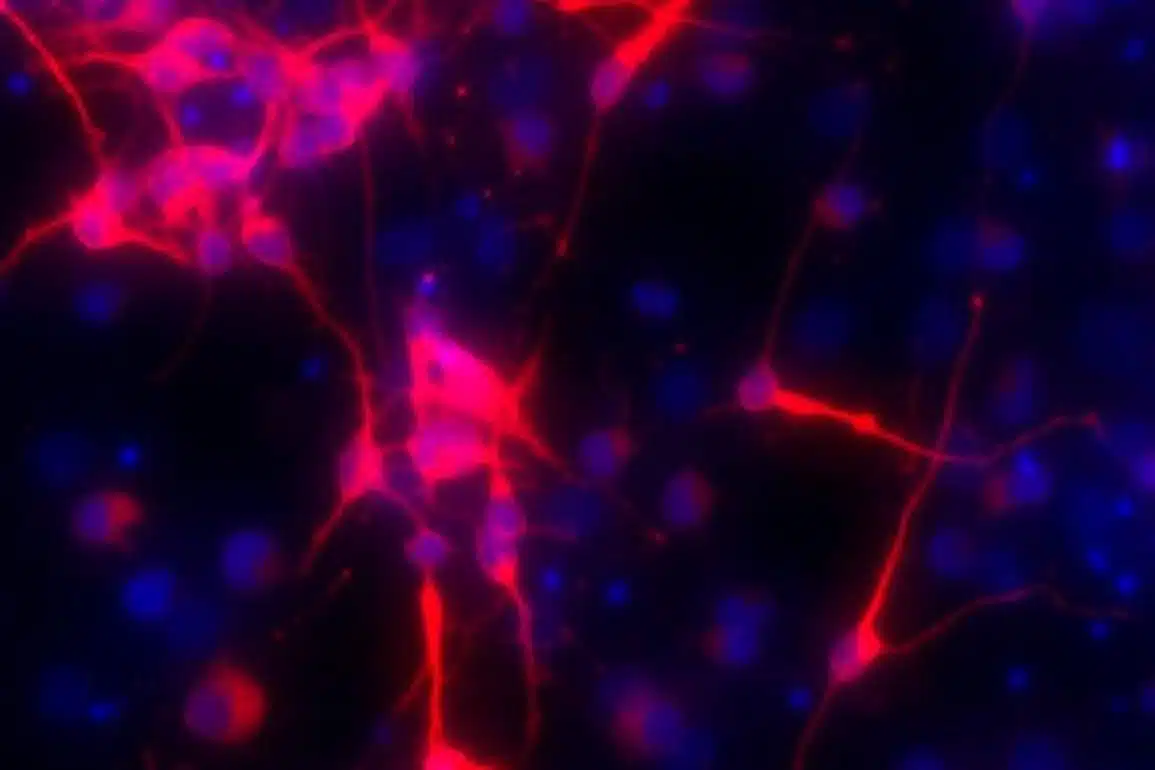
Summary: Chimeric Antigen Receptor T-cell (CAR-T) therapy has revolutionized the treatment of liquid blood cancers by engineering a patient’s own immune cells to destroy malignant targets, replicating this success in solid brain tumors has repeatedly failed due to the brain’s immunosuppressive microenvironment.
New research demonstrates that glioblastoma is not merely a collection of cancer cells, but a deeply connected “tumour-immune ecosystem.” By engineering a novel CAR-T cell line that simultaneously targets both the cancer cells and the corrupted immune cells shielding them, the team successfully eliminated all detectable tumors and achieved long-term, disease-free survival in complex preclinical models.
Key Facts
- The Macrophage Hijack: Glioblastoma tumors are heavily populated by macrophages—immune cells that normally defend the body. The cancer aggressively hijacks and reprograms these macrophages, transforming them into a cellular shield that actively suppresses immune attacks and feeds tumor growth.
- The GPNMB Biomarker Catalyst: Researchers identified a unique molecular vulnerability: a specific protein called GPNMB is highly expressed on both the glioblastoma cancer cells and the tumor-supporting, hijacked macrophages.
- The Two-Pronged Strike: By engineering CAR-T cells to specifically recognize and bind to GPNMB, the team created a dual-action therapeutic strike force. The engineered T-cells hunt down and kill the cancer cells while simultaneously dismantling the surrounding immune support system that keeps the tumor alive.
- Preclinical Eradication: When deployed against highly aggressive models grown directly from human patient tumors, this dual-targeting CAR-T design completely eradicated detectable malignancies, yielding long-term, disease-free survival profiles.
- Ecosystem-Level Targeting: This strategy represents a fundamental shift in solid-tumor design. Instead of treating a tumor as a simple mass of isolated cancer cells, the approach treats it as an interconnected ecosystem, destroying both the seed (the cancer) and the soil (the supportive microenvironment).
Source: King’s College London
A study led by a researcher based at King’s College London and McMaster University in Canada reveals how CAR-T cell therapy, a treatment that engineers a patient’s own immune cells to recognise and attack cancer, could be used to treat glioblastoma. Glioblastoma is one of the most aggressive and difficult-to-treat cancers, with devastatingly poor survival.
In several preclinical models of glioblastoma, including those grown from human patient tumours, the therapy eliminated detectable tumours and led to long-term disease-free survival.

Just 5% of patients with this type of brain cancer live beyond five years after diagnosis. The average survival time is just 12-18 months after diagnosis.
Glioblastoma is extremely hard to treat for many reasons. It aggressively spreads though the brain, forming threads into brain tissue rather than a clear lump which can be removed during surgeries. Even after surgery, microscopic remnants of cancer can remain. The cancer is also made up of multiple different types of cells, making it hard to target with chemotherapy and radiotherapy.
CAR-T therapy has transformed outcomes for some blood cancers, but it has not yet produced the same breakthrough for glioblastoma. Scientists are now investigating how the treatment could be used in glioblastoma, drawing on its known connections with the immune system.
Lead author Professor Sheila Singh, Professor of Neuro-oncology and Neurosurgery at King’s College London and McMaster University, said: “Glioblastoma is not made up of cancer cells alone. A large portion of the tumour consists of immune cells called macrophages. These cells normally help defend the body against infection, but glioblastoma can recruit and reprogramme them to help the tumour grow, suppress immune attacks, and resist treatment.”
The researchers identified a protein called GPNMB on both glioblastoma cells and tumour-supporting macrophages. This gave the team a rare opportunity to design a therapy that targets the tumour and the immune environment that helps sustain it. By engineering CAR-T cells to recognize GPNMB, the team developed a strategy designed to attack glioblastoma on two fronts at once.
Professor Singh added: “Instead of treating glioblastoma as only a mass of cancer cells, we need to think of it as a connected tumour-immune ecosystem. Our approach targets both the tumour and the environment that allows it to thrive. By going beyond the cancer cells alone, we are also targeting immune cells that help shield the tumour from treatment.”
Co-lead author Shan Grewal, an MD/PhD candidate at McMaster, added: “CAR-T therapy has been effective in some blood cancers, but translating that success to brain tumours has been difficult,” says “Most approaches have focused on killing cancer cells alone. Our work suggests we may also need to dismantle the immune support system that helps glioblastoma survive.”
The researchers stress that more work is needed before the treatment can move toward clinical trials. However, the study introduces a new treatment paradigm for one of the deadliest cancers in oncology by targeting the tumour and its immune defenses at the same time.
Professor Sheila Singh’s joint position at King’s College London and McMaster University is bringing together scientists at the forefront of research into brain cancer. Within King’s, Professor Singh is Head of the Comprehensive Cancer Centre, based at a specialist Innovation Hub.
Scientists from across disciplines at King’s work within the Innovation Hub to embed cutting-edge cancer research and access to clinical trials directly into patient care. Last month, His Majesty The King met Professor Sheila Singh and other cancer researchers based at the hub, located at Guy’s and St Thomas’ NHS Foundation Trust.
Professor Singh added: “Only through collaboration with scientists across the world and with clinicians can we tackle this devastating disease. I’ve seen firsthand through my work as a neurosurgeon the impact glioblastoma has on patients and their family members and I am committed to developing new treatments to improve outcomes for those affected by brain cancer.”
Key Questions Answered:
A: Blood cancers exist as free-floating cells in the bloodstream, making them easy targets for engineered CAR-T cells to find and attack. Glioblastoma is completely different. It behaves like a highly protected fortress inside the brain. It doesn’t form a neat, solid lump; instead, it weaves microscopic threads deep into healthy brain tissue. Worse, it surrounds itself with an army of hijacked immune cells called macrophages. These macrophages normally protect the body, but glioblastoma brainwashed them into building a biological shield that actively shuts down, neutralizes, and kills any therapeutic T-cells that attempt to enter the tumor.
A: Previously, scientists designed CAR-T cells to look for markers found only on the cancer cells, which left the protective shield of hijacked macrophages completely intact. Professor Sheila Singh’s team discovered that a specific protein called GPNMB acts as a shared badge worn by both the enemy combatants (the glioblastoma cells) and their corrupt protectors (the hijacked macrophages). By engineering the CAR-T cells to lock onto GPNMB, they created a smart weapon that simultaneously assassinates the cancer cells and completely dismantles the immune support network keeping them alive.
A: While achieving complete tumor eradication and long-term survival in patient-derived models is a massive victory, the researchers emphasize that there is still significant laboratory work ahead. The team must carefully validate the safety profile of the GPNMB-targeting cells to ensure they do not accidentally damage healthy brain tissue. Once these rigorous safety metrics are established, the platform can transition into phase-one human clinical trials through specialized acceleration networks like the Innovation Hub at King’s College London, transforming this preclinical breakthrough into a live, accessible treatment.
Editorial Notes:
- This article was edited by a Neuroscience News editor.
- Journal paper reviewed in full.
- Additional context added by our staff.
About this brain cancer research news
Author: Annie Slinn
Source: King’s College London
Contact: Annie Slinn – King’s College London
Image: The image is credited to Neuroscience News
Original Research: Open access.
“Navigating the transcytosis highway: engineering protein coronas for enhanced drug delivery across the blood–brain barrier” by Neil Savage, Shan Grewal, Muhammad Vaseem Shaikh, Franz J. Zemp, Dillon Mckenna, Nicholas Mikolajewicz, Hinda Najem, Joanna Pyczek, Jiuran Wei, Mohamed A. B. Taleb, Lucas C. Asselstine, Alisha Anand, Shawn C. Chafe, Kui Zhai, William T. Maich, Chirayu R. Chokshi, Hardikkumar Patel, Tiegan E. Korman, Minomi Subapanditha, Zoya Tabunshchyk, Nazanin Tatari, Petar Miletic, David Chen, Sebastian Pacheco, Abdelsimar T. Omar, Bill Wang, Hong Han, Jennifer A. Chan, Kevin R. Brown, Chitra Venugopal, Thomas Kislinger, Amy B. Heimberger, Jason Moffat, Douglas J. Mahoney & Sheila K. Singh. Nature
DOI:10.1038/s41586-026-10641-1
Abstract
Glioblastoma is a lethal brain tumour for which current multimodal treatment rarely prevents recurrence. Therapeutic failure is driven by extensive intratumoural cellular heterogeneity with a microenvironment dominated by tumour-associated macrophages that sustain tumour growth and immunosuppression.
Although chimeric antigen receptor (CAR)-T cell therapies are being developed for glioblastoma, sustained response has been undermined by non-uniform antigen expression, antigen loss and microenvironmental barriers that are not directly engaged by tumour-targeting designs.
These limitations motivate new strategies that address the disease as a coupled tumour–immune system rather than a single malignant compartment. Here we use a multi-omic target discovery platform to identify GPNMB as a dual-compartment antigen in glioblastoma. Anti-GPNMB CAR-T cells showed potent anti-tumour activity, with long-term disease control in orthotopic patient-derived xenografts and syngeneic glioma models through concomitant depletion of GPNMB+ tumour and immunosuppressive myeloid populations.
By collapsing tumour control and microenvironmental reprogramming, these findings provide a new strategy for antigen selection and targeting in heterogenous, myeloid-rich solid cancers.