

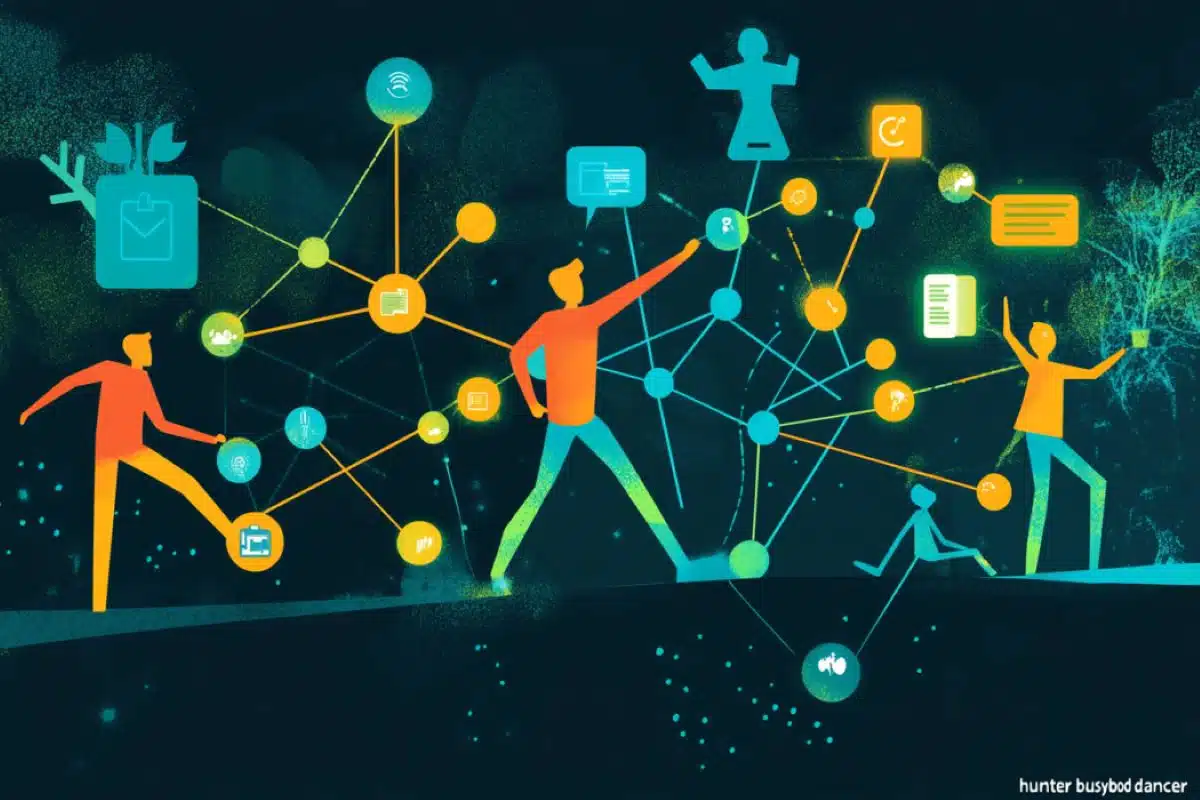
Summary: A study of global Wikipedia browsing patterns reveals three curiosity styles: the focused “hunter,” the exploratory “busybody,” and the creative “dancer.” Data from 482,760 readers in 50 countries shows that cultural factors, such as gender equality and education levels, influence browsing styles, with more egalitarian countries showing greater exploratory browsing.
Researchers believe curiosity styles impact learning and may suggest tailored educational approaches. The study also hints at how AI systems might integrate curiosity-based learning behaviors. By understanding how curiosity differs, we can enhance both human and machine learning environments.
Key Facts:
- Egalitarian countries tend to foster a “busybody” curiosity style, exploring diverse topics.
- The “dancer” style creatively connects domains, offering new ways to view information.
- Curiosity styles may impact educational approaches, supporting individual learning paths.
Source: University of Pennsylvania
At one point or another, you may have gone online looking for a specific bit of information and found yourself “going down the Wiki rabbit hole” as you discover wholly new, ever-more fascinating related topics—some trivial, some relevant—and you may have gone so far down the hole it’s difficult to piece together what brought you there to begin with.
According to the University of Pennsylvania’s Dani Bassett, who recently worked with a collaborative team of researcher to examine the browsing habits of 482,760 Wikipedia readers from 50 different countries, this style of information acquisition is called the “busybody.”
This is someone who goes from one idea or piece of information to another, and the two pieces may not relate to each other much.
“The busybody loves any and all kinds of newness, they’re happy to jump from here to there, with seemingly no rhyme or reason, and this is contrasted by the ‘hunter,’ which is a more goal-oriented, focused person who seeks to solve a problem, find a missing factor, or fill out a model of the world,” says Bassett.
In the research, published in the journal Science Advances, Bassett and colleagues discovered stark differences in browsing habits between countries with more education and gender equality versus less equality, raising key questions about the impact of culture on curiosity and learning.
“We observed that countries that had greater inequality, in terms of gender and access to education, had people who were browsing with more intent—seeking closely related information, whereas the people in countries that had more equality were browsing expansively, with more diversity in topics—jumping from topic to topic and collecting loosely connected information,” Bassett says.
“While we don’t know exactly why this is, we have our hunches, and we believe these findings will prove useful in helping scientists in our field better understand the nature of curiosity.”
This work builds on a previous study led by assistant professor in the Annenberg School for Communication David Lydon-Staley, who was a postdoctoral researcher in Bassett’s Complex Systems Lab at the time.
In that paper, the team had 149 participants from Philadelphia browse Wikipedia for 15 minutes a day for 21 days. In the course of that study, they identified the two curiosity styles, which were predicted by Perry Zurn, one of the new paper’s coauthors and a professor of philosophy at American University and currently a visiting professor at Cornell University, who studied and analyzed literature from over the last two millennia to home in those these styles of curiosity.
“Beginning this line of work in a small sample allowed us to work out the methods needed to capture the complex information-seeking that accompanies curiosity,” Lydon-Staley says.
“Working out those methods then allowed us to scale up and ask whether we could confirm that the styles we observed could be found outside of our sample of Philadelphians.”
Working with Martin Gerlach of the Wikimedia Foundation, who had data of more than two million human browsers, “allowed us to apply our existing methods, and develop new methods, to capture styles of curiosity emerging across 14 different languages of Wikipedia and 50 different countries or territories,” Lydon-Staley says.
The three hunches
The researchers cite three main hypotheses driving the associations between information-seeking approaches and equality.
“One is that it’s possible that countries that have more inequality also have more patriarchal structures of oppression that are constraining the knowledge production approaches to be more Hunter-like,” says Bassett.
“Countries that have greater equality, in contrast, are open to a diversity of ideas, and therefore a diversity of ways that we’re engaging in the world. This is more like the busybody—the one that’s moving between ideas in a very open-minded way.”
A second possibility the researchers outline is that browsers go to Wikipedia for different purposes in different countries, citing how someone in a country with higher equality may be going to the site for entertainment or leisure rather than for work.
And the third potential explanation is that people in different countries who come to Wikipedia may have different ages, genders, socioeconomic status, or educational attainment, and that those differences in who’s actually coming to Wikipedia may explain the differences in the browsing patterns.
Making connections
One of the most exciting findings of the study was the confirmation of a third curiosity style—the “dancer,” which had previously only been hypothesized based on Zurn’s research on historical texts.
“The dancer is someone who moves along a track of information but, unlike the busybody, they make leaps between ideas in a creative, choreographed way,” says Zurn. “They don’t jump randomly; they connect different domains to create something new.”
This curiosity style shows a degree of creativity and interdisciplinary thinking, offering a new perspective on how people engage with information. “It’s less about randomness and more about seeing connections where others might not,” Bassett says.
“What this tells us is that people—and likely children—have different curiosity styles, and that might affect how they approach learning,” Bassett says.
“A child with a hunter-like curiosity may struggle if assessed using methods that favor the busybody style, or vice versa. Understanding these styles could help us tailor educational experiences to better support individual learning paths.”
Where curiosity may lead next
Looking ahead, the team seeks to explore the factors influencing these curiosity styles.
“One question I’m particularly interested in is whether people browse differently at different times of day—perhaps they’re more hunter-like in the morning and more like busybodies in the evening,” says Bassett.
“This opens up new research avenues, including the role of biological processes in shaping how we seek information,” says Shubhankar Patankar, another author on the paper and a doctoral student in Penn Engineering. He is also keen to understand the implications of the work for AI.
“Imparting notions of curiosity to AI systems learning from interactions is an increasingly important area of research,” Patankar says.
The team aims to explore the motivations behind Wikipedia browsing, examining whether users are driven by extrinsic factors, like work, or intrinsic curiosity, like personal interest. Additionally, they are considering expanding their analysis to include other digital platforms where learning and exploration naturally occur.
“Wikipedia is a very special place on the internet,” Lydon-Staley says.
“The site features exclusively free content and no commercial advertisements. Much of the rest of the contemporary digital landscape is designed to activate individuals’ buying impulses and customizes our media content. This raises the question of how much we are in charge of where our curiosity takes us in online contexts beyond Wikipedia.”
Dani S. Bassett is the J. Peter Skirkanich Professor at the University of Pennsylvania with a primary appointment in the School of Engineering and Applied Science’s Department of Bioengineering and secondary appointments in the School of Arts & Sciences’ Department of Physics & Astronomy, Penn Engineering’s Department of Electrical and Systems Engineering, and the Perelman School of Medicine’s Departments of Neurology and Psychiatry.
Martin Gerlach is a senior research scientist for the Wikimedia Foundation.
David Lydon-Staley is an assistant professor of communication and principal investigator of the Addiction, Health, & Adolescence Lab in the Annenberg School for Communication at Penn.
Shubhankar Patankar is a Ph.D. student at Penn Engineering.
Dale Zhou was a Ph.D. student in the Perelman School of Medicine who is now a postdoctoral researcher at the University of California at Irvine.
Perry Zurn is an associate professor and director of undergraduate studies in philosophy at American University in the College of Arts and Sciences’ Department of Philosophy and Religion.
Funding: This research received support from the George E. Hewitt Foundation for Medical Research, the Center for Curiosity, and the National Institute of Health (Grant K01 DA047417).
About this learning and neuroscience research news
Author: Nathi Magubane
Source: University of Pennsylvania
Contact: Nathi Magubane – University of Pennsylvania
Image: The image is credited to Neuroscience News
Original Research: Open access.
“Architectural styles of curiosity in global Wikipedia mobile app readership” by Dani Bassett et al. Science Advances
Abstract
Architectural styles of curiosity in global Wikipedia mobile app readership
Intrinsically motivated information seeking is an expression of curiosity believed to be central to human nature. However, most curiosity research relies on small, Western convenience samples.
Here, we analyze a naturalistic population of 482,760 readers using Wikipedia’s mobile app in 14 languages from 50 countries or territories.
By measuring the structure of knowledge networks constructed by readers weaving a thread through articles in Wikipedia, we replicate two styles of curiosity previously identified in laboratory studies: the nomadic “busybody” and the targeted “hunter.”
Further, we find evidence for another style—the “dancer”—which was previously predicted by a historico-philosophical examination of texts over two millennia and is characterized by creative modes of knowledge production.
We identify associations, globally, between the structure of knowledge networks and population-level indicators of spatial navigation, education, mood, well-being, and inequality.
These results advance our understanding of Wikipedia’s global readership and demonstrate how cultural and geographical properties of the digital environment relate to different styles of curiosity.


