

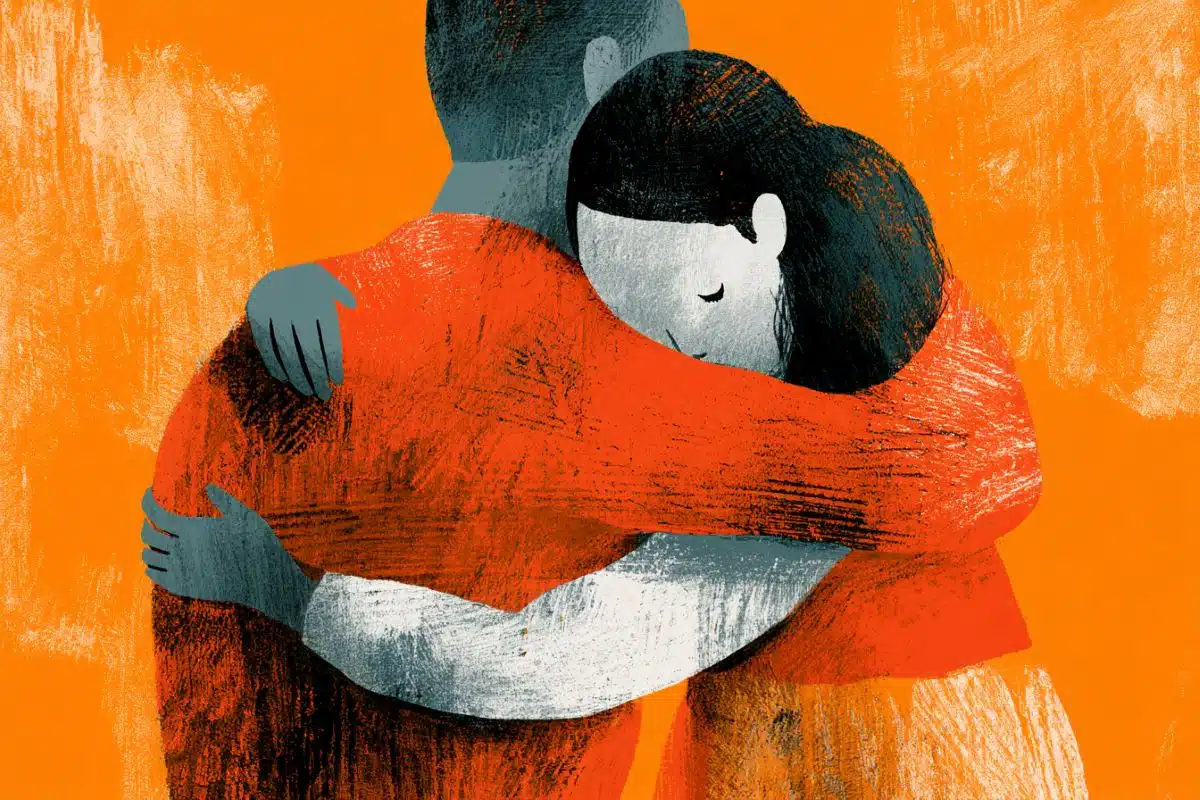
Summary: When a loved one is visually distressed or upset, modern psychological paradigms assume that the universal human instinct is to comfort them, to actively step in and alleviate their negative emotions. However, a landmark international study challenges this foundational assumption, proving that the motivation to make others “feel better” is a deeply rooted cultural construct rather than an inherent feature of human nature.
The comprehensive cross-cultural evaluation analyzed data from over 6,900 participants across 17 countries alongside real-world tracking of romantic couples in Germany and South Korea. The research reveals that while humans across all borders share an identical desire to regulate their own internal emotions toward happiness, their motives for regulating the emotions of others diverge sharply along cultural lines.
In individualistic societies, wiping away negative feelings is the gold standard of care; in collectivistic frameworks, unpleasant emotions are preserved as vital instruments for self-improvement, relationship building, and existential meaning.
Key Facts
- The Interpersonal Divergence: Culture exerts a significantly more powerful influence over how we manage other people’s emotions (interpersonal regulation) than how we manage our own internal feelings (intrapersonal regulation).
- The Individualistic Comfort Model: In highly individualistic nations like the United States, Germany, and the United Kingdom, individuals are driven by a powerful motive to actively minimize another person’s distress through external reframing, active validation, and comfort.
- The Collectivistic Preservation Model: Conversely, in highly collectivistic nations like South Korea, Japan, India, and China, individuals do not view unpleasant or painful emotions as problems that must be immediately extinguished.
- The Utility of Discomfort: Collectivistic frameworks perceive negative emotions as functionally valuable tools meant to drive deep self-reflection, catalyze personal self-improvement, fortify social relationships, or honor structural meaning.
- Relationship Closeness Dynamics: The study revealed distinct relationship consequences: in Germany, actively trying to dissolve a partner’s distress strongly predicted deeper feelings of relationship closeness. In South Korea, this motivation was completely unrelated to marital or relational intimacy.
- Global Operational Impact: The findings directly challenge the “one-size-fits-all” framework used in international business, multicultural couples therapy, diplomacy, and globalized healthcare pipelines, suggesting a clinical shift from “How can I make you feel better?” to “What type of emotional support matches your cultural worldview?”
Source: Hebrew University of Jerusalem
When someone you love is upset, your first instinct may be to comfort them. To reassure them. To make them feel better.
But what if that instinct isn’t universal?
A new international study led by Dr. Maya Tamir and PhD. student Shir Ginosar Yaari of the Hebrew University of Jerusalem, published in the Proceedings of the National Academy of Sciences (PNAS), challenges one of psychology’s long-standing assumptions: that helping others feel better is a universal motive. Instead, the research shows that people in different cultures have different ideas of what supporting others should look like.
While psychologists have spent decades studying how people regulate their own emotions, this study turns the spotlight on something less explored: how people try to regulate the emotions of others. The findings reveal that culture may inform how people manage the emotions of others more strongly than it informs how people manage their own emotions.
This research combined data from more than 6,900 participants across 17 countries spanning Europe, Asia, Africa, North and South America, and the Middle East, making it one of the broadest investigations of interpersonal emotion regulation to date. The researchers also followed couples in Germany and South Korea in their daily lives to examine how people naturally respond to their partners’ emotions.
The researchers found that people in more individualistic cultures were more motivated to reduce other people’s distress than those in more collectivistic cultures. On average, participants from more individualistic countries, such as Germany, the United States, and the United Kingdom, were more motivated to help others feel better. By contrast, participants from more collectivistic countries, including South Korea, Japan, India, and China, were less likely to view unpleasant emotions as something that should necessarily be eliminated, reflecting broader cultural beliefs that unpleasant emotions can be valuable. The findings reflect broad cultural patterns rather than characteristics of any single country.
“We often assume that if someone is suffering, the kind thing to do is to make them feel better,” said Dr. Maya Tamir, senior author of the study. “Our findings suggest that this assumption reflects cultural values more than universal human nature.”
The study found that in countries emphasizing individual achievement and personal happiness, people were more likely to comfort others by expressing care, listening, encouraging acceptance, and helping them reframe difficult experiences. They were also less likely to encourage emotional suppression or dwelling on negative feelings.
In more collectivistic cultures, however, the picture was different.
The researchers suggested that unpleasant emotions are not always viewed as problems to eliminate. Instead, they may be seen as serving valuable purposes, promoting self-improvement, strengthening relationships, encouraging reflection, or helping people find meaning. As a result, making someone feel better is not necessarily the best way to support them.
Perhaps the study’s most surprising finding was that culture mattered more in how people tried to influence the emotions of others than in how they tried to influence their own emotions.
Across countries, people were similar in their motivation to make themselves feel better. What varied was how much they wanted to change someone else’s emotions.
“Culture doesn’t just shape how we experience emotions,” said Tamir. “It shapes what we believe other people should feel and how we think we can best help them.”
Emotional support isn’t one-size-fits-all. The researchers also discovered that these cultural differences have consequences for relationships.
In Germany, a more individualistic culture, people who were more motivated to reduce their partner’s distress reported feeling closer to their partner. This association did not emerge in South Korea, where the motivation to make one’s partner feel better was unrelated to feelings of closeness to the partner.
The findings suggest that what counts as emotionally supportive behavior depends on cultural context.
The project brought together researchers from universities across Europe, Asia, North and South America, Africa, and the Middle East. Combining three complementary studies, including large international surveys and daily diary data from romantic couples, it is among the largest international investigations of interpersonal emotion regulation ever conducted.
Why it matters
In an increasingly interconnected world, misunderstandings often arise not because people care less, but because they express care differently.
Whether in multicultural families, international workplaces, education, healthcare, or mental health care, recognizing that emotional support looks different in different culture can foster better communication, stronger relationships, and more culturally sensitive approaches to care.
Rather than asking, “How can I make you feel better?” this research suggests we may sometimes need to ask a different question: “What kind of support is right for you?”
Key Questions Answered:
A: It stems from what these societies value most at an existential level. Individualistic cultures place a premium on personal happiness, autonomy, and individual achievement, so negative emotions are viewed as an internal malfunction or a problem that needs to be fixed right away. Collectivistic cultures, on the other hand, prioritize social harmony, duty, and deep interconnectedness. In these societies, sitting with a negative emotion is not seen as a failure; it is viewed as a highly valuable tool for learning humility, reflecting on your choices, deepening your relationships with others, and finding genuine meaning in hardship.
A: Not at all. Misunderstandings happen in our globalized world not because people care less, but because they express that care through completely different cultural frameworks. An American or British person might think the kindest act is to distract a sad friend or help them reframe the problem to make them smile. A Japanese or South Korean person, however, might believe that trying to force someone out of their sadness is intrusive, disrespectful, or counterproductive. To them, true empathy means validating the gravity of the moment and allowing the person the psychological space to experience a painful emotion that could ultimately make them wiser or stronger.
A: The most shocking finding was that culture barely matters when it comes to how we handle our own internal feelings, nearly everyone worldwide, regardless of where they live, is naturally motivated to make themselves feel better when they are down. But the moment we try to manage someone else’s mind, culture completely takes the driver’s seat. Culture doesn’t just dictate how we experience our own life; it heavily dictates our moral assumptions about what other people are supposed to feel and how we should properly behave to support them.
Editorial Notes:
- This article was edited by a Neuroscience News editor.
- Journal paper reviewed in full.
- Additional context added by our staff.
About this social empathy research news
Author: Danae Marx
Source: Hebrew University of Jerusalem
Contact: Danae Marx – Hebrew University of Jerusalem
Image: The image is credited to Neuroscience News
Original Research: The findings will appear in PNAS


