Summary: The “Cambrian Explosion”, the period roughly 500 million years ago when animal life rapidly diversified, may not have been a sudden burst of innovation. New research suggests this was a gradual, multi-stage process fueled by the evolution of the brain.
The study proposes that as marine environments became more competitive, the need to process sensory information drove neural complexity, which then provided the genetic “toolkit” for building more complex body plans.
Key Research Findings
- The Brain-First Hypothesis: Rather than being a byproduct of complex bodies, the expansion and regionalization of the brain may have come first, enabling subsequent anatomical innovation.
- Ecological Feedback Loops: Increasing complexity in marine environments (predator-prey interactions) created pressure for organisms to sense and respond to their surroundings, favoring more sophisticated nervous systems.
- Genetic Co-option: The genetic “toolkits” used for brain development were eventually reused, or co-opted, to pattern other organ systems, such as advanced sensory organs and segmented structures.
- Specific Lineages: This evolutionary path was particularly pronounced in successful groups like arthropods, mollusks, annelids, and chordates.
- Environmental Context: Evolutionary success is not tied solely to complexity; many organisms thrive with simple body plans if they meet the specific demands of their environment.
Source: Hebrew University of Jerusalem
For decades, scientists have sought to explain the so-called “Cambrian Explosion,” a pivotal period over 500 million years ago when a remarkable diversity of animal life appeared in the fossil record.
But rather than a sudden burst of innovation, new research suggests this diversification was the result of a gradual, multi-stage process, driven in large part by the evolution of the brain.

A new theoretical framework proposed by Professor Ariel Chipman of the Hebrew University of Jerusalem, published in BioEssays, offers a fresh perspective on one of evolution’s most enduring questions.
Instead of looking for a single trigger behind the rise in animal diversity, the study reframes the Cambrian period as a cascade of interconnected developments, where increasing ecological complexity drove the evolution of more sophisticated nervous systems, particularly the brain.
As marine environments became more dynamic and competitive, with growing interactions between predators and prey, organisms faced new pressures to sense, process, and respond to their surroundings. According to Chipman, this ecological shift favored the development of more complex neural systems capable of handling increasing amounts of sensory information.
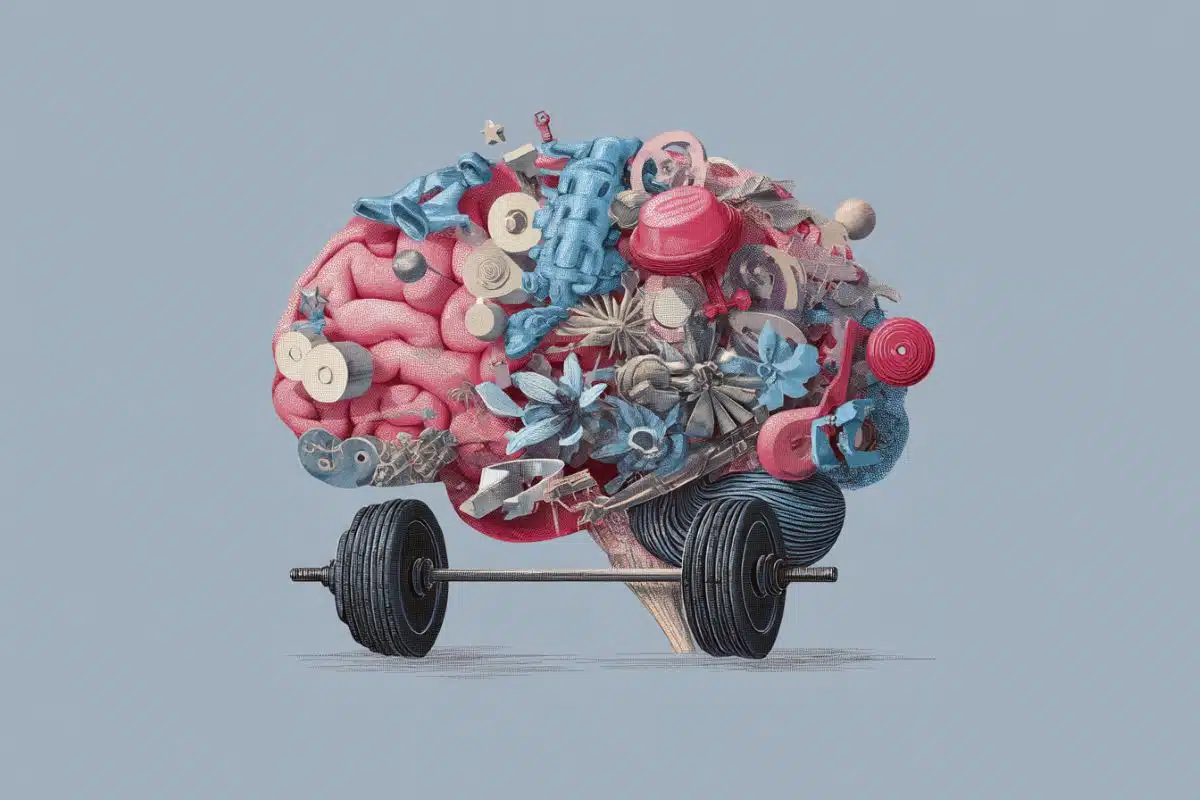
At the center of this framework is what Chipman terms the “Brain-First Hypothesis.” Rather than viewing complex nervous systems as a byproduct of advanced body structures, the model suggests that the expansion and regionalization of the brain came early, and played a key role in enabling further anatomical innovation.
Crucially, the study proposes that the genetic mechanisms underlying brain development did not remain limited to the nervous system. Through a process known as co-option, these same genetic “toolkits” were reused to pattern and build other organ systems. This reuse of existing developmental pathways helped drive the emergence of more complex body plans, including specialized digestive systems, advanced sensory organs, and segmented structures.
This increase in overall biological complexity allowed certain groups of animals to adapt to a wider range of ecological niches, contributing to their evolutionary success. The effect was not uniform across all life forms. Instead, it was particularly pronounced in groups such as arthropods, mollusks, annelids, and chordates, lineages that today exhibit both high structural complexity and exceptional species diversity.
“Rather than thinking about a single ‘explosion,’ we should think in terms of a series of linked stages,” explains Prof. Chipman. “As environments became more complex, animals needed better ways to process information. The evolution of the brain enabled that, and in turn opened the door to greater diversity in body forms and lifestyles.”
Importantly, the study also emphasizes that increased complexity is not inherently advantageous. Many organisms have thrived with relatively simple body plans, highlighting that evolutionary success depends on the specific demands of an organism’s environment.
By shifting the focus from a single dramatic event to a sequence of gradual changes, this research offers a new way of understanding the origins of animal diversity. Future work, particularly in genetics and developmental biology, may help test this hypothesis and further clarify the role of the brain in shaping the trajectory of life on Earth.
Key Questions Answered:
A: The term “explosion” reflects the relatively short geological window in which these diverse fossils appear. However, this framework suggests that the underlying biological “fuse”, the evolution of the brain and its genetic instructions, was burning long before the physical structures became visible in the fossil record.
A: This is called co-option. Evolution is efficient; once a set of genetic instructions is perfected to organize a complex structure like a brain, the “code” can be reused to organize other complex structures, leading to the rapid emergence of varied body parts.
A: Not necessarily. The study emphasizes that complexity is not inherently better. Success depends on the environment; many simple organisms have survived for millions of years because their simple body plans are perfectly suited to their specific niches.
Editorial Notes:
- This article was edited by a Neuroscience News editor.
- Journal paper reviewed in full.
- Additional context added by our staff.
About this evolutionary neuroscience research news
Author: Yarden Mills
Source: Hebrew University of Jerusalem
Contact: Yarden Mills – Hebrew University of Jerusalem
Image: The image is credited to Neuroscience News
Original Research: Open access.
“An Increase in Animal Diversity was Facilitated by Ecologically-Driven Brain Complexity Throughout the Cambrian” by Ariel Chipman. BioEssays
DOI:10.1002/bies.70136
Abstract
An Increase in Animal Diversity was Facilitated by Ecologically-Driven Brain Complexity Throughout the Cambrian
The Cambrian Explosion is often seen as a singular event requiring an explanation. In fact, it is better represented as a cascade of linked events, each with numerous causes.
The iconic middle Cambrian fauna, represented by sites such as the Burgess Shale, is a culmination of several phases of increases in taxonomic diversity and morphological complexity. I focus on an often-overlooked increase in complexity that took place in a limited number of phyla in parallel after the main “explosion”.
This increase in morphological complexity and disparity was facilitated by an increase in the complexity of the central nervous system, which in itself was a selective response to the ecological complexity of the biosphere, which had been increasing from the late Ediacaran.
Genetic regulatory components that contributed to an increasingly differentiated and regionalized central nervous system were developmentally co-opted to increase the differentiation and complexity of additional organ systems.
This process took place convergently in arthropods, mollusks, and annelids at different times throughout the Cambrian and, later in the Ordovician, also in vertebrates.