

Summary:
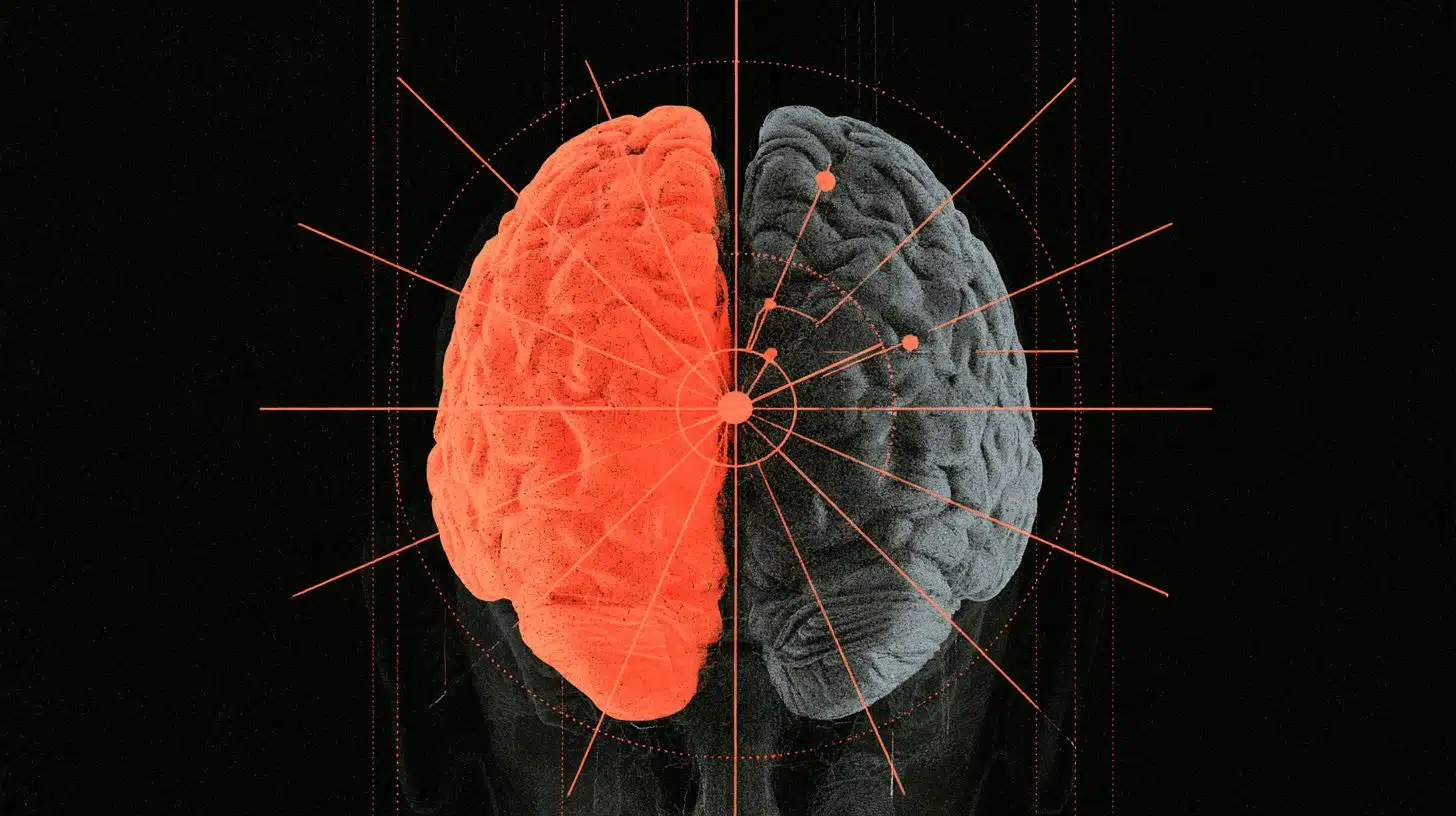
A theoretical neuroanatomy paper published in Frontiers in Neuroanatomy by researchers at the University of Minnesota proposes an evolutionary explanation for why the brain is cross-wired. The authors argue that contralateral organization, where the left side of the brain governs the right side of the body and vice versa, was not necessarily an independent adaptation for limb control or somatosensation. Instead, the ancient optical physics of the eye and the contralateral mapping of the midbrain optic tectum established a structural template over 500 million years ago that subsequently biased the evolution of sensory and motor circuits in four-limbed animals.
Key Facts:
- Ancient Visual Blueprint: Because optical lenses invert images onto the retina, early vertebrates evolved an optic chiasm and a contralaterally mapped optic tectum (superior colliculus in mammals) to register visual stimuli, a structure conserved across all living vertebrates dating back roughly 500 million years to Cambrian-era ancestors.
- Evolutionary Spandrel: The authors hypothesize that decussating (midline-crossing) tracts, including the dorsal column, spinothalamic, tectospinal, rubrospinal, and corticospinal pathways, did not evolve independently as specific adaptations, but followed the pre-existing spatial map established by ancient midbrain vision circuits.
- Co-Opted Primate Dexterity: While the mammalian corticospinal tract ancestrally served to gate and modulate incoming somatosensory signals, primates and dexterous mammals co-opted this pre-existing contralateral wiring to establish direct motor connections to spinal motor neurons, enabling fine finger dexterity.
Source: Frontiers / University of Minnesota
One of the most enduring enigmas in neuroanatomy is contralateral organization: why did vertebrates evolve central nervous systems where the left cerebral hemisphere monitors and directs the right side of the physical body, and the right hemisphere commands the left?
While medical students and neuroscientists routinely memorize the intricate crossings of the brainstem and spinal cord, known as decussations, the evolutionary pressures that led to this complex “cross-wiring” across sensory and motor modalities have fueled debate for centuries.
Now, in an analysis published in Frontiers in Neuroanatomy, neuroscientists Daniel Wang and Martin Wessendorf, PhD, associate professor emeritus at the University of Minnesota, propose a unifying evolutionary hypothesis.
They suggest that the brain’s widespread cross-wiring is not a collection of independent functional adaptations. Rather, it represents an ancient evolutionary path-dependency initiated by the simple optical physics of primitive eyes and the ancient midbrain circuits built to interpret them.
The Optical Inversion That Started It All
The evolutionary story begins with sensory input from the visual apparatus. Because a spherical eye lens physically reverses an incoming image onto the retina, light originating from the right visual hemifield falls onto the left side of each retina, and vice versa.
To process this inverted sensory data efficiently, early vertebrates evolved the optic chiasm—an anatomical intersection where retinal ganglion cell axons cross the midline so that visual inputs from the right half of the world are routed entirely to the left side of the brain.
These visual signals terminate primarily in the optic tectum (termed the superior colliculus in mammals), an ancient midbrain structure present across all living vertebrate lineages. The optic tectum constructs an internal spatial map of the contralateral environment to coordinate rapid defensive and predatory orienting responses.
Crucially, in its deeper cellular layers, the tectum also receives somatic touch and auditory information aligned in exact spatial registration with the overlying visual coordinates.
Given that all surviving vertebrates possess an optic chiasm and a contralaterally organized optic tectum, the authors deduce that this architecture was already firmly established in Cambrian-era jawless fishes roughly 538 to 486 million years ago.
Conserving the Contralateral Template in Tetrapods
As ancient aquatic creatures transitioned into four-limbed terrestrial animals (tetrapods), the lineage encompassing amphibians, reptiles, birds, and mammals, new somatic sensory and voluntary motor pathways were required to control limbs and navigate dry land.
The authors examined two major ascending somatosensory pathways:
- The Dorsal Column-Medial Lemniscal Pathway: Responsible for discriminative touch, vibration, and proprioception, this system ascends the spinal cord and crosses the midline in the medulla within the brainstem. While absent in ray-finned fishes, it is universally conserved across tetrapods.
- The Spinothalamic Tract: Mediating sensations of pain, temperature, and crude touch, this tract crosses the midline immediately within the spinal cord before ascending to the thalamus. This contralateral architecture is extraordinarily ancient, observed in birds, reptiles, mammals, and even cartilaginous fishes like sharks and rays.
Similarly, descending motor pathways governing skeletal muscle mirrored this crossing organization:
- The Tectospinal Tract: Originating in the deep layers of the optic tectum and crossing to the contralateral spinal cord, this pathway drives reflexive head and body turns toward surprising peripheral visual, auditory, or tactile stimuli, such as instinctively stepping back from an oncoming vehicle in one’s peripheral vision.
- The Rubrospinal Tract: Arising in the midbrain red nucleus and decussating to project down the opposite spinal cord, this tract facilitates coordinated gross limb movement in tetrapods.
- The Corticospinal Tract: A mammalian innovation originating in the six-layered neocortex that crosses at the pyramidal decussation. The authors note that while in most mammals this tract terminates in dorsal sensory horns to modulate incoming tactile inputs, primates and other dexterous animals co-opted these existing contralateral fibers to synapse directly onto spinal motor neurons, giving humans fine, independent control of their fingers.
Evolution as a Pragmatic Engineer
Rather than viewing each crossing pathway as an optimal adaptation designed from a clean slate, Wang and Wessendorf argue that evolution operated as a conservative engineer building with pre-existing modular materials.
Because the optic tectum had already coupled a contralateral visual map to deeper somatic sensations to coordinate survival reflexes hundreds of millions of years prior, any novel sensory or motor tract that evolved later had to align with this established coordinate system to prevent sensorimotor mismatch.
“Since evolution is conservative in its innovations – it often retains and builds upon existing structures, pathways, and mechanisms rather than inventing new ones – the organization of the visual system (and in particular, the optic tectum) may have defined the organizational principles required of the sensory and motor pathways that evolved later,” the authors explain.
Under this framework, contralateral wiring is an evolutionary spandrel: an architectural consequence anchored to the optics of the vertebrate eye. The authors note that future analyses examining the internal neurocranial fossils of early Cambrian vertebrates could provide physical milestones tracking how this visual blueprint laid the groundwork for the human central nervous system.
Editorial Notes:
- This article was edited by a Neuroscience News editor.
- Journal paper reviewed in full.
- Additional context added by our staff.
About this evolutionary neuroscience Research:
- Media Contact: Deborah Pirchner
- Source: Frontiers
- Image Credit: Image credited to Neuroscience News
- Original Research is Open Access: Frontiers in Neuroanatomy (Oct 1, 2026). “Why is the right side of the brain responsible for the left side of the body? The evolutionary history of a puzzling trait.” Authors: Daniel Delie Wang and Martin W. Wessendorf.
- DOI: 10.3389/fnana.2026.1937941
Abstract
Why is the right side of the brain responsible for the left side of the body? The evolutionary history of a puzzling trait
In humans and most other mammals, the right motor cortex controls the spinal motoneurons that cause the limbs on the left sides of our bodies to move.
Similarly, the right side of the cerebral cortex predominantly receives sensory information about the left side of our bodies and the left side of the outside world. Although there have been numerous papers (dating back at least to Cajal) speculating on the adaptive value of this contralateral organization, to date none appears to have examined its evolutionary history.
Our paper examines the major contralaterally organized circuits found in extant vertebrate brains and proposes a novel hypothesis regarding their evolution. We found that vision is contralaterally organized in all vertebrates reported: input from each visual field is carried by the optic tract to the contralateral optic tectum (i.e., the superior colliculus in mammals) and is retinotopically mapped there. In addition, in most tetrapods, somatosensation and hearing are carried rostrally to forebrain by contralaterally organized circuits. Stem amniotes (−-the predecessors of reptiles, birds, and mammals) appear to have had contralaterally organized motor systems including the tectospinal tract and rubrospinal tract.
Finally, the last common ancestor of mammals itself appears to have had a contralaterally organized neocortex, including a corticospinal tract. We conclude that the mammalian neocortex evolved in brains in which many major motor and sensory circuits were already contralaterally organized. By adapting contralateral organization itself, the neocortex was able to integrate directly with those circuits without the “wiring cost” incurred by altering them.


