Summary: How we recall our memories, either through first-person perspective or as an observer, can affect the vividness and potency of the memory. Remembering an event in first-person perspective can make the memory stronger.
Source: University of Alberta
Think of a memory from your childhood. Are you seeing the memory through your own eyes, or can you see yourself, while viewing that child as if you were an observer?
“If memory was simply an exact recollection of our experiences, one would think that we would recall our early memories from the first-person perspective,” said Peggy St Jacques, assistant professor in the Faculty of Science’s Department of Psychology. “Recalling a memory is not like watching a film of what happened. We edit and modify memories each time we recall them.”
The perspective through we which recall our memories–either seeing it through our own eyes in the first person, or viewing as an observer in the third person–can have an effect on the vividness and potency of the memory, with stronger recollection when perceived in the first person.
“A number of studies have shown that this can impact how we later recall these memories,” said St Jacques, who recently authored a paper exploring this phenomenon. “Viewing memories in the third person tends to reduce the vividness of that experience, as well as the amount of emotion that we feel. Our memory system is very dynamic and flexible.”
And that’s probably a good thing, St Jacques explained. Our ability to edit our memories allows us to grow and change how we perceive both ourselves and our experiences. For example, by changing the way we feel about a troubling memory, we’re able to learn and move forward, helping those suffering post-traumatic stress disorder as just one example.
So, the next time you recall a memory in the third person, ask yourself if that memory is real or not. “It’s possible because you’re not recalling that experience through your own eyes that the memory is distorted in some way,” she said. “There could be some aspects that are false or edited.”
Using virtual reality
But if our memories are influenced by the perspective we use to recall them, what does that mean for experiences we see for the first time in third-person? That’s one question that St Jacques is further exploring–using virtual reality technology.
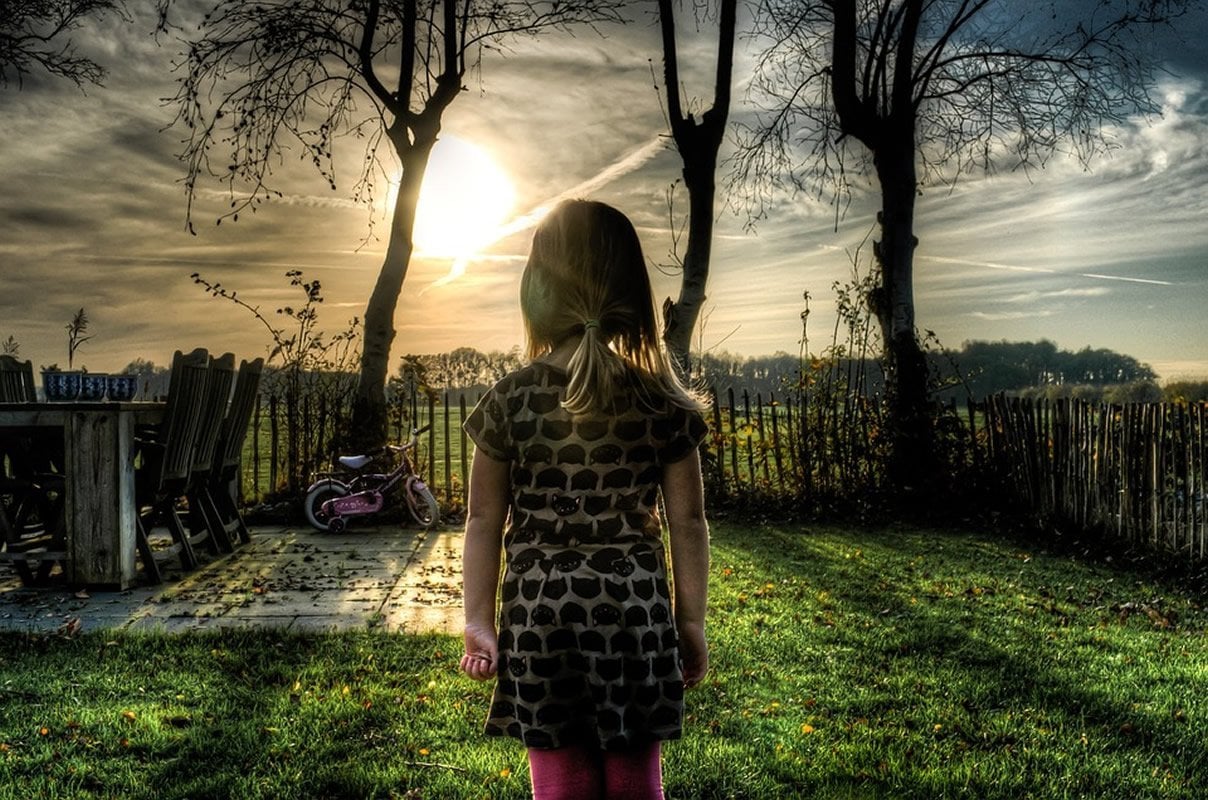
“Virtual reality allows us to have immersive experiences that seem really real to us but that we experience in the third person,” she said. “In our lab, we’re using virtual reality to look at how the experience of virtual environments in first- and third-person impact people’s memories. Our working hypothesis is that, after a delay, if you’ve formed memories from a third-person perspective, that the memory will not be as durable and will tend to lose vividness over time.”
Source:
University of Alberta
Media Contacts:
Katie Willis – University of Alberta
Image Source:
The image is in the public domain.
Original Research: Open access
“A New Perspective on Visual Perspective in Memory”. The perspective through we which recall our memories–either seeing it through our own eyes in the first person, or viewing as an observer in the third person–can have an effect on the vividness and potency of the memory, with stronger recollection when perceived in the first person..
Current Directions in Psychological Science. doi:10.1177/0963721419850158
Abstract
A New Perspective on Visual Perspective in Memory
Memories for events require adopting a particular visual perspective—viewing the past from our own eyes or from an observerlike perspective in which we see ourselves in the memory. The current review synthesizes new behavioral and functional-neuroimaging evidence on the role of visual perspective in reshaping memories and how shifting visual perspective to novel viewpoints relies on similar constructive processes during imagination. Directions for future research are also discussed.