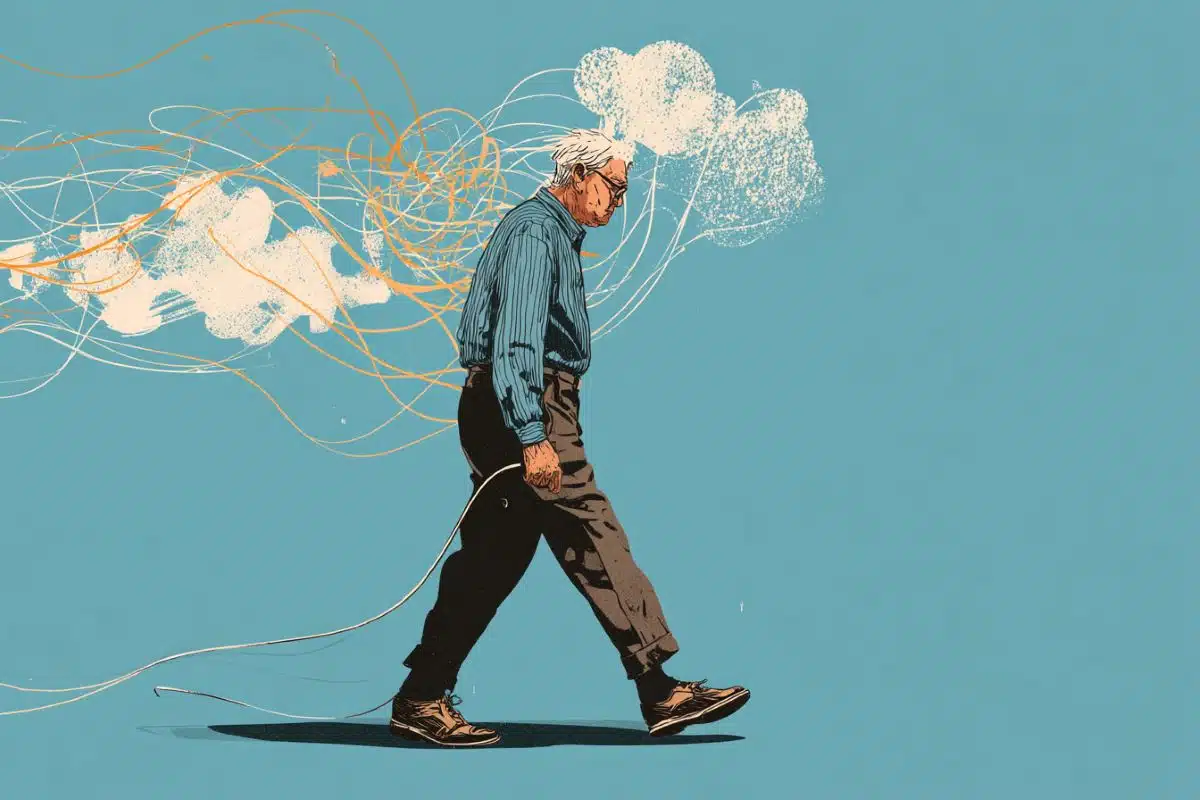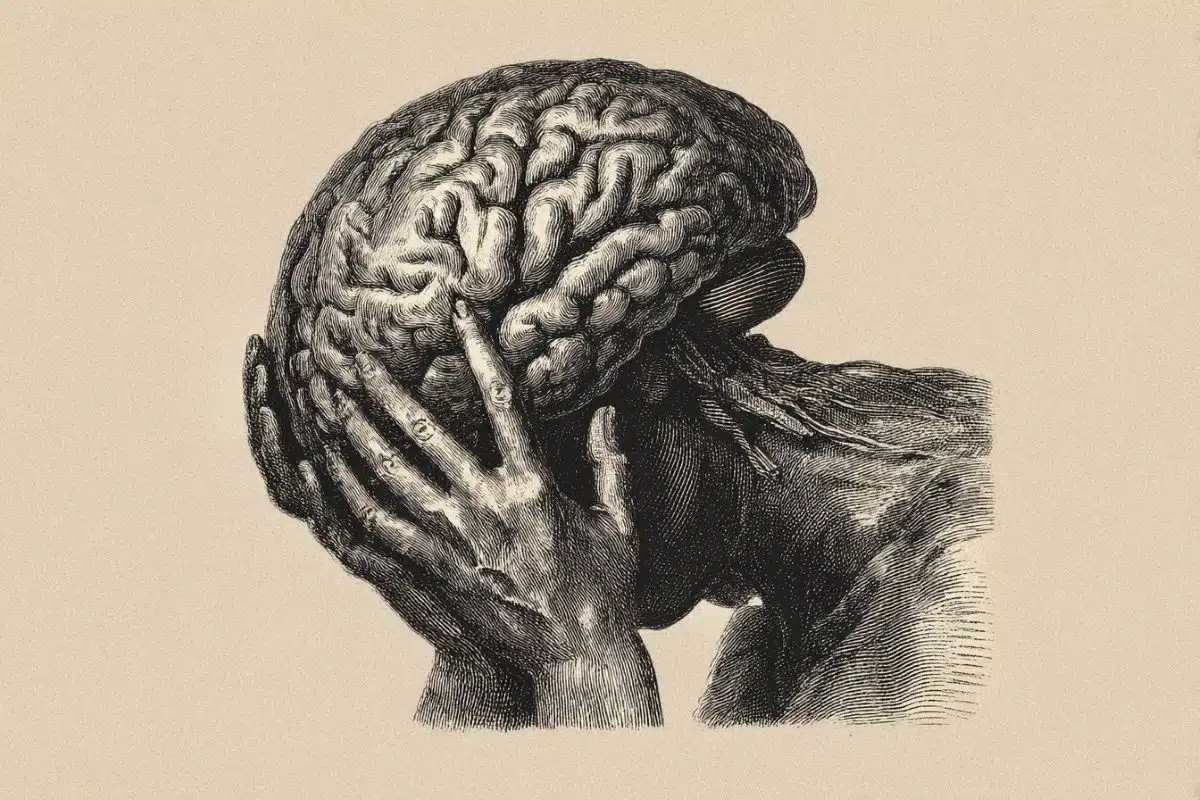
Summary: Ever wonder why you don’t feel an itch when you’re in the middle of a high-pressure situation? Researchers have mapped the neural circuit responsible for this phenomenon.
The study identifies a specific population of neurons in the lateral hypothalamic area (LHA) that are activated during acute stress. These neurons act as a biological “mute button” for itch sensations. However, the study also warns that chronic stress can backfire: in psoriasis-like conditions, these same neurons become hyper-excitable, potentially explaining why long-term stress makes chronic itching even worse.
Key Facts
- The “Mute Button”: Acute stress triggers neurons in the lateral hypothalamus that directly suppress scratching behavior.
- Necessary and Sufficient: Artificial activation of these neurons stops itching even without stress, while silencing them prevents stress from providing relief.
- The Chronic Catch: In models of chronic inflammation (like psoriasis), these stress-sensitive neurons become overactive and lose their ability to suppress itch, highlighting the damage caused by long-term stress.
- Brain-Centric Treatment: While most itch treatments focus on the skin, this research suggests the brain’s emotional centers are a powerful target for managing chronic conditions.
- Differentiation: The study clarifies how the brain prioritizes different sensory inputs—pain leads to withdrawal, while itch leads to scratching—and how stress selectively modulates these signals.
Source: IISC
Researchers at the Indian Institute of Science (IISc) have mapped a neural circuit in the brain involved in the complex relationship between itch and stress.
Their findings, published in Cell Reports, reveal how specific neurons activated during stress can directly regulate itch.
Itch and pain are both unpleasant sensations triggered by harmful or irritating stimuli, but they lead to different behavioural responses. While pain typically causes us to withdraw (such as pulling our hand away from a fire), itch drives scratching.
Scientists have long known that emotional states such as stress and anxiety can influence the intensity of these sensations. While the neural mechanisms linking stress and pain have been studied extensively, the effect of stress on itch has remained poorly understood.
In the new study, the IISc team focused on the lateral hypothalamic area (LHA), a brain region known to regulate stress, motivation, and emotional states. Using genetically engineered mouse models, the researchers identified a specific population of neurons in the LHA that become active during acute stress.
The researchers then tested whether these stress-activated neurons directly influence itch. “We ran some pilot experiments, and we saw that surprisingly, acute stress was able to suppress acute itching,” says Jagat Narayan Prajapati, PhD student at the Centre for Neuroscience (CNS), IISc, and first author of the study.
When the team artificially activated the stress neurons, scratching behaviour decreased in both short-term chemically induced itch and a psoriasis-like chronic itch model. Conversely, when these neurons were silenced, stress no longer reduced scratching. These results showed that these neurons are both necessary and sufficient for stress-induced suppression of itch.
“We show that a specific circuit in the lateral hypothalamus can suppress itch during acute stress, revealing how the brain directly links emotional states to sensory perception,” says Arnab Barik, Assistant Professor at CNS and corresponding author. “By identifying the specific neural circuit that links stress to itch, we are opening the possibility of targeting these brain mechanisms to better manage chronic stress-induced worsening of itch.”
The study, carried out in collaboration with PhD student Aynal Haque and Giriraj Sahu, Assistant Professor at the Molecular Biophysics Unit, IISc, also uncovered differences between acute and chronic itch. In mice models with psoriasis-like chronic inflammation, the same stress-sensitive neurons showed increased activity and became more responsive during scratching episodes.
This suggested that in mice models with psoriasis-like chronic inflammation, the stress-sensitive neurons became more excitable and showed altered activity patterns that would prevent suppression of itch, underscoring the harmful effects of chronic stress.
Chronic itch affects millions of people worldwide. Current treatments largely focus on the skin and immune system, but the new findings highlight the importance of the brain in shaping itch perception.
“Most current treatments for chronic itch are peripheral – they treat the symptoms, not the cause. But the interaction between stress, anxiety, and sensations like itch happens in the brain,” Barik explains.
“Understanding these circuits gives us a framework for eventually developing therapies that address the central mechanisms underlying stress-related itch.”
The researchers note that their study examined one form of acute stress, and additional brain circuits are likely involved in how different types of stress influence itch. Future work will aim to identify the molecular characteristics of these neurons and understand how stress-related circuits change over longer timescales, particularly in chronic disease conditions.
Key Questions Answered:
A: It’s likely an evolutionary survival tactic. In a high-stress “fight or flight” moment, your brain prioritizes immediate survival over minor irritations like a bug bite or a skin itch, effectively muting those signals so you can focus on the threat.
A: There is a big difference between acute stress (a sudden deadline) and chronic stress (long-term anxiety). The study found that while short bursts of stress suppress itch, chronic stress actually makes the relevant neurons “hyper,” which can exacerbate the sensation over time.
A: Yes, that’s the hope. By identifying the exact “switch” in the hypothalamus, scientists could potentially develop drugs that target these specific brain circuits to provide relief for chronic itch sufferers without affecting the rest of the body.
Editorial Notes:
- This article was edited by a Neuroscience News editor.
- Journal paper reviewed in full.
- Additional context added by our staff.
About this itching and stress research news
Author: Office of Communications
Source: IISC
Contact: Office of Communications – IISC
Image: The image is credited to Neuroscience News
Original Research: Open access.
“Lateral hypothalamus directs stress-induced modulation of acute and psoriatic itch” by Jagat Narayan Prajapati, Aynal Hoque, Manojeet Pattanayak, Giriraj Sahu, and Arnab Barik. Cell Reports
DOI:10.1016/j.celrep.2026.117025
Abstract
Stress modulates itch, with acute stress suppressing and chronic stress exacerbating pruritus, yet the underlying neural mechanisms remain unclear. In this study, we investigate the role of lateral hypothalamic area (LHA) neurons in stress-induced itch modulation.
Using neural-activity-dependent genetic labeling and chemogenetic tools, we selectively engaged a stress-sensitive population of LHA neurons (LHAstress-TRAP neurons).
Transient activation of these neurons elicited anxiety-like behavior and place aversion while suppressing both acute (chloroquine-induced) and chronic (psoriatic) itch; conversely, their inhibition potentiated itch.
Notably, these neurons were not activated by acute itch but displayed activity correlated with scratching in psoriatic mice and exhibited enhanced intrinsic excitability ex vivo.
Anterograde tracing revealed projections to key brainstem itch-modulatory regions, including the periaqueductal gray (PAG), rostral ventromedial medulla (RVM), and lateral parabrachial nucleus (LPBN). Projection-specific manipulations demonstrated that itch modulation is predominantly mediated via the PAG.
Together, these findings uncover a central stress-itch circuit centered on LHA neurons and their brainstem targets.