Summary: Researchers demonstrated that the intense, high-frequency mechanical vibrations generated during snoring directly damage upper airway muscle tissue. By linking real-world patient biopsies with a novel biomechanical laboratory cellular model, the team proved that these nightly tissue tremors cripple the muscle cells’ internal powerhouses (mitochondria), sabotaging their cellular energy metabolism.
This micro-structural trauma leaves the throat muscles severely weakened, structurally exhausted, and highly susceptible to total collapse during sleep.
Key Facts
- Snoring as a Pathological Cause: Dr. Farhan Shah points out that treating snoring as an active disease mechanism alters clinical approaches. The physical vibrations themselves act as an ongoing mechanical trauma, destabilizing healthy tissue independent of background obesity or structural anatomy.
- The Cellular Vibration Model: To isolate this phenomenon, postdoctoral researcher Yucheng Qian and the engineering team developed a validated, custom-built laboratory simulator. This device subjects living upper airway muscle cell cultures to high-resolution physical vibrations that precisely mimic a patient’s nightly snoring patterns.
- Mitochondrial Exhaustion Captured: When exposed to these simulated snoring waves, the muscle cells’ capacity to monitor mechanical load and regulate energy production was heavily compromised. The structural vibrations directly disrupt mitochondrial function, starving the muscle tissue of the adenosine triphosphate (ATP) required to maintain muscle tone.
- The Airway Collapse Vicious Cycle: As the mitochondria fail and energy production plummets, the upper airway muscles experience profound fatigue. Lacking the energetic stamina to stay rigid and open during the throat-relaxing phases of deep sleep, the tissue collapses, inducing the severe oxygen-deprivation episodes characteristic of sleep apnea.
- Overlapping Vibration Trauma: The insights gained at Umeå University intersect with other industrial and workplace conditions. The cellular mechanics of snoring damage mirror Hand-Arm Vibration Syndrome (HAVS), a painful occupational disease characterized by irreversible nerve and vascular decay in laborers who operate heavy vibrating tools like drills and jackhammers.
- Broad Scientific Horizon: Beyond sleep apnea and industrial health, the Umeå laboratory is deploying its specialized vibration metrics to evaluate muscle resilience across several high-stakes physiological environments, including cancer cachexia (severe muscle wasting), natural aging, long-term patient immobilization, and the structural muscle loss experienced during spaceflight.
Source: Umea University
Snoring is not just a symptom of obstructive sleep apnea – it may also contribute to the disease. Researchers at Umeå University show that the vibrations affect how muscle cells produce and manage energy. This, in turn, may weaken the muscles of the upper airway, making them more likely to collapse during sleep.
“Snoring has long been regarded as a symptom of obstructive sleep apnea, but our findings suggest that the vibrations themselves may contribute to the disease process by damaging muscle tissue and impairing cellular energy metabolism,” says Farhan Shah, Associate Professor at the Department of Medical and Translational Biology at Umeå University.
Linking patient samples to a laboratory model
A key strength of the study is that the researchers link findings from patient samples to a newly developed laboratory model that mimics snoring vibrations in muscle cells. Using this model, they were able to demonstrate how repeated vibrations affect the cells’ ability to sense mechanical load, regulate energy production, and maintain normal cellular function.
The research was conducted at Umeå University’s Laboratory for Vibration Biology, a unique research environment established with support from the Kempe Foundations. The laboratory combines expertise in muscle biology, mechanobiology, mitochondrial function, and vibration research to investigate how physical forces influence cellular function, tissue adaptation, and disease.
The experimental vibration model was developed and validated by postdoctoral researcher Yucheng Qian together with the technical team consisting of Roger Widmark, Anders Bäckström, and Per Utsi.
From snoring to other vibration-related injuries
Beyond sleep apnea, the findings may also have implications for other vibration-related conditions. Understanding how cells respond to mechanical vibration is a central focus of the Laboratory for Vibration Biology. One example of a vibration-related disorder is hand–arm vibration syndrome (HAVS), an occupational condition caused by long-term exposure to vibrating tools such as drills and chainsaws., says Farhan Shah.
While the present study focused on snoring vibrations and sleep apnea, the research group investigates how mechanical stimuli and disease states influence muscle health across a range of conditions, including cancer cachexia, ageing, prolonged immobilization, occupational vibration exposure, and spaceflight. A common theme of the research is understanding how cellular energy metabolism and mitochondrial function determine muscle adaptation, resilience, and disease progression.
Key Questions Answered:
A: For a long time, doctors believed exactly that, that snoring was just a harmless alarm bell showing your airway was partially blocked. But this groundbreaking study from Umeå University proves that snoring is an active participant in the destruction. Snoring creates intense, non-stop physical vibrations that act like a miniature nightly earthquake inside your throat. These constant tremors physically batter the delicate upper airway muscle tissues, causing micro-structural damage and ruining their internal chemical systems so they become too weak to stay open, accelerating full-blown sleep apnea.
A: The vibrations attack the cells’ internal energy grids. By placing living muscle cells into a specialized laboratory simulator that mimics snoring, scientists watched the cells lose their ability to sense physical stretching and stress. Crucially, the vibration trauma cripples the cells’ mitochondria, the tiny biological engines responsible for producing cellular energy. Without a steady supply of energy, the throat muscles essentially experience chronic tissue starvation and fatigue, making them flaccid and far more likely to collapse inward the moment you fall into a deep sleep.
A: It sounds like a bizarre pairing, but down at the cellular level, your throat muscles reacting to loud snoring and a construction worker’s hands reacting to a heavy chainsaw are suffering from the exact same medical condition: vibration-induced tissue injury. Long-term exposure to vibrating power tools causes a severe occupational disorder called Hand-Arm Vibration Syndrome (HAVS), which permanently damages blood vessels, nerves, and muscles in the arms. The researchers at Umeå’s Laboratory for Vibration Biology are utilizing the exact same cellular rules to study both conditions, proving that whether a vibration comes from an industrial jackhammer or a heavy sleeper’s throat, excessive physical shaking ruins human muscle health.
Editorial Notes:
- This article was edited by a Neuroscience News editor.
- Journal paper reviewed in full.
- Additional context added by our staff.
About this sleep apnea research news
Author: Ingrid Söderbergh
Source: Umea University
Contact: Ingrid Söderbergh – Umea University
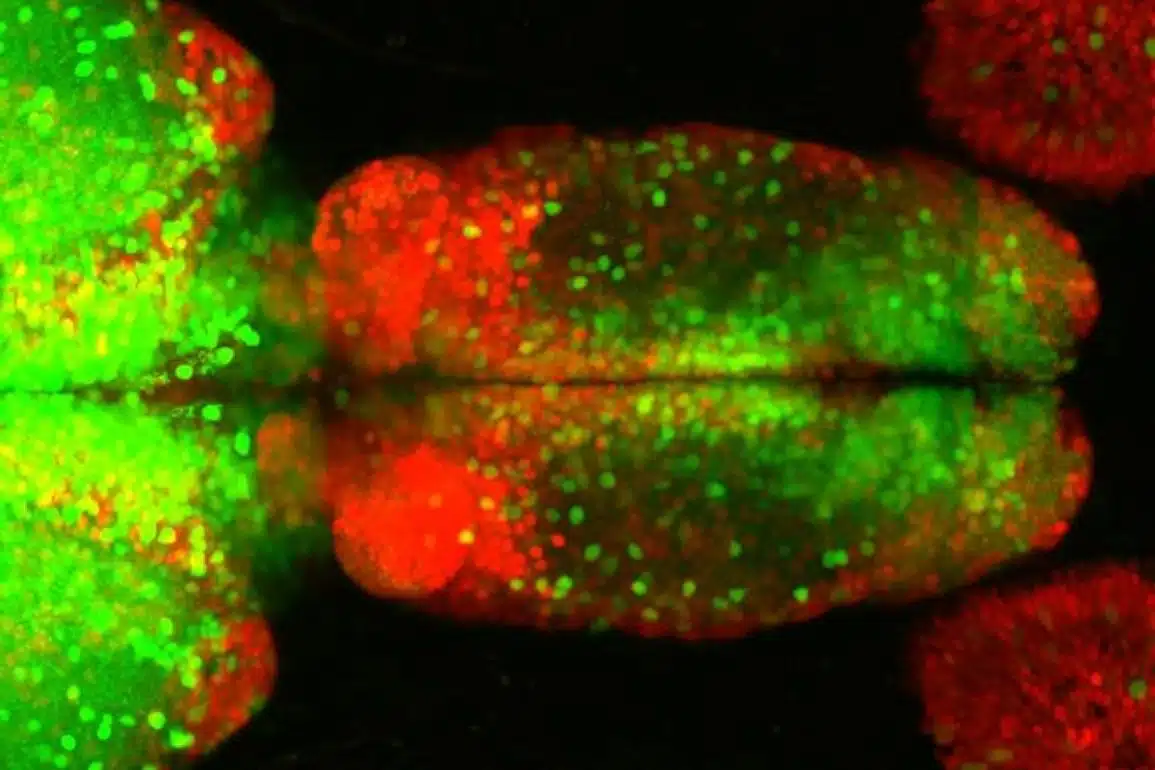
Image: The image is credited to Neuroscience News
Original Research: Open access.
“Mitochondrial dysfunction in muscle cells induced by snoring vibrations” by André Mateus, Chloe Williams, Farhan Shah, Jonathan D. Gilthorpe, Per Stål, Roine El-Habta, Shaochun Zhu, Yu-Cheng Qian. Mitochondrion
DOI:10.1016/j.mito.2026.102174
Abstract
Mitochondrial dysfunction in muscle cells induced by snoring vibrations
Snoring-related vibrations have been proposed as a pathogenic factor contributing to upper airway muscle dysfunction in patients with obstructive sleep apnea (OSA). To investigate whether exposure to snoring vibration is linked to muscle weakness, we used an in vitro vibration model to examine its effects on mitochondrial homeostasis in L6 muscle cells at 8, 12, 24, and 48 h.
The findings were then compared with mitochondrial alterations in the upper airway muscles from snorers and patients with OSA. Proteomic analysis of L6 myoblasts revealed extensive remodeling of the mitochondrial proteome at 8 h, affecting pathways involved in oxidative phosphorylation, protein import, ribosome biogenesis, and RNA processing.
Respiratory chain remodeling was subunit-specific, with increased abundance of selected components of Complexes I, IV, and V, including NDUFS4, COX5A, and ATP5PD. However, reductions in spliceosome-associated factors, such as SRSF2 and DDX46, along with alterations in mitochondrial ribosomal proteins, indicated impaired RNA processing and protein synthesis.
Furthermore, both proteomic and transcriptomic analyses revealed activation of a mechanosensing–mechanotransduction axis, with early upregulation of integrin subunits and mechanosensitive ion channels, followed by transient activation of focal adhesion signaling.
Despite transcriptional upregulation of selected Complex IV subunits Cox5a and Cox6a2, this response was accompanied by accumulation of unspliced pre-mRNA, indicating impaired RNA processing efficiency and a decoupling between transcript and protein levels. Real-time Seahorse assay revealed a collapse of mitochondrial respiration and glycolytic reserve at 8 h.
Although mitochondrial oxygen consumption recovered after 48 h, the ability to dynamically upregulate glycolysis remained impaired. In patients, muscle capillarization was impaired, COX activity was reduced, and mitochondrial organization was disrupted. Moreover, transcription of Complex IV subunits COX5A and COX6A2 was, as in vibrated L6 cells, upregulated, suggesting a mismatch between transcript levels and protein expression.
We conclude that snoring-induced vibrations are an unrecognized stressor that disrupts mitochondrial homeostasis in muscle by impairing RNA processing, protein synthesis, and mechanotransduction-driven mitochondrial remodeling, leading to transcript–protein uncoupling and likely muscle dysfunction.