Summary: Major Depressive Disorder (MDD) is a diverse condition where symptoms vary significantly between individuals, yet standard treatments like SSRIs often fail to help up to 50% of patients.
A new study addresses this by utilizing precision psychiatry, a framework that targets the specific neural circuits driving a patient’s unique symptoms. Researchers successfully used real-time fMRI neurofeedback to train participants to regulate the brain networks responsible for rumination, the repetitive loop of negative thinking, leading to measurable improvements in depressive symptoms.
Key Research Findings
- The Target Circuit: The study focused on the coupling between the posterior cingulate cortex (self-referential thinking) and the dorsolateral prefrontal cortex (goal-directed behavior).
- Gamified Neurofeedback: Participants trained their brains by watching a green circle in an MRI scanner; the circle grew larger as their brain activity shifted toward a “healthier” coupling pattern.
- Optimal Training Conditions: Participants who trained on consecutive days and were offered higher financial incentives showed the most significant neural improvements.
- Lasting Neural Shifts: The healthier brain patterns persisted even during rest periods, suggesting the training induced a genuine shift in neural activity rather than a temporary effect.
- Symptom Specificity: Improvements in brain activity directly correlated with a decrease in rumination and depression, but not anxiety, proving the intervention was highly specific to the targeted circuit.
Source: ATR
Major Depressive Disorder (MDD) is far from a cookie-cutter diagnosis. Different patients report suffering from different subsets of symptoms, yet most are ultimately prescribed the same first-line treatments — typically selective serotonin reuptake inhibitors (SSRIs)— regardless of their individual experience.
This matters because, as the researchers point out, different symptoms are rooted in different disruptions in the brain, which helps explain why 30–50% of patients with MDD don’t fully respond to standard treatment.
The team behind this study set out to tackle this problem head-on with a concept known as “precision psychiatry.” Their core idea: rather than applying a blanket treatment, target the specific neural circuits driving each patient’s symptoms and try to restore them to a healthier state.
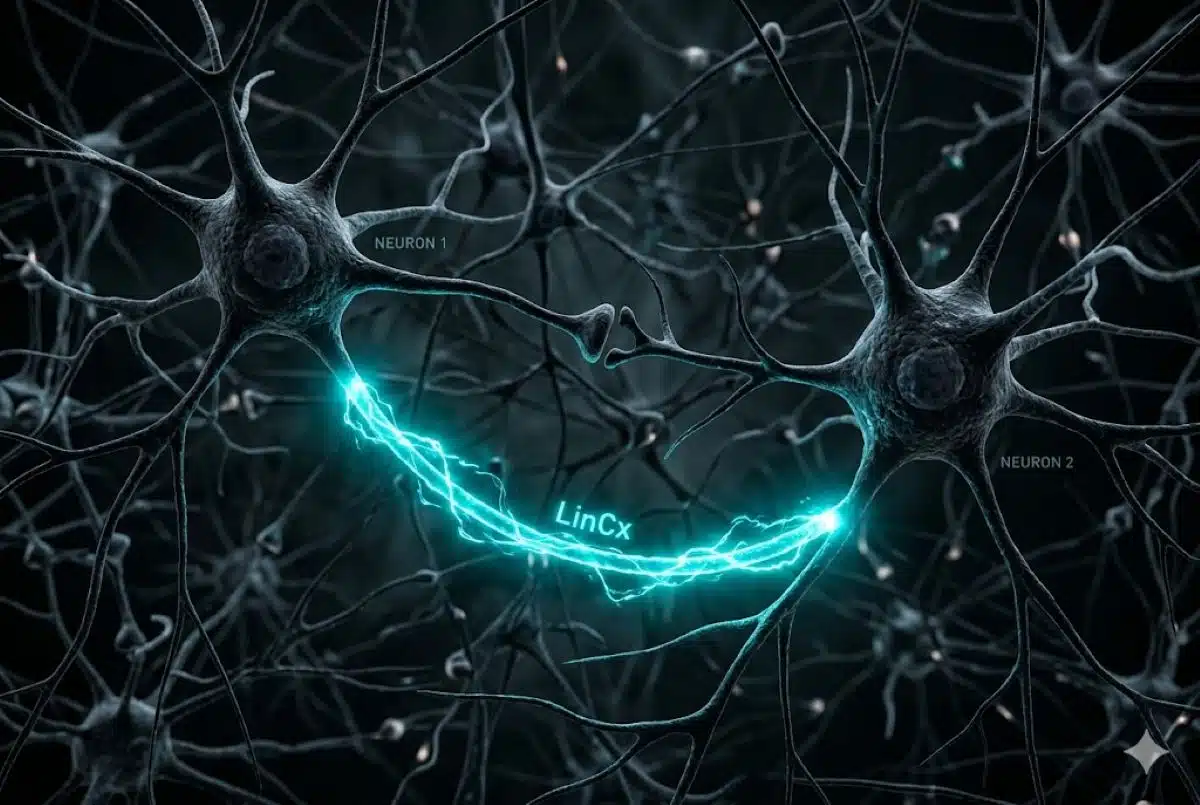
For their first target, they chose rumination — the exhausting mental loop of repetitive, intrusive negative thinking. Research suggests this arises partly from a disturbance in the coupling between the posterior cingulate cortex, a region involved in internal self-referential thinking, and the dorsolateral prefrontal cortex, which is linked to external goal-directed behavior.
The goal was to use real-time fMRI neurofeedback to train people to bring this coupling pattern back toward what is seen in healthy brains.
To make this approachable, the researchers turned brain training into something resembling a video game. Participants lay in an MRI scanner and watched a green circle on a screen, simply instructed to use their brain to make the circle bigger.
Behind the scenes, their brain scans were being processed in real time, with the size of the circle reflecting how healthy-like their neural coupling was becoming.
Participants got creative in their attempts to regulate this brain activity — some did mental arithmetic, others played word association games, and some even imagined tiny people running around the edge of the circle.
The study ran 68 participants across multiple sessions to understand not just whether the approach works, but how to make it work best — testing variables such as whether training on consecutive days is more effective than spreading sessions out, and whether stronger financial incentives improve performance.
Those who trained on consecutive days with the highest earning potential showed the greatest improvements.
The results were encouraging on multiple fronts. Healthier brain patterns persisted even during rest periods, suggesting a genuine shift in brain activity rather than just an in-the-moment performance effect. The changes also extended beyond the two targeted brain regions to the broader networks they belong to.
Most strikingly, the more a participant’s brain activity improved, the more their rumination and depressive symptoms decreased — while anxiety symptoms, which were not targeted, did not change alongside brain activity. This specificity is exactly what the precision psychiatry framework predicts.
The researchers’ long-term dream is that patients could one day walk into a clinic, have their brains scanned, and be prescribed a portable EEG headset for neurofeedback targeted at their own specific symptoms — something they could use from the comfort of their own homes. This study represents an important step toward that vision.
Key Questions Answered:
A: It’s essentially a biofeedback loop. Participants tried various mental strategies—like math, word games, or visualization, to see which “thought” made the circle on the screen bigger. The screen acted as a real-time mirror for their neural efficiency.
A: Rumination is an exhausting “mental loop” that is a core feature of depression. By fixing the specific brain regions that allow this loop to run, researchers can treat a primary symptom that traditional medication might not reach.
A: The long-term goal is to use these MRI findings to develop portable EEG headsets. This would allow patients to receive targeted neurofeedback for their specific symptoms from the comfort of their own homes.
Editorial Notes:
- This article was edited by a Neuroscience News editor.
- Journal paper reviewed in full.
- Additional context added by our staff.
About this neurotech and depression research news
Author: Ritsuko Mashimo
Source: ATR
Contact: Ritsuko Mashimo – ATR
Image: The image is credited to Neuroscience News
Original Research: Open access.
“Paving the way for precision treatment of psychiatric symptoms with functional connectivity neurofeedback” by JE Taylor, T. Oka, M. Murakami, T. Motegi, T. Yamada, T. Kawashima, Y. Kobayashi, Y. Yoshihara, J. Miyata, T. Murai, M. Kawato & A. Cortese. Translational Psychiatry
DOI:10.1038/s41398-026-04040-3
Abstract
Paving the way for precision treatment of psychiatric symptoms with functional connectivity neurofeedback
Treatment for Major Depressive Disorder (MDD) remains relatively homogeneous, despite patients having heterogeneous subsets of symptoms with differing underlying neural aberrations.
Demonstrating potential for a more individualised treatment approach, we recently showed that normalisation of a neural network and a corresponding reduction in related symptoms can be achieved using real-time fMRI functional connectivity neurofeedback (FCNef). Specifically, we showed that brooding rumination but not anxiety symptoms decreased as functional connectivity between the dorsolateral prefrontal cortex (DLPFC) and posterior cingulate cortex/precuneus (PCC) normalised with FCNef.
However, the robustness of this effect, how localised it is in the brain, and the best parameters for optimising therapeutic outcomes remained unknown. We therefore ran additional participants (final N = 68) in our FCNef protocol. We replicated our original findings and ran new analyses that better highlighted the precision of this effect to rumination symptoms.
For the first time we also demonstrated that connectivity between the Executive Control and Default-Mode networks reduced significantly with FCNef. Finally, we manipulated core FCNef parameters between participants and found that the most effective protocol involved consecutive training days with greater external reward.
These results highlight the potential of FCNef for precision medicine in psychiatry and underscore the importance of optimising parameters to enhance feasibility of BMI-based clinical interventions.