Summary: Researchers have discovered a protective brain pathway that could slow the progression of Parkinson’s disease by keeping dopamine-producing neurons alive longer.
The study found that reinforcing nicotine-responsive receptors, without actually using nicotine, preserved neural health and reduced degeneration. However, this protective effect was exclusively observed in females, highlighting a fundamental biological sex difference in how the brain defends itself against the disease.
Key Research Findings
- Disease-Modifying Potential: Unlike current treatments that only manage symptoms, this pathway focuses on preserving the neurons themselves, offering a rare opportunity to slow the underlying progression of the disease.
- Nicotine Receptors, No Nicotine: The team targeted receptors that normally bind with acetylcholine (a chemical involved in movement). They used gene editing to increase the availability of these receptors on the neuron’s surface, bypassing the need for addictive nicotine.
- The Gender Divide: The protective mechanism was “clearly engaged in females and absent in males”. Females showed intact dopamine neurons and healthier surrounding tissue, while males showed no such benefits.
- Neural Integrity: In female models, reinforcing this pathway prevented the activation of cell-death signals and reduced the reactivity of surrounding brain cells, leading to overall healthier neural tissue.
- Biological Sex as a Driver: The researchers emphasize that sex differences in hormones and cellular regulation are not secondary details but are fundamental to how Parkinson’s functions and how future treatments must be designed.
Source: Texas A&M
Scientists have identified a protective brain pathway that may help slow the progression of Parkinson’s disease by strengthening the brain’s own dopamine‑producing neurons, but the positive effect was only observed in females.
In the Journal of Neuroscience, researchers report that enhancing a pathway involving nicotine‑responsive receptors helped preserve dopamine‑producing neurons and reduced signs of degeneration in female models.

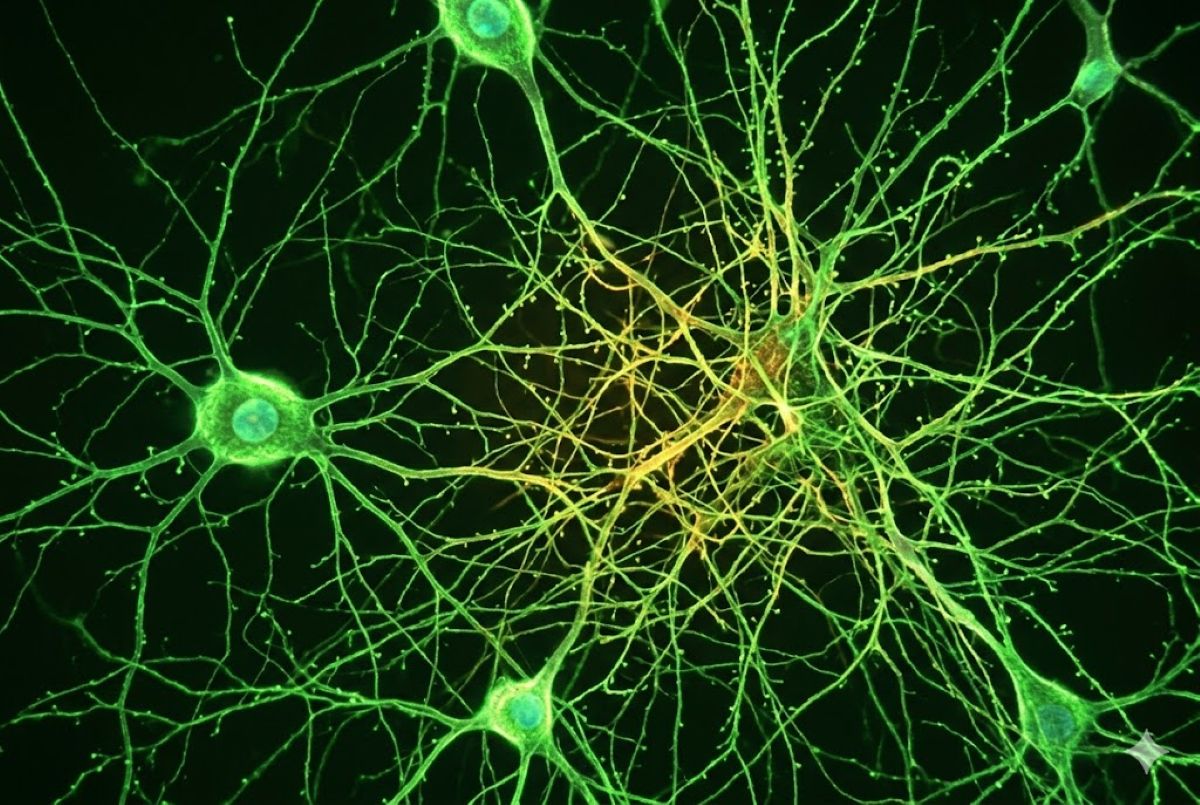
Crucially, the effect occurred by boosting nicotine-responsive receptors without using nicotine. The findings point to a possible way to slow Parkinson’s itself, not just manage its symptoms, in a disease where progression has been impossible to stop.
“This work is about keeping neurons alive longer,” said Dr. Rahul Srinivasan, associate professor of neuroscience at the Texas A&M University Naresh K. Vashisht College of Medicine. “If you can preserve dopamine‑producing cells, you have a real opportunity to slow the rate at which the disease advances.”
Tobacco still bad for you
Understanding how the brain responds to nicotine has long attracted attention in Parkinson’s research, but nicotine is addictive and affects many systems throughout the body, making it unsuitable for long‑term therapy. Instead, the new findings point to protective pathways directly affected by nicotine, without relying on this harmful substance.
“Despite the nicotine connection, these receptors exist to serve normal brain function,” said Srinivasan, whose team includes Dr. Gauri Pandey, a Ph.D. graduate of the College of Medicine, and current M.D./Ph.D. student Roger Garcia. “Nicotine just hijacks a receptor system that’s already there.”
The pathway identified in the study centers on receptors that respond to acetylcholine, a natural brain chemical involved in movement and communication between neurons and the receptors where nicotine happens to bind.
Parkinson’s disease worsens as dopamine‑producing neurons gradually die, and although current treatments can ease symptoms by replacing dopamine or mimicking its effects, they do not stop the underlying neuron loss that drives progression.
Earlier work from Srinivasan’s lab showed that certain nicotine‑related drugs could protect dopamine‑producing neurons in female models. The new study asked whether activating those receptors was necessary, or whether the brain’s own protective pathway could be strengthened without nicotine.
To answer that question, the researchers used gene editing to increase the availability of nicotine‑responsive receptors, ensuring more of them reached the parts of the neuron where they are needed, without exposing the brain to nicotine or nicotine‑like drugs.
The results showed that reinforcing this protective brain pathway helped dopamine‑producing neurons remain intact under conditions that normally cause degeneration, while surrounding brain cells showed reduced reactivity, signaling healthier neural tissue.
Why only females?
One of the team’s most striking findings is that the protective brain mechanism operated only in female models. Across multiple measures — including preservation of dopamine neurons, reduced activation of cell‑death signals and healthier surrounding brain tissue — females consistently showed protection, while males did not.
“This wasn’t a subtle difference,” Srinivasan said. “The protective pathway was clearly engaged in females and absent in males.”
Parkinson’s disease affects males and females differently, and growing evidence suggests that biological sex plays a central role in how neurons respond to damage. Hormones, receptor trafficking and cellular regulation (the processes governing cell behavior) may all contribute to why the pathway functions differently across sexes.
“This study reinforces that sex differences are not secondary details, they are fundamental to how the disease works and how treatments may need to be designed,” Srinivasan said.
Toward treatments that slow the disease itself
Because the newly identified pathway helps preserve dopamine‑producing neurons rather than simply compensating for their loss, the findings align with a broader push toward disease‑modifying Parkinson’s therapies.
“Every additional year that these neurons remain functional matters,” Srinivasan said. “If we can strengthen protective brain pathways early, we may be able to meaningfully slow Parkinson’s progression and improve the quality of life of patients with Parkinson’s.”
While further research will be needed to determine how this pathway could be targeted in people, the study offers a clear takeaway: slowing Parkinson’s disease may depend not just on treating symptoms, but on helping the brain protect what it can’t afford to lose.
Key Questions Answered:
A: Absolutely not. Nicotine is addictive and harmful to multiple bodily systems. The breakthrough here is that scientists have found a way to “hijack” the brain’s internal protective system that nicotine usually targets, without using the drug itself.
A: It likely comes down to biological sex differences in receptor trafficking and hormones. Male and female brains respond to damage differently at a cellular level, suggesting that a “one-size-fits-all” approach to Parkinson’s might be fundamentally flawed.
A: The researchers used gene editing to ensure that more nicotine-responsive receptors reached the specific parts of the neuron where they are needed most. By increasing their availability, they effectively “armored” the dopamine-producing cells against degeneration.
Editorial Notes:
- This article was edited by a Neuroscience News editor.
- Journal paper reviewed in full.
- Additional context added by our staff.
About this Parkinson’s disease research news
Author: Lesley Henton
Source: Texas A&M
Contact: Lesley Henton – Texas A&M
Image: The image is credited to Neuroscience News
Original Research: Closed access.
“Genetically encoded constitutive upregulation of β2 subunit containing neuronal nicotinic acetylcholine receptors is neuroprotective in female parkinsonian mice” by Gauri Pandey, Roger C. Garcia, Debanjana Das, Akilesh R. Mohan, Cristobal Rodriguez, Donovan Pollock, Nethra Karthik, Sushmitha Nalluri, Tan Nguyen, Christopher Polo, Sara M. Zarate, Mendell Rimer and Rahul Srinivasan. Journal of Neuroscience
DOI:10.1523/JNEUROSCI.1368-25.2026
Abstract
Genetically encoded constitutive upregulation of β2 subunit containing neuronal nicotinic acetylcholine receptors is neuroprotective in female parkinsonian mice
Parkinson’s disease is projected to rise to pandemic proportions by 2050, which has resulted in an urgent need for disease-modifying treatments.
We previously showed that in a mouse model of parkinsonism with unilateral 6-hydroxydopamine (6-OHDA) injection into the dorsolateral striatum, low doses of the neuronal nicotinic acetylcholine receptor (nAChR) partial agonist and smoking cessation drug, cytisine exerts neuroprotection in substantia nigra pars compacta (SNc) dopaminergic (DA) neurons of only female mice by reducing endoplasmic reticulum (ER) stress, and that cytisine-mediated neuroprotection requires 17β-estradiol.
Although these data suggest that neuroprotection might occur via cytisine-mediated upregulation of β2 subunit-containing (β2*) nAChRs in SNc DA neurons and upregulation of endoplasmic reticulum-exit sites (ERES), there is no direct evidence to support this idea.
Therefore, this study asks the question of whether β2* nAChR upregulation without nicotinic ligands can exert neuroprotection in a preclinical mouse model of 6-OHDA-induced parkinsonism. To address this, we generate a novel β2-upregulated transgenic mouse line with constitutive upregulation of β2* nAChRs, without the need for nicotinic ligands.
Surprisingly, only female β2-upregulated mice demonstrate ERES upregulation in SNc DA neurons and showed significant neuroprotection against 6-OHDA-induced parkinsonism using four independent readouts, viz., contralateral apomorphine-induced rotations, preservation of SNc DA neurons, inhibition of the proapoptotic ER stress protein, C/EBP homologous protein and glial fibrillary acid protein expression in SNc astrocytes.
The novel transgenic β2-upregulated mice characterized in this study will provide a valuable tool for understanding the role of nAChR upregulation in major neurological disorders such as addiction, anxiety, depression and dementia.