Summary: Researchers successfully utilized machine learning to identify hidden neurological warning signs in the brain’s baseline electrical rhythms, bypassing the need to capture active seizures for an epilepsy diagnosis. The research demonstrates that an advanced pattern-recognition algorithm can detect subtle electroencephalogram (EEG) abnormalities linked to genetic epilepsy with high accuracy.
This computational framework builds a customized “dictionary” of waveforms to expose underlying brain changes, establishing a clear pathway toward early pediatric intervention and noninvasive precision medicine.
Key Facts
- The Diagnostic Window Bottleneck: Neurologists rely heavily on EEGs to diagnose epilepsy, but standard clinical sessions provide only a 20-minute snapshot of brain activity, making manual detection incredibly difficult if a seizure does not naturally occur during the recording.
- Building a Waveform Dictionary: Rather than tracking overt seizures, the AI algorithm treats baseline EEG readings like an unfamiliar language, identifying frequently repeating electrical patterns and learning their structural meaning in context to spotlight anomalies that human reviewers miss.
- The Seizure-Free Assay: To test the system, researchers gathered multi-day EEG recordings from a panel of more than 40 mice, some of which carried epilepsy-causing variations in the TSC1 gene. The algorithm analyzed baseline segments containing zero seizure activity.
- High-Accuracy Genetic Detection: The machine-learning approach successfully distinguished between different genetic backgrounds and identified the presence of the TSC1 mutation with high accuracy across two out of three mouse strains purely from baseline brain waves.
- Pediatric Clinical Phase: Supported by the Delaware Clinical and Translational Research ACCEL Program, the team is transitioning the method into the clinic to analyze shorter EEG recordings from children undergoing epilepsy evaluations at Nemours Children’s Health.
- Mitigating Family Anxiety: Epilepsy seizures follow natural, unpredictable cycles; identifying early, objective biomarkers can eliminate the high cognitive toll and profound anxiety families experience while waiting for an onset.
- Precision Treatment Horizons: Lead investigators Dr. Austin Brockmeier and Dr. Amanda Hernan note that advanced brain-wave typing will prevent doctors from misinterpreting a medication’s effectiveness during natural seizure lulls, while laying the groundwork for continuous tracking via wearables for related conditions like autism and ADHD.
Source: University of Delaware
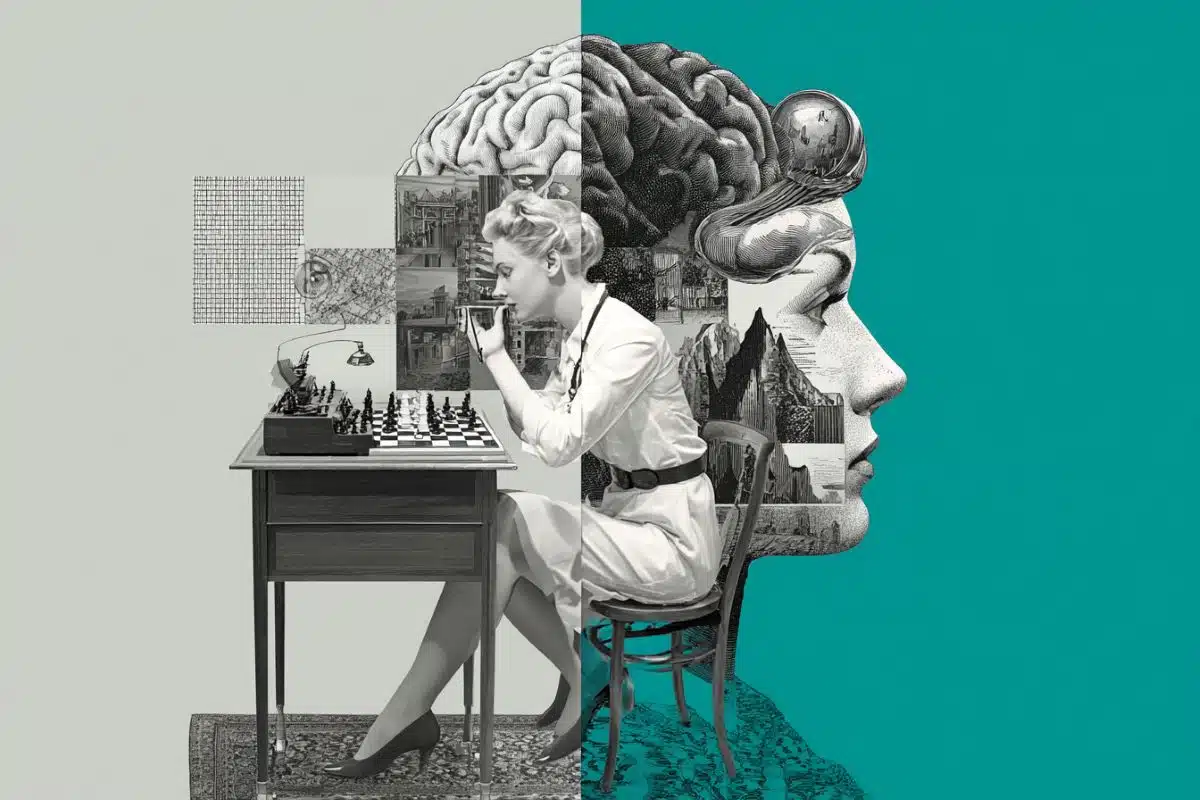
Epilepsy isn’t always easy to diagnose. Seizures often don’t occur during routine brain-wave recordings (EEGs), leaving doctors without the direct observation they need to make a clear diagnosis. University of Delaware researchers and collaborators are working to close that gap, using artificial intelligence to detect early warning signs hidden in the brain’s electrical rhythms.
In a proof-of-concept study in mice, the team showed that their approach can identify subtle EEG differences linked to a genetic form of epilepsy, even when no visible seizures occurred. The findings, published in the Journal of Neural Engineering, set the stage for the next phase of the research, which will test the method on EEGs from children being evaluated for epilepsy at Nemours Children’s Health.

A dictionary of brain waves
Neurologists often use EEGs to help diagnose epilepsy, but routine recordings offer only about a 20-minute snapshot of brain activity. Without a seizure captured during that window, clinicians must look for far subtler clues that can be difficult to detect visually.
That’s where AI comes in. The UD researchers’ algorithm works much like a language learner encountering an unfamiliar tongue. It starts by identifying patterns that appear frequently in EEG recordings and learns what they mean in context, effectively building a dictionary of electrical patterns.
“Our machine-learning approach lets the algorithm learn the brain’s ‘language’ of waveforms, spotting subtle patterns humans might miss during manual review,” said Austin Brockmeier, assistant professor in electrical and computer engineering and computer and information sciences.
Starting small with a mouse model
When Brockmeier, a faculty mentor in UD’s interdisciplinary neuroscience graduate (ING) program, presented his computational neuroscience research at an ING seminar, he caught the attention of Amanda Hernan, an affiliated associate professor of psychological and brain sciences and biomedical engineering at UD and senior research scientist at Nemours Children’s Health. Hernan, who is also an ING faculty mentor, studies how variations in brain activity affect thinking and learning in children with epilepsy.
The two decided to put machine learning to the test using EEGs from mice with epilepsy-causing variations in the TSC1 gene. The researchers used a panel of more than 40 mice, including animals with and without the gene variation, across three different genetic backgrounds, or strains. They extracted EEG segments from five days of recordings from each mouse for analysis.
Because the EEG segments contained no seizure activity, the algorithm had to detect differences in the brain’s baseline activity alone. It was able to distinguish between the mouse strains and to detect the TSC1 gene variation with high accuracy in two of the three strains.
“These results show that EEG patterns contain measurable signals of neurological differences, even without visible seizures,” Hernan said.
Taking it to the clinic
Now, the team is taking their method out of the lab and into the clinic. With funding from the Delaware Clinical and Translational Research ACCEL Program, Brockmeier and Hernan will next apply their approach to EEG recordings from children being evaluated for epilepsy at Nemours Children’s Health.
Pediatric EEGs are shorter than the multi-day recordings used in the mouse study, and children present with many different types of epilepsy. But the researchers are optimistic.
“The goal is to identify biomarkers that flag underlying changes in the brain’s electrical activity before seizures occur,” Hernan said. Earlier detection could lead to earlier treatment and less uncertainty for families.
That uncertainty, Hernan said, takes a toll. “Seizures follow natural cycles, but without a way to know where you are in that cycle, the anticipation can be incredibly anxiety-provoking,” she explained.
Better pattern recognition could also improve treatment decisions. For example, if a new medication is introduced during a natural lull in seizure activity, its benefits could be overestimated.
Looking further ahead, the researchers envision a future where wearable EEG devices allow continuous, real-time monitoring for those with high risk of seizures. Similar approaches could eventually be applied to other neurological conditions, including autism and ADHD.
“This is a step toward precision medicine,” Brockmeier said. “Brain-wave typing could help identify which interventions will work best for a given patient.”
For families navigating the daily uncertainty of epilepsy, that kind of precision could make a huge difference.
Key Questions Answered:
A: By learning the brain’s unique “language” of background rhythms. The University of Delaware algorithm builds a custom dictionary of frequently occurring waveforms, allowing it to accurately spot micro-patterns and genetic anomalies hidden in ordinary baseline brain activity that are completely invisible to the human eye.
A: Because children present with a much wider variety of epilepsy types, and clinical pediatric EEGs offer a significantly shorter window of data than controlled, multi-day laboratory recordings. Despite these factors, researchers are highly optimistic that the AI can successfully isolate early tracking biomarkers.
A: It prevents them from misinterpreting a natural lull in activity as a sign of a successful treatment. Because seizures move through natural, hidden cycles, an objective brain-wave mapping system tells doctors exactly where a patient stands in that loop, ensuring a drug’s true benefits are never overestimated.
Editorial Notes:
- This article was edited by a Neuroscience News editor.
- Journal paper reviewed in full.
- Additional context added by our staff.
About this epilepsy and AI research news
Author: Marina Jones
Source: University of Delaware
Contact: Marina Jones – University of Delaware
Image: The image is credited to Neuroscience News
Original Research: Closed access.
“Interpretable EEG biomarkers for neurological disease models in mice using bag-of-waves classifiers” by Maria Isabel Cano Achuri, Montana Kay Lara, Khalil Abed Rabbo, Benjamin T. Wilson, Austin Meek, J. Matthew Mahoney, Amanda E. Hernan, and Austin J. Brockmeier. Journal of Neural Engineering
DOI:10.1088/1741-2552/ae4d8c
Abstract
Interpretable EEG biomarkers for neurological disease models in mice using bag-of-waves classifiers
Objective.
Electroencephalograms (EEGs) are time-series records of the electrical potential from collective neural activity in the brain. EEG waveform patterns—rhythmic and irregular oscillations and transient patterns of sharp waves or spikes—are potential phenotypical biomarkers, reflecting genotype-specific neural activity. This is especially relevant to diagnosing epilepsy without direct seizure observations, which is common in clinical settings, as well as in animal models, which often have subtle neurological phenotypes without overt epilepsy. Herein, we investigate genotypic prediction from long-term EEG signals of freely behaving mice belonging to six groups defined by the presence or absence of a neurological disease-genotype (TSC1 gene knockout) in three different inbred strains with distinct genetic backgrounds.
Approach.
We propose a machine learning approach to predict the genotypes of individual mice from the occurrence counts of waveforms that approximate short windows of the EEG. That is, a dictionary of waveforms is optimized to approximate windows from each genotype, and the vectors of waveform occurrence counts are the features for predicting genotypes via logistic regression models.
Main results.
Across two-fold cross-validation of the waveform dictionary learning, and leave-one-individual-out genotype prediction, we find that waveform counts pooled over multiple hour segments enable reliable prediction of mouse strain with an accuracy of 70% (95% CI 62–78) compared to chance rate of 38%. For two of the three strains, DBA2 and C57B6, strain-specific classifiers reliably determined the epilepsy-genotype (TSC1 gene knockout) with accuracies of 86% (95% CI 70–101) and 67% (95% 55–79), respectively. None of the mice of these strains had evidence of overt seizures or EEG-based seizure detection. In comparison, a state-of-the-art time-series classification approach (Hydra) enables higher strain classification at 98%, comparable TSC1-genotype prediction for the two strains (86% and 71% respectively), but the method is not interpretable.
Significance.
The methodologies and results show the potential of EEG waveforms as interpretable phenotypes and bag-of-waves as a feature representation for identifying epilepsy genotypes.