

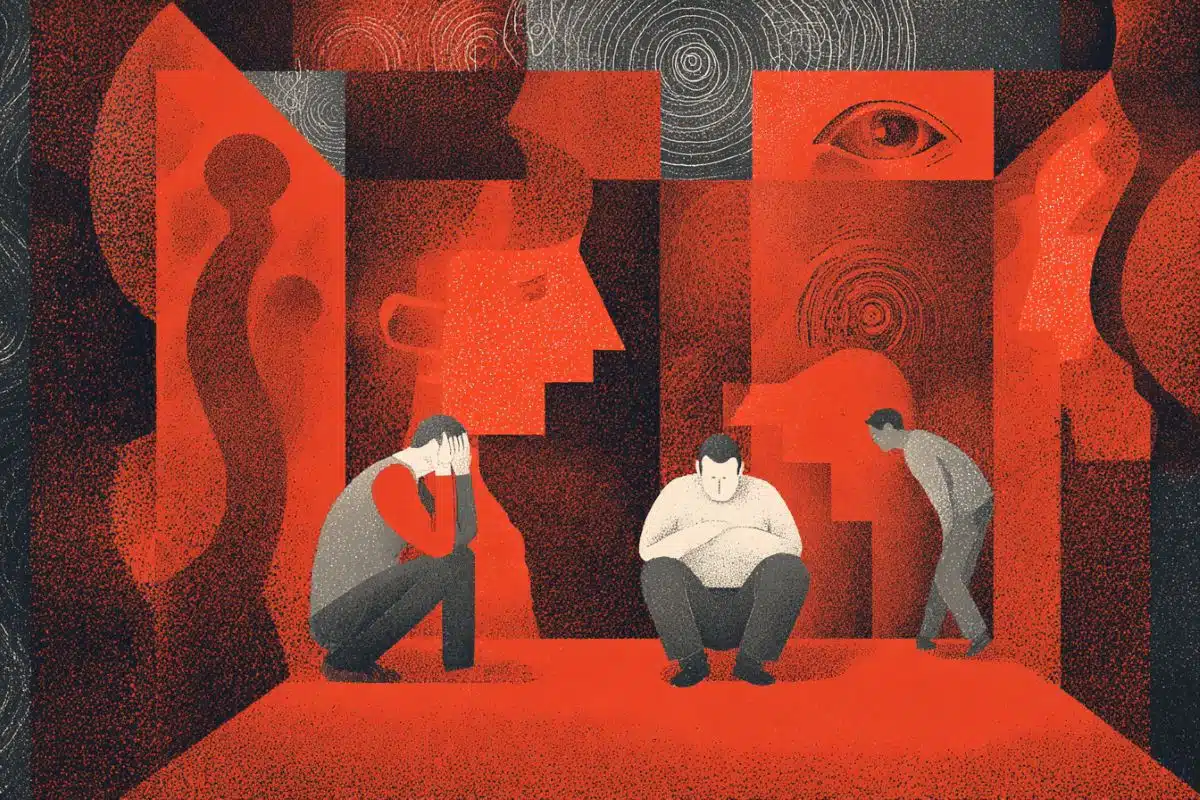
Summary: An international behavioral science study has exposed a counterintuitive “proximity paradox” within isolated crews. Investigating a 10-month overwintering mission at Antarctica’s Concordia Station, a premier real-world analog for Mars exploration, researchers utilized wearable sensors to track daily interpersonal contact.
The data revealed that instead of offering social support, frequent physical proximity inside confined environments directly correlates with heightened conflict, growing mistrust, and a drop in perceived performance, while causing multicultural teams to fragment into national subgroups over time.
Key Facts
- The Mars Simulation Laboratory: Concordia Station in Antarctica experiences brutal winter temperatures dropping to minus 80 °C. Due to its total, multi-month isolation and confinement, it serves as one of the world’s best real-world models to study the psychological stresses of long-duration space missions to the Moon or Mars.
- The Biometric Proximity Audit: Over a ten-month isolation block, 12 crew members completed routine psychological questionnaires paired with wearable proximity sensors. These sensors automatically logged exactly when and how long crew members stood near one another, mapping raw social dynamics without interfering with daily station operations.
- The Proximity Paradox: The sensor data shattered the assumption that frequent contact improves team bonding. Crew members who recorded the highest levels of physical proximity were significantly more likely to report interpersonal conflict, escalating mistrust, and a sense of reduced performance.
- Tensions of the Pack: In tight, extreme environments, constant contact does not automatically provide social support. Instead, the psychological data suggests that forced, unyielding proximity operates as a major independent source of environmental stress.
- Social Fragmentation Trajectory: As the confinement dragged on, the crew increasingly splintered into distinct, isolated subgroups. Individuals began pulling away from the multicultural collective, seeking out peers who shared their exact native language or nationality to find comfort and orientation.
- Terrestrial Cross-Over Value: Beyond deep-space exploration, these behavioral insights apply directly to other extreme, high-stakes environments characterized by a lack of privacy, including submarines, offshore oil platforms, and remote scientific outposts.
Source: ETH Zurich
Space missions expose crews to months of isolation, confinement and extreme stress. An international study led by Jan Schmutz, professor at the Department of Psychology at the University of Zurich, and Andrea Cantisani, psychiatrist and research associate at the University of Bern, has investigated how such conditions affect team dynamics during a ten-month overwintering mission at Concordia Station in Antarctica.
The station is one of the most isolated places on Earth, where winter temperatures drop to as low as minus 80 °C. Because of its extreme isolation, it is considered one of the best real-world models for future long-duration missions to the Moon or Mars.
Frequent contact not automatically beneficial
During the ten-month mission, 12 crew members completed questionnaires at four different points in time. They also wore sensors that automatically recorded when and for how long they were in close proximity to one another. This allowed the researchers to track how social relationships, loneliness, mistrust, conflict, team cohesion and perceived performance evolved over the course of the mission.
One particularly striking finding was that greater physical proximity did not necessarily have a positive effect. People who had more frequent contact with other team members were more likely to report conflict, growing mistrust and reduced performance. The results suggest that in highly confined settings, not only isolation but also constant proximity can be a source of stress.
“In small teams under extreme conditions, more contact doesn’t automatically equate to social support, but can actually increase tensions,” says Jan Schmutz.
Because the analyses are correlational, no conclusions can be drawn about causality. It is possible, for example, that lonely individuals sought more contact but that these interactions were not sufficiently rewarding.
Subgroups emerged over time
The sensor data also revealed that the team increasingly divided into subgroups as the mission progressed. Crew members were more likely to seek out people who shared the same language or nationality. Such patterns can provide support and orientation in stressful situations. At the same time, however, they may increase the risk of social fragmentation and can weaken cohesion within multicultural teams.
Applicable to extreme environments
The study is particularly relevant for future long-duration space missions, on which small crews must live and work together for months or years with little privacy and limited contact with the outside world. However, the findings may also apply to other extreme environments, such as submarines, offshore oil platforms and remote research stations.
“The results show how important it is to identify social dynamics early on and provide teams with targeted support,” says Schmutz.
The study also demonstrated that wearable proximity sensors can function reliably even in extreme conditions. The sensors make it possible to track changes in the team’s daily routine without significantly interfering with the crew’s activities. Future research will examine more closely which social interactions help reduce stress and which may create additional strain.
Key Questions Answered:
A: Because inside a tight, inescapable environment, constant proximity stops feeling like social support and starts feeling like an exhausting psychological burden. When you are stripped of your privacy for months on end, every tiny habit, noise, or micro-interaction gets magnified, transforming routine contact into a breeding ground for friction, paranoia, and mental fatigue.
A: Traditional surveys only capture what people remember or are willing to admit. By deploying wearable proximity sensors, researchers could passively and flawlessly log the exact duration and frequency of every interaction in real time. This allowed scientists to watch the daily routines and social distance of the team evolve naturally without getting in the way of their extreme environment operations.
A: It is an instinctual survival mechanism for comfort and orientation. When the brain is crushed by the extreme stress of isolation, processing a foreign language or navigating cultural differences takes extra cognitive energy. Retreating into a subgroup of people who speak your native tongue provides a path of least resistance to feel safe, even though it accidentally threatens the unity of the broader team.
Editorial Notes:
- This article was edited by a Neuroscience News editor.
- Journal paper reviewed in full.
- Additional context added by our staff.
About this social neuroscience research news
Author: Nathalie Huber
Source: University of Zurich
Contact: Nathalie Huber – University of Zurich
Image: The image is credited to Neuroscience News
Original Research: The findings will appear in PNAS


