Summary: Researchers pooled data from 26 international datasets to track the long-term impact of ambient air pollution on neurological decline. The study unmasked an undeniable relationship: chronic exposure to fine particulate matter directly compounds the relative risk of developing Parkinson’s disease.
The researchers suggest that inhaled micro-toxins cross biological barriers to trigger oxidative stress and neuroinflammation, destroying dopamine-producing neurons in genetically susceptible individuals.
Key Facts
- The Inhalable Threats Isolated: The Cambridge meta-analysis successfully isolated two distinct classes of airborne particulate matter that carry a direct statistical link to Parkinson’s disease, which currently affects over 6 million people worldwide:
- PM2.5 (Fine Particled Matter): Tiny particles 2.5 microns or less in diameter capable of traveling deep into lung tissue and entering the bloodstream. Sources include vehicle exhaust, wood-burning stoves, industrial complexes, and secondary chemical reactions involving atmospheric sulfur dioxide.
- PM10 (Coarse Particled Matter): Particles 10 microns or less in diameter. Sources include industrial pollution, construction dust, road grime, and non-exhaust vehicle emissions like brake and tire wear.
- The 10% Risk Multiplier (PM2.5): The mathematical models revealed that for every 5 micrograms per cubic meter (mu g/m3) increase in chronic PM2.5 exposure, an individual’s relative risk of developing Parkinson’s disease jumps by 10%.
- The 18% Risk Multiplier (PM10): For coarser PM10 particles, each 15 mu g/m3 increase in long-term exposure drives an 18% surge in relative Parkinson’s risk.
- The Urban Baseline Reality: To ground these metrics in real-world environments, the authors noted that Central London’s average roadside measurements hovered at 10 mu g/m3 for PM2.5 and 17 mu g/m3 for PM10. This means ordinary city dwellers are routinely living in exposure zones well above baseline safety levels.
- The α-Synuclein Accumulation Theory: Neuroscientists hypothesize that when these microscopic particles are inhaled, they cause severe oxidative stress and chronic neuroinflammation. In individuals with an underlying genetic susceptibility, this chronic inflammation triggers the abnormal, toxic build-up of the protein alpha-synuclein and the systematic destruction of dopaminergic (dopamine-producing) neurons, the primary biological signature of Parkinson’s.
- A Peer-Reviewed Policy Toolkit: To give regional policymakers a concrete way to fight back, Dr. Haneen Khreis compiled an open-access interactive systematic evidence map. The database catalogs the real-world effectiveness of over 1,000 unique urban interventions, including congestion pricing, low-emission zones, and active mass transit infrastructure, to help city planners systematically lower human exposure and protect brain health.
Source: University of Cambridge
Long-term exposure to certain types of air pollution is linked to an increased risk of Parkinson’s disease, Cambridge researchers have found in a critical review of the existing evidence.
Air pollution is a major public health issue, with long-term exposure to fine particulate matter linked with an increased risk of various diseases, including stroke and dementia. It has also been implicated in neurodegenerative diseases such as Parkinson’s disease, multiple sclerosis and motor neurone disease. However, studies have been underpowered and their findings are often inconsistent or inconclusive.
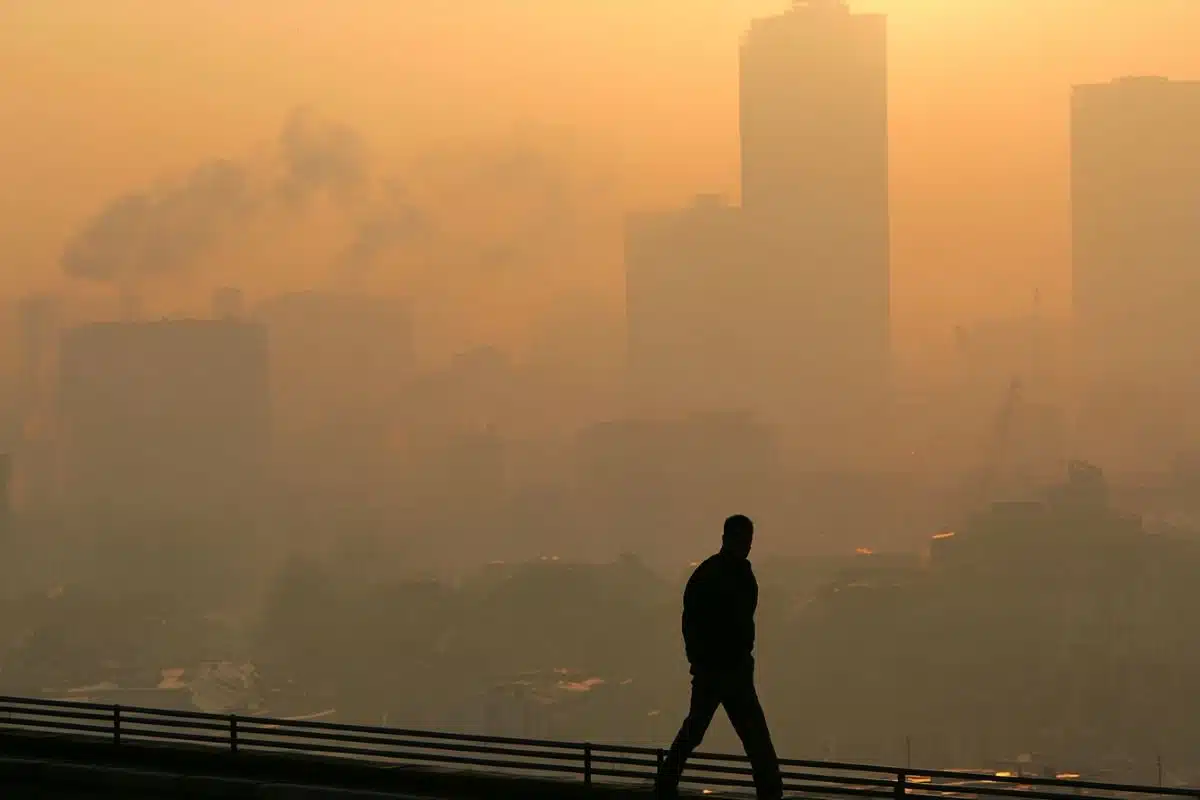
In a paper published in Environment International, researchers at IMS Epidemiology, University of Cambridge, carried out a systematic review and meta-analysis of existing scientific literature to examine these links further. This approach allowed them to bring together studies that on their own may not provide sufficient evidence, and which sometimes disagree with each other, to provide more robust overarching conclusions.
The analysis included 26 studies on Parkinson’s disease and three each for multiple sclerosis and motor neurone disease.
The team found two air pollutants that were associated with an increased risk of Parkinson’s disease, which affects approximately 6 million people worldwide:
- Particulate matter with a diameter of 2.5 microns or less (PM2.5): a pollutant made up of tiny particles small enough that they can be inhaled deep into the lungs. These particles come from several sources, including exhaust and non-exhaust vehicle emissions, power plants, industrial processes, wood burning stoves and fireplaces, and construction dust. They also form in the atmosphere because of complex chemical reactions involving other pollutants such as sulphur dioxide and nitrogen oxides. The particles can stay in the air for a long time and travel a long way from where they were produced.
- Particulate matter with a diameter of 10 microns or less (PM10): larger particles, but still small enough to be inhaled. These particles come from sources including dust from roads or construction, pollen and mould spores, vehicle emissions (especially from diesel engines), including non-exhaust emissions such brake and tyre wear, and industrial pollution.
According to the researchers, for every 5 micrograms per cubic metre (μg/m³) of PM2.5, an individual’s relative risk of Parkinson’s disease would increase by 10%. The average roadside measurement for PM2.5 in Central London in 2023 was 10 μg/m³.
For each 15 μg/m³ of PM10, the relative risk of Parkinson’s disease increased by 18%. The average roadside measurement for PM10 in Central London in 2023 was 17 μg/m³.
Evidence was inconclusive for a link between nitrogen dioxide (NO2), carbon monoxide (CO), sulphur dioxide (SO2), ozone and soot, largely due to the low number of research studies and their imprecision or a lack of consistency. Future research should assess these pollutants, and interaction between pollutants, when more evidence becomes available.
Similarly, the researchers found no evidence of a link between air pollution and either multiple sclerosis or motor neurone disease, but this may because there were so few studies in this area.
Dr Annalan Navaratnam, and Clinical Research Fellow at IMS Epidemiology, University of Cambridge, said: “There are still relatively few robust studies that explore the link between air pollution and Parkinson’s disease, but even so, it’s becoming clear that there is a link.
“We found evidence of a link with two types of pollutants in particular, but even though the evidence was inconclusive for other types, this may be down to how the studies were designed. We urgently need more research, in larger populations, to examine what is a significant public health issue.”
One possible explanation for the link between air pollution and Parkinson’s disease proposed by the researchers is that oxidative stress and neuroinflammation triggered by air pollution – especially PM2.5 – may interact with genetic susceptibility to the disease. In turn, this may lead to the abnormal build-up of the protein α‑synuclein and the loss of dopaminergic neurons, both are which are characteristic of Parkinson’s disease.
First author Alexandra Tien-Smith from IMS Epidemiology, Cambridge, added: “These findings add to a growing and strong body of evidence of the many adverse health impact of air pollution worldwide ranging from a wide variety of diseases across every human organ system to premature mortality.”
The research was partly funded by the European Research Council and the European Union’s Horizon 2020 Programme and Horizon Europe Framework Programme.
To help practitioners and policymakers tackle air pollution in their own regions and cities, Dr Haneen Khreis and colleagues have previously created an open-access interactive tool mapping the effectiveness of over 1,000 unique policy interventions to reduce traffic-related emissions and air pollution.
The interventions include congestion charging, urban transport planning, housing planning, mass transit development, active travel promotion, electric vehicles and low emissions zones, among others.
Dr Haneen Khreis, also from IMS Epidemiology, Cambridge, added: “The message is clear: we need to take action now to improve air quality and help reduce the global burden of disease.
“Our open access tool is intended to help researchers, practitioners, policymakers and third sector organisations understand the impact of different interventions on everything from traffic emissions and air pollution to human exposure, health impacts and unexpected co-benefits. We hope it aids and empowers those in a position to make a difference to implement effective and meaningful policies.”
The tool is the first peer-reviewed systematic evidence map to compile international evidence on urban-level policy interventions to reduce traffic emissions the context of human exposure and health effects, whilst also recording other important policy considerations such as enablers, barriers, and co-benefits.
The researchers are currently developing this tool further to provide decision-makers with information on the financial investments required, economic benefits and costs, and greenhouse gas emission reductions achievable through the indexed policy interventions.
Key Questions Answered:
A: Microscopic particles like PM2.5 are so incredibly small that when you breathe them in, they travel deep into your lungs and slip directly into your bloodstream. Even more alarming, they can take a direct backdoor route into your head through your nose. They pass through the olfactory epithelium (the lining of your nasal cavity) and travel up the olfactory nerve straight into the brain’s deep structures. Once inside, they act as persistent physical irritants, triggering chronic inflammation and cellular stress that systematically damages your brain health.
A: The study outlines a devastating chemical chain reaction. When these toxic particles lodge themselves in brain tissue, they trigger intense oxidative stress and chronic neuroinflammation. If a person has a genetic vulnerability to Parkinson’s, this ongoing inflammation acts as a match, causing a native brain protein called alpha-synuclein to misfold and clump together into toxic knots. These protein build-ups eventually kill off dopaminergic neurons, the specialized nerve cells that produce the dopamine required to control smooth physical movement.
A: Currently, the evidence is inconclusive. The Cambridge team specifically looked for links to Multiple Sclerosis (MS) and motor neurone disease (MND/ALS), but they found no statistically significant connection. However, Dr. Annalan Navaratnam points out that this is highly likely due to a lack of data, as there are very few long-term studies tracking those specific conditions against air quality. As more large-scale data becomes available, researchers will be better equipped to determine if these microscopic pollutants damage other neurological pathways
Editorial Notes:
- This article was edited by a Neuroscience News editor.
- Journal paper reviewed in full.
- Additional context added by our staff.
About this Parkinson’s disease research news
Author: Craig Brierley
Source: University of Cambridge
Contact: Craig Brierley – University of Cambridge
Image: The image is credited to Neuroscience News
Original Research: Open access.
“Association of long-term outdoor air pollution exposure with incidence of Parkinson’s disease, multiple sclerosis and motor neuron diseases: a systematic review and meta-analysis” by Annalan M. D. Navaratnam, Alexandra Z. Tien-Smith, Carol Brayne, Christiaan Bredell, Clare Best Rogowski, Haneen Khreis, James Woodcock, Kwan Wai Fung, Lucy Hong, Magdalena Szybka, Shazia Absar, Veronica Phillips, Zorana Jovanovic Andersen. Environment International
DOI:10.1016/j.envint.2026.110377
Abstract
Association of long-term outdoor air pollution exposure with incidence of Parkinson’s disease, multiple sclerosis and motor neuron diseases: a systematic review and meta-analysis
Background
Parkinson’s disease (PD), multiple sclerosis (MS) and motor neurone disease (MND) are progressive and debilitating diseases that are increasing in prevalence globally. Some primary studies show an increased risk from long-term outdoor air pollution exposure, while others contradict this association.
Methods
A systematic review and meta-analysis were undertaken to assess the associations of long-term (≥1 year) outdoor air pollution exposure with PD, MS and MND incidence. We searched eight databases for publications up to July 2025. Primary case-control, cohort, cross-sectional or ecological studies investigating the association between long-term air pollution exposure and adult (>18 years old) PD, MS, or MND incidence were included. Meta-analyses were carried out using random-effects models with assessment of heterogeneity, meta-bias and shape of the exposure–response functions. PROSPERO (CRD42023417961).
Results
Of 42 papers included, 26, 3 and 3 were meta-analysed for PD, MS, and MND outcomes, respectively. 19 studies from North America, 12 from Europe and 10 from Asia were meta-analysed. For every 5 μg/m3 and 15 μg/m3 increase of Particulate Matter 2.5 (PM2.5) and PM10 concentration, estimated (95% Confidence Interval) PD risk was 10% (1.10; 1.03–1.19) and 18% (1.18; 1.01-1.38), respectively but effects varied across settings (Prediction Interval: 0.80-1.52 for PM2.5 and 0.41–3.36 for PM10), with the largest estimated risk for PM2.5 in Asia (1.19; 1.01-1.41). There was no clear evidence that PM2.5 (1.01; 0.77–1.32) or nitrogen dioxide (NO2, 0.98, 95% CI: 0.95-1.01) were associated with MS risk or PM2.5 with MND risk (1.07, 95% CI: 0.86-1.33).
Conclusion
This systematic review reports increased PD risk from long-term PM2.5 and PM10 exposure. No association was observed for MS and MND from a very limited evidence base. The neurodegenerative diseases investigated here are rare and therefore alternatives to insufficiently powered cohort studies are needed to strengthen the evidence on risk.