Summary: A new study reveals NREM sleep plays a vital role in visual perceptual learning.
Source: University of Michigan.
Remember those “Magic Eye” posters from the 1990s? You let your eyes relax, and out of the tessellating structures, a 3-D image of a dolphin or a yin yang or a shark would emerge.
Becoming skilled at seeing those 3-D images is an example of visual perceptual learning, and University of Michigan researchers have found that this type of visual learning is cemented in the brain during the deepest part of sleep, called slow-wave sleep. The work here was done in mice, and published in the Proceedings of the National Academy of Sciences.
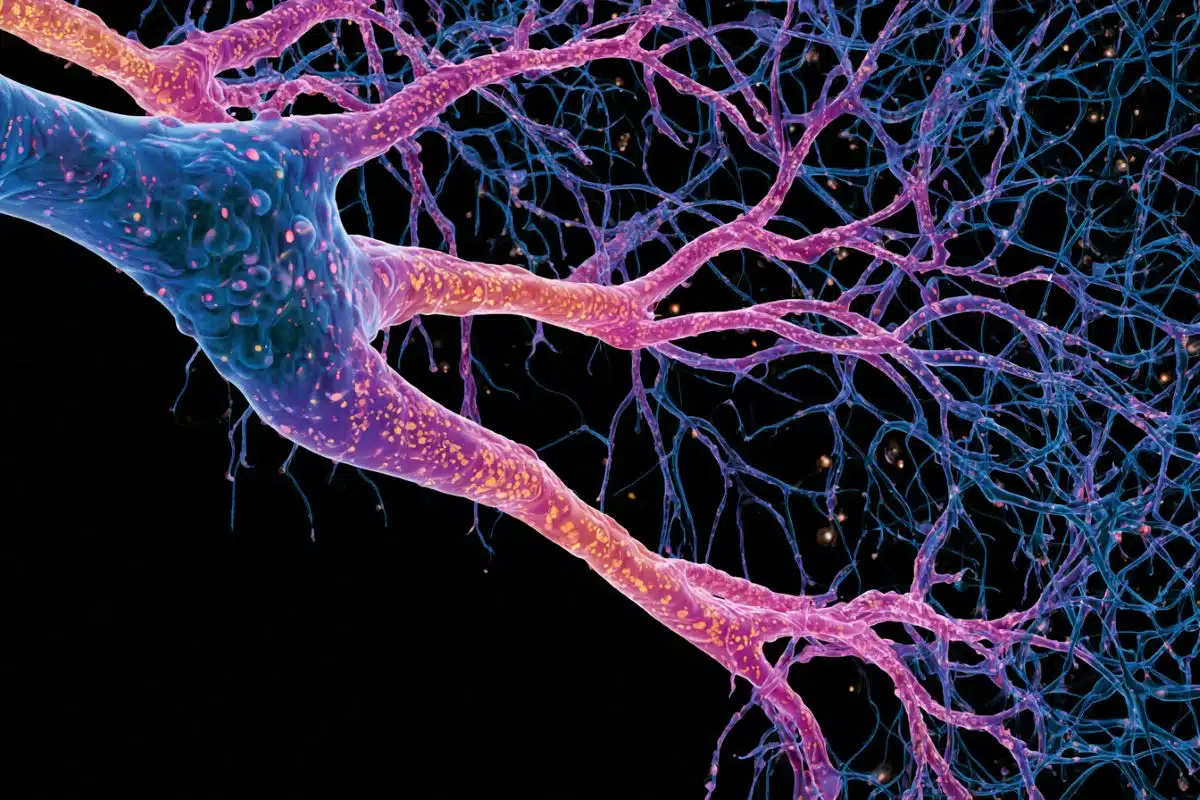
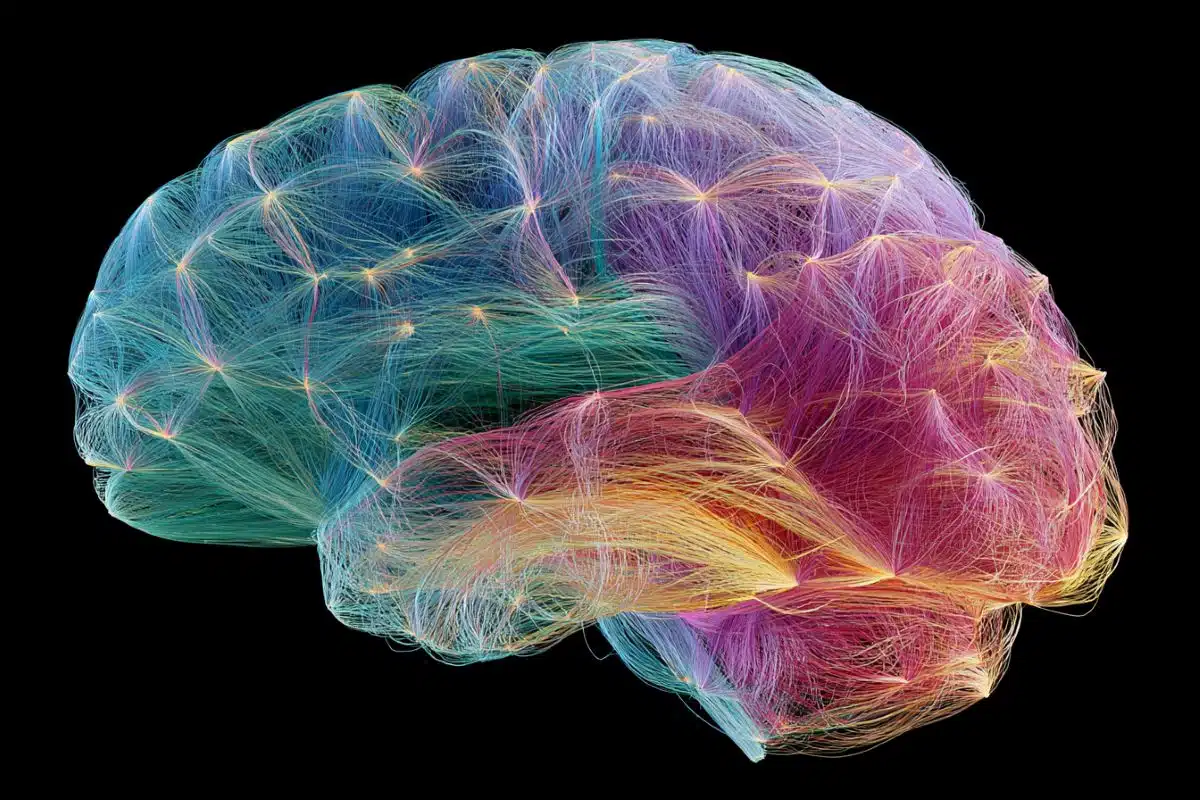
When we see something, our retinas transmit that image to the thalamus in the brain, where neurons send very basic visual information to the visual cortex to be processed, says study author Sara Aton, U-M assistant professor of molecular, cellular and developmental biology.
When the brain is awake, neurons in the thalamus and cortex fire steadily to transmit visual information between them. However, in slow-wave sleep, those neurons will burst and then pause rhythmically and in synchrony, Aton says.
There is also communication in the opposite direction—between the visual cortex and thalamus—forming a loop of communication between the two structures. Prior work in the Aton lab had shown that after presenting mice with a new type of visual experience and then allowing those mice to sleep, neurons in the cortex fired more when seeing that stimuli again. But the lab also showed the brain needs sleep in order to make cortical changes. If mice were sleep deprived after the experience, no changes in the cortex occurred.
“We wondered what would happen if we just disrupted that pattern of activity without waking up these animals at all?” Aton said. “The big finding in our study is that if you disrupt communication from the cortex to the thalamus during slow-wave sleep, it will completely disrupt that slow-wave rhythm and the plasticity in the visual cortex.”

The researchers turned off neurons in the visual cortex that complete the “loop,” sending information back to the thalamus, while the mice were naturally asleep or awake. While this did not wake the sleeping mice, it did keep them from having coordinated rhythms of activity between the two structures during slow-wave sleep.
Aton says if cortex-to-thalamus communication is disrupted in any other behavioral state such as wakefulness or REM, there’s no effect on sleep-dependent plasticity of the visual cortex.
“But if you disrupt these oscillatory patterns during slow-wave sleep, you see a deficit,” Aton said. “What we’re thinking is you need these big waves of activity occurring in order to have that benefit of sleep.”
What is the significance of the waves? Lead author Jaclyn Durkin, a doctoral student in Aton’s lab, made recordings in both a part of the thalamus called the lateral geniculate nucleus, which processes visual information, and the visual cortex of mice. She tracked the activity of these populations of neurons while presenting the mice with patterns of visual stimulation. She did this across many hours of subsequent sleep.
“In these mice, during visual experience, we saw immediate changes in the neurons in the thalamus, but nothing going on in the visual cortex,” Aton said. “These waves during subsequent sleep are apparently able to transfer information from the thalamus to the cortex, and that information reflects what that animal has just been looking at.”
Next, the researchers plan to test what types of information can be relayed in this way, and determine exactly how information is relayed to cortex by thalamic neurons. They also hope to test how sleep-dependent plasticity in the visual cortex affects visual perception and visual memory in their mice.
Source: Sara Aton – University of Michigan
Image Source: NeuroscienceNews.com image is adapted from the University of Michigan news release.
Original Research: Full open access research for “Cortically coordinated NREM thalamocortical oscillations play an essential, instructive role in visual system plasticity” by Jaclyn Durkin, Aneesha K. Suresh, Julie Colbath, Christopher Broussard, Jiaxing Wu, Michal Zochowski, and Sara J. Aton in PNAS. Published online September 11 2017 doi:10.1073/pnas.1710613114
[cbtabs][cbtab title=”MLA”]University of Michigan “Deep Sleep is Critical For Visual Learning.” NeuroscienceNews. NeuroscienceNews, 4 October 2017.
<https://neurosciencenews.com/sleep-visual-learning-7653/>.[/cbtab][cbtab title=”APA”]University of Michigan (2017, October 4). Deep Sleep is Critical For Visual Learning. NeuroscienceNews. Retrieved October 4, 2017 from https://neurosciencenews.com/sleep-visual-learning-7653/[/cbtab][cbtab title=”Chicago”]University of Michigan “Deep Sleep is Critical For Visual Learning.” https://neurosciencenews.com/sleep-visual-learning-7653/ (accessed October 4, 2017).[/cbtab][/cbtabs]
Abstract
Cortically coordinated NREM thalamocortical oscillations play an essential, instructive role in visual system plasticity
Two long-standing questions in neuroscience are how sleep promotes brain plasticity and why some forms of plasticity occur preferentially during sleep vs. wake. Establishing causal relationships between specific features of sleep (e.g., network oscillations) and sleep-dependent plasticity has been difficult. Here we demonstrate that presentation of a novel visual stimulus (a single oriented grating) causes immediate, instructive changes in the firing of mouse lateral geniculate nucleus (LGN) neurons, leading to increased firing-rate responses to the presented stimulus orientation (relative to other orientations). However, stimulus presentation alone does not affect primary visual cortex (V1) neurons, which show response changes only after a period of subsequent sleep. During poststimulus nonrapid eye movement (NREM) sleep, LGN neuron overall spike-field coherence (SFC) with V1 delta (0.5–4 Hz) and spindle (7–15 Hz) oscillations increased, with neurons most responsive to the presented stimulus showing greater SFC. To test whether coherent communication between LGN and V1 was essential for cortical plasticity, we first tested the role of layer 6 corticothalamic (CT) V1 neurons in coherent firing within the LGN-V1 network. We found that rhythmic optogenetic activation of CT V1 neurons dramatically induced coherent firing in LGN neurons and, to a lesser extent, in V1 neurons in the other cortical layers. Optogenetic interference with CT feedback to LGN during poststimulus NREM sleep (but not REM or wake) disrupts coherence between LGN and V1 and also blocks sleep-dependent response changes in V1. We conclude that NREM oscillations relay information regarding prior sensory experience between the thalamus and cortex to promote cortical plasticity.
“Cortically coordinated NREM thalamocortical oscillations play an essential, instructive role in visual system plasticity” by Jaclyn Durkin, Aneesha K. Suresh, Julie Colbath, Christopher Broussard, Jiaxing Wu, Michal Zochowski, and Sara J. Aton in PNAS. Published online September 11 2017 doi:10.1073/pnas.1710613114