Summary: GLP-1 weight-loss drugs do much more than just make you feel full. New research shows that these medications reach deep into the brain to alter the circuits that govern motivation and reward.
By connecting the hindbrain to the central amygdala and dopamine neurons, these drugs effectively “turn down the volume” on the desire for high-calorie foods. This discovery explains why patients often lose interest in “cravings” but also sheds light on side effects like nausea and a diminished sense of pleasure.
Key Facts
- Targeting “Wanting,” Not Just “Feeling”: While scientists knew GLP-1 drugs affected the hindbrain to signal fullness, this study found they also engage a circuit linking the central amygdala to dopamine neurons. This system controls the desire to pursue food, not just the physical sensation of hunger.
- Oral vs. Injectable: The researchers used newer “small-molecule” oral GLP-1 drugs, which are more stable and less expensive than injectables. They found these molecules are particularly effective at reaching deep brain regions involved in value assignment.
- The Dopamine Connection: By influencing dopamine-producing neurons, the drugs reduce the “reward value” of high-calorie foods. In short: the brain stops viewing the cake as a prize.
- Beyond Weight Loss: Because the affected pathways are linked to impulse control and addiction, these drugs are showing potential for treating compulsive behaviors like smoking or alcohol use.
- The “Anhedonia” Risk: Some patients report a reduced ability to experience pleasure overall. The study suggests this is a direct result of the drug’s impact on the brain’s reward centers, highlighting a need for more precise drug design.
Source: UVA
A new study from the University of Virginia reveals that a widely used class of weight-loss drugs does more than suppress appetite—it directly alters brain circuits that control motivation and reward.
Published in Nature, the research led by UVA neuroscientist Ali D. Güler shows that newer oral GLP-1 drugs can influence how the brain values food, helping explain both their effectiveness and their sometimes unexpected side effects.

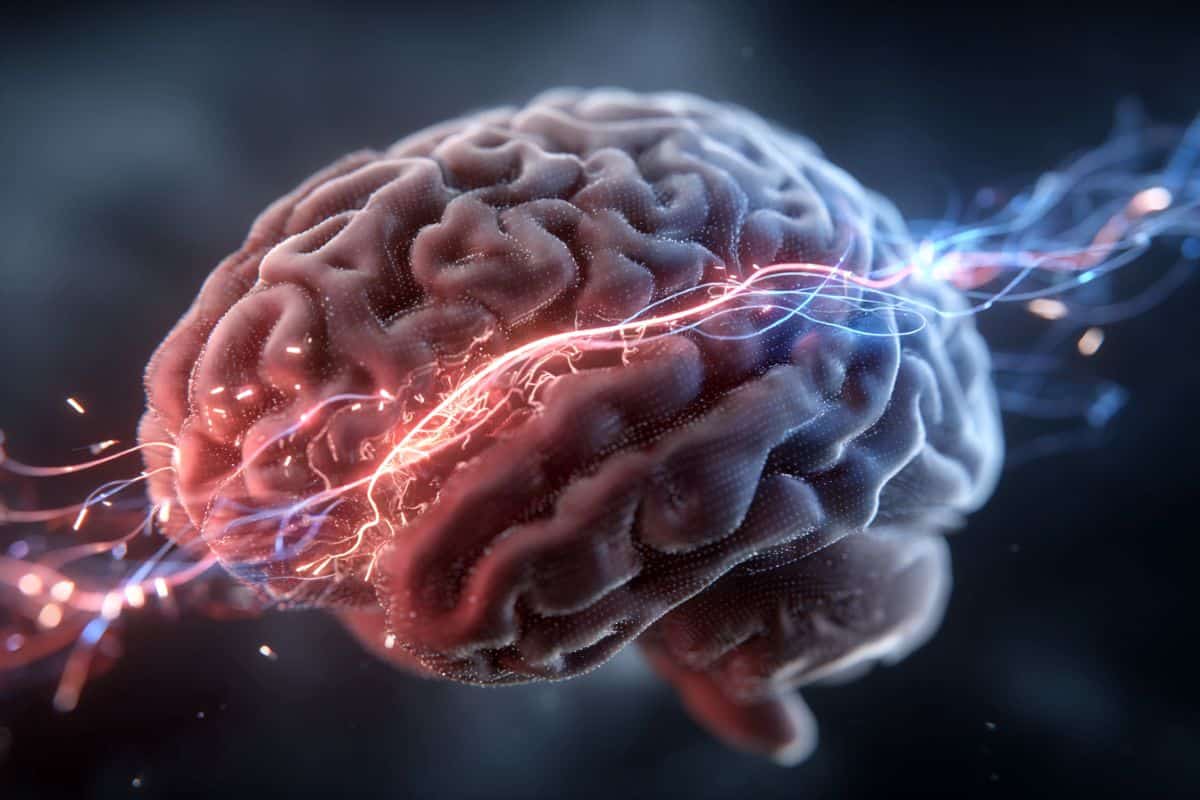
“These drugs are incredibly effective,” Güler said. “But what we wanted to understand is what they’re doing in the brain.”
Key findings
- GLP-1 drugs act not only on metabolic pathways but also on brain circuits linked to reward
- Researchers identified a pathway connecting the hindbrain, central amygdala and dopamine-producing neurons
- The drugs reduce not just hunger, but the desire for high-calorie, rewarding foods
- Findings may help explain both therapeutic benefits and side effects such as nausea or reduced pleasure
Beyond appetite suppression
GLP-1 receptor agonists were originally developed to treat Type 2 diabetes by improving insulin response, with weight loss emerging as a secondary benefit. The UVA team sought to better understand how these drugs work in the brain.
Using a genetically engineered mouse model, the researchers demonstrated that newer small-molecule GLP-1 drugs—such as recently approved oral medications—can reach deep brain regions. Scientists have long known that GLP-1 drugs act on neurons in the hindbrain, contributing to feelings of fullness and nausea. The UVA team found that, in addition to those established effects, the drugs also engage a separate circuit linking the hindbrain to the central amygdala and ultimately to dopamine-producing neurons.
This pathway plays a critical role in how the brain assigns value to rewarding experiences, including high-calorie foods.
“What we show is that these drugs can reduce not just hunger, but the desire to pursue rewarding food,” Güler said. “They’re acting on the system that makes you want the cake, not just the system that makes you feel full.”
The findings also help explain differences among drugs in this rapidly growing class. Some compounds appear to produce more nausea-like effects, while others create a brain state that reduces food motivation without the same level of discomfort.
Implications for medicine, industry and society
The discovery comes as pharmaceutical companies race to develop more accessible alternatives to injectable GLP-1 therapies. Oral versions are easier to produce, more stable and significantly less expensive—potentially expanding access to millions of patients worldwide.
At the same time, the findings raise broader questions about how these drugs may affect behavior.
“If these drugs are affecting reward pathways in the brain, that has implications beyond weight loss,” Güler said. “It could influence things like addiction, impulse control or even how people experience pleasure.”
Early evidence suggests some patients may find it easier to reduce compulsive behaviors, such as smoking, while others report a diminished sense of enjoyment. Güler said both outcomes underscore the need for deeper study.
“As scientists, our job is not just to say that something works,” he said. “It’s to understand how it works, so we can improve it and anticipate unintended consequences.”
He added that as these medications become more widely used, careful oversight will be essential.
“These are powerful compounds,” Güler said. “We need to understand them fully as they move into everyday use.”
Next steps
Güler and his team are continuing to study how these brain circuits function and how different drugs may target them more precisely.
“This is just the beginning,” he said. “If we understand these pathways, we may be able to design treatments that target specific behaviors—whether that’s overeating, addiction or something else entirely.”
As GLP-1 drugs become more widely used, researchers say understanding their full neurological impact will be critical.
“This is about knowing what these drugs are really doing,” Güler said. “The more we understand, the better we can make them—for patients and for society.”
Funding: The research was supported by internal funding from the University of Virginia, including its Brain Institute and Arts & Sciences programs.
Key Questions Answered:
A: It comes down to which specific brain circuits are being hit. The UVA team found that while some pathways trigger nausea in the hindbrain, others successfully reduce food motivation without the discomfort. Future drugs may be designed to target the “reward” circuit while skipping the “nausea” circuit.
A: Possibly. By dampening the dopamine response to rewards, these drugs could theoretically reduce the “itch” for nicotine, alcohol, or even gambling. Clinical trials are already looking into this “anti-addiction” side effect.
A: It varies. Some people report a “diminished sense of enjoyment” (anhedonia), while others simply find it easier to stop eating after a few bites. The goal of current research is to understand these pathways well enough to keep the “satiety” benefits without losing the ability to enjoy life.
Editorial Notes:
- This article was edited by a Neuroscience News editor.
- Journal paper reviewed in full.
- Additional context added by our staff.
About this neuroscience and neuropharmacology research news
Author: Russ Bahorsky
Source: UVA
Contact: Russ Bahorsky – UVA
Image: The image is credited to Neuroscience News
Original Research: Open access.
“A brain reward circuit inhibited by next-generation weight-loss drugs in mice” by Elizabeth N. Godschall, Taha Bugra Gungul, Isabelle R. Sajonia, Aleyna K. Buyukaksakal, Orien Li, Sophia Ogilvie, Austin B. Keeler, Guilian Tian, Yu Shi, Omar Koita, Chloe Xinzhu Guo, Tyler C. J. Deutsch, Eric J. Steacy, Maisie Crook, YuChen Zhang, Nicholas J. Conley, Gulsun Memi, Addison N. Webster, O. Yipkin Calhan, Weile Liu, Amani Akkoub, Karan Malik, Kaleigh I. West, Sara Michel-Le, Arun Karthikeyan, Grace van Gerven, Olivia A. Dell’Aglio, Kevin T. Beier, Larry S. Zweifel, Manoj K. Patel, John N. Campbell, Christopher D. Deppmann & Ali D. Güler. Nature
DOI:10.1038/s41586-026-10444-4
Abstract
A brain reward circuit inhibited by next-generation weight-loss drugs in mice
Glucagon-like peptide 1 receptor agonists (GLP1RAs) effectively reduce body weight and improve metabolic outcomes; however, established peptide-based therapies require injections and are complex to manufacture.
Small-molecule GLP1RAs promise oral bioavailability and scalable manufacturing, but their selective binding to human versus rodent receptors has limited mechanistic studies.
Here we developed humanized GLP1R mouse models to investigate how small-molecule GLP1RAs influence feeding behaviour.
We found that these compounds regulate both homeostatic and hedonic feeding through parallel neural circuits. Beyond engaging canonical hypothalamic and hindbrain networks that control metabolic homeostasis, GLP1RAs recruit a discrete population of Glp1r-expressing neurons in the central amygdala, which selectively suppress the consumption of palatable foods by reducing dopamine release in the nucleus accumbens.
Stimulating these central amygdalar neurons curtails hedonic feeding, whereas targeted deletion of the receptor in this cell population specifically diminishes the anorectic efficacy of GLP1RAs for reward-driven intake.
These findings identify a neural circuit through which small-molecule GLP1RAs modulate reward processing, with implications for the treatment of substance-use disorder and binge eating.