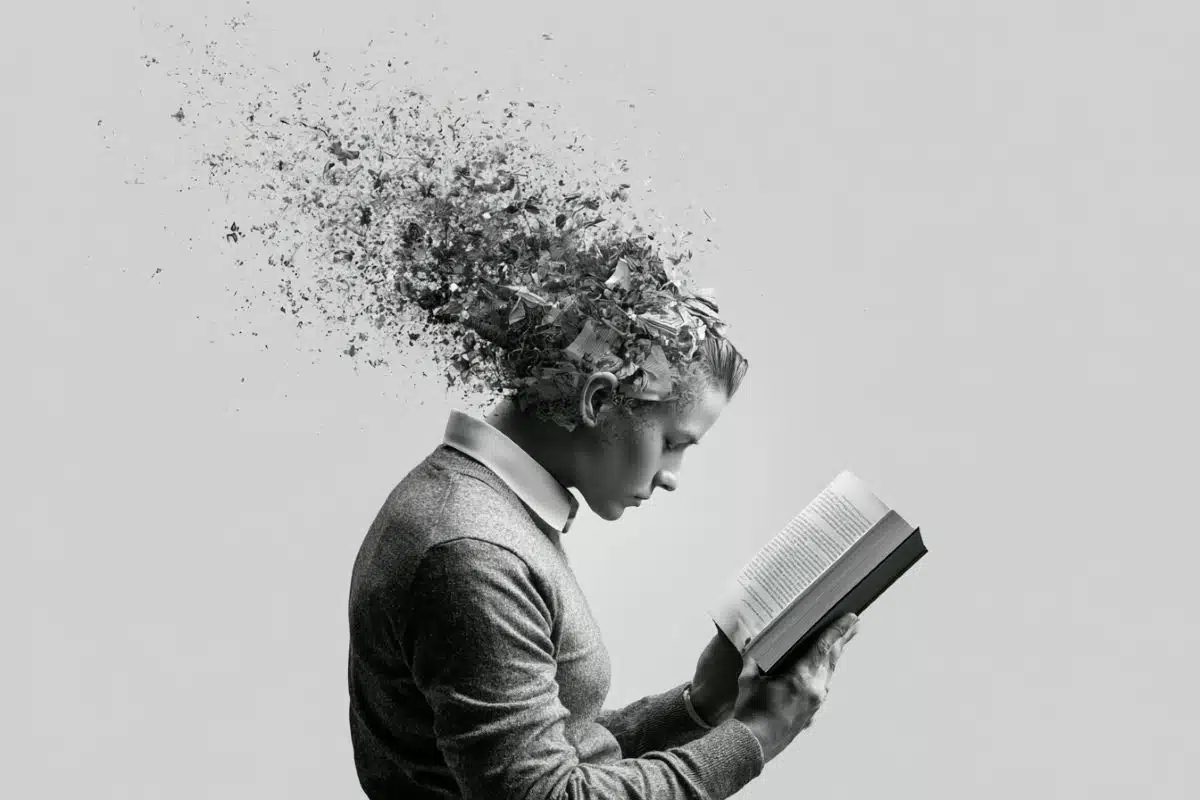
Summary: Is consciousness a mere byproduct of firing neurons, or is it a fundamental building block of the universe? A new study challenging the dominant materialist worldview.
Despite decades of brain mapping, science still cannot explain how physical matter creates “the feeling of being you”—the famous “Hard Problem” of consciousness. The study argues that to solve this, we must reconsider metaphysical frameworks like panpsychism, suggesting that consciousness isn’t “produced” by the brain, but is an intrinsic property of any complex, integrated system.
Key Facts
- The Hard Problem: This is the gap between “function” (how the brain processes light) and “experience” (the subjective redness of a sunset). Koch argues physical mechanisms alone haven’t bridged this gap.
- Integrated Information Theory (IIT): Koch is a leading advocate for IIT, which posits that consciousness is measured by “Phi” ($\Phi$)—a mathematical metric of how much information a system can integrate. High $\Phi$ equals high consciousness.
- A Scientific Panpsychism: IIT implies that consciousness isn’t exclusive to humans or animals. Any system—biological or perhaps even artificial—with high enough integration possesses some level of subjective experience.
- Extraordinary States: Koch highlights “outlier” events like Near-Death Experiences (NDEs) and terminal lucidity (dementia patients suddenly becoming clear before death) as phenomena that resist current strictly materialist explanations.
- Clinical Impact: Beyond theory, Koch’s work at the Allen Institute has led to methods for detecting signs of consciousness in “unresponsive” patients, helping doctors determine if someone is “in there” despite a lack of movement.
Source: BIAL Foundation
Is consciousness a product of the brain, or could it be something more fundamental?
This is one of the central questions addressed by Christof Koch, one of the most influential contemporary neuroscientists, in his contribution to the 15th “Behind and Beyond the Brain” Symposium, promoted by the Bial Foundation and taking place from April 8 to 11 in Porto.
At a time when materialism remains the dominant worldview in science, Koch offers a critical reflection on its limitations. Despite advances in neuroscience, how subjective experience emerges from brain activity remains unexplained – the so‑called “hard problem” of consciousness.
His presentation will address three areas of tension: the difficulty of reducing conscious experience to physical mechanisms; the challenges posed by contemporary physics to defining what is “real”; and the role of extraordinary experiences – such as near‑death experiences, mystical states, or episodes of terminal lucidity – that continue to resist a strictly scientific explanation.
From this analysis, Koch argues for the need to reconsider classical metaphysical frameworks, such as idealism or panpsychism, in light of current scientific methods, acknowledging that these perspectives regard consciousness as a fundamental element of reality rather than a mere by‑product of the brain.
The neuroscientist is an advocate of Integrated Information Theory, which posits that any system with a high degree of integrated information possesses subjective experience – a scientific formulation of panpsychism.
A researcher at the Allen Institute for Brain Science and former professor at MIT and Caltech, Koch has been a central figure in consciousness research, developing innovative methods to detect signs of conscious activity in unresponsive patients.
Key Questions Answered:
A: According to Integrated Information Theory (IIT), probably not. For a system to have “Phi” (consciousness), its parts must be interconnected in a way that the whole is more than the sum of its parts. A toaster’s parts don’t “talk” to each other in a complex, integrated web, so its “Phi” would be effectively zero.
A: The “Easy Problems” are things like how the brain reacts to heat or moves a muscle—we can map those circuits. The “Hard Problem” is why those circuits feel like something. Why don’t we just function like “zombies” or complex computers without an inner world? Science currently has no physical formula for “feeling.”
A: Koch isn’t necessarily arguing for a religious soul, but rather a “metaphysical shift.” He’s suggesting that consciousness is a property of the universe, like mass or charge. It’s not “magic,” but it might be a fundamental law that we haven’t fully written the equations for yet.
Editorial Notes:
- This article was edited by a Neuroscience News editor.
- Journal paper reviewed in full.
- Additional context added by our staff.
About this consciousness research news
Author: Sandra Pinto
Source: BIAL Foundation
Contact: Sandra Pinto – BIAL Foundation
Image: The image is credited to Neuroscience News
Original Research: The findings will be presented at the 15th “Behind and Beyond the Brain” Symposium.